

The wedding was the easy part. A ceremony is just words and confetti. The marriage—especially a marriage between two people who have lived nearly seventy years of separate lives—is a negotiation of space, silence, and habits.
Daniel moved into my house two weeks after the courthouse ceremony. We spent a weekend packing up his apartment. It is a strange thing to watch a man dismantle his life to fit it into yours.
“I have a lot of books,” Daniel warned me, standing amidst a sea of cardboard boxes labeled ‘History’ and ‘Photography.’
“I have shelves,” I countered.
I didn’t have enough shelves.
The first month was a comedy of errors. Daniel, having lived alone for decades, was used to a silence so profound you could hear a pin drop. I, having raised a daughter and now helping with two grandsons, was used to a level of background noise that rivaled O’Hare Airport.
He liked the thermostat at sixty-eight degrees; I liked it at seventy-two. He drank tea in the afternoon; I drank coffee. He organized his cutlery drawer with military precision; I threw things in there and hoped for the best.
One Tuesday evening, about a month in, I found him standing in the living room, staring at my collection of ceramic roosters on the mantelpiece.
“Is something wrong?” I asked, coming in with the laundry basket.
“No,” he said, too quickly. “Just… admiring the poultry.”
I laughed. “You hate them.”
“I don’t hate them,” he lied, kissing my forehead. “I just feel… watched.”
We compromised. The roosters moved to the guest room. His collection of vintage cameras took their place.
But beneath the domestic shuffling, there was a deeper excavation happening. We were learning the shapes of the people we had become in the silence of the last forty years.

The Excavation of the Storage Unit
The real challenge came in November. Daniel had a storage unit on the other side of town—a ten-by-ten metal box where he had stored the overflow of his life during his years as a caregiver.
“We need to clear it out,” he said one morning over oatmeal. “I’m paying a hundred dollars a month to store dust.”
We drove over on a Saturday. The roll-up door rattled as we lifted it, revealing a wall of boxes that smelled of damp cardboard and old memories.
“This is the lost decade,” Daniel said quietly, running his hand over a stack of crates. “My twenties. My thirties. It’s all in here.”
We spent the afternoon sorting. ‘Keep.’ ‘Donate.’ ‘Trash.’
It was going well until we hit a plastic bin at the back. It was taped shut with layers of duct tape, as if to ensure whatever was inside could never escape.
“What’s this?” I asked.
Daniel froze. He looked at the bin, then at me. His face went pale, a ghost of the look he’d had in the hospital.
“That,” he said, his voice tight, “is the Letters Box.”
I sat down on a stack of encyclopedias. “Letters to who?”
He sat down opposite me on a rusty folding chair. “To you.”
My heart hammered. “You said you wrote me a dozen letters.”
“I lied,” he whispered. “I wrote you hundreds.”
We took the bin home. We didn’t open it immediately. It sat on the coffee table for two days, a monolith of unresolved history. Finally, on a rainy Tuesday night, after Megan had picked up the boys and the house was quiet, Daniel poured us both a glass of wine.
“I think,” he said, looking at the bin, “I think we need to let the ghosts out.”
He cut the tape.
Inside were stacks of envelopes. Some were white and crisp; others were yellowed with age. Some were addressed to my old dorm room. Others had no address at all. They were organized chronologically, bundled with rubber bands that had long since snapped.
“Read them,” he said. “Please.”
I picked up the first bundle. 1979. The year after he left.
Dear Susan, I am writing this from a motel in Phoenix. Dad had another seizure today. I wiped his face and told him it was okay, but I wanted to scream. I wanted to call you. I walked to the payphone three times. I even dialed the area code. But what would I say? ‘Hey, I’m in hell, come visit?’ I can’t drag you down here. You’re going to be a great nurse. You’re going to save people. I can’t even save him.
I looked up, tears blurring my vision. “Daniel…”
“Keep reading,” he said, staring into his wine glass.
I picked up a bundle from 1985.
Susan, I saw a woman today who walked just like you. That fast, purposeful stride, like you’re late for something important. I followed her for two blocks before she turned around. It wasn’t you. I felt like I’d lost you all over again. Mom is getting worse. She forgets who I am half the time. She calls me by Dad’s name. I feel like I’m disappearing. I wonder if you’re married. I wonder if you’re happy. I hope he makes you laugh.
And 1998.
I bought the ring today. I know it’s insane. You’re probably a grandmother by now. But I saw it in a pawn shop window in Oregon, and it looked like something you’d wear. Simple. Golden. I keep it in my pocket. It makes me feel less alone.
We sat there until 3:00 AM, reading forty years of grief, love, and loneliness. It was like watching a man drown in slow motion.
When I finished the last one—dated just two weeks before he posted the photo on Facebook—I felt heavy, but also incredibly light.
“You were never really gone,” I whispered. “You were talking to me the whole time.”
“I never stopped,” he said. “You were the only person I could tell the truth to, even if you never heard it.”
We took the letters and put them in the fireplace. It wasn’t an act of destruction; it was a release. We watched the smoke curl up the chimney, carrying the weight of the “lost years” out into the night air. We didn’t need the paper anymore. We were here.

The Brother Who Got Away
The holidays brought a new challenge. Daniel’s brother, Mark.
I knew the basics: Mark was four years younger. Daniel had essentially raised him after their father got sick, shielding him from the worst of the caretaking duties so Mark could have a “normal” life. Mark had gone to law school, moved to Chicago, and become a very successful, very busy corporate attorney.
They spoke on holidays. They were polite. But there was a distance there—a chasm filled with guilt on one side and resentment on the other.
“He’s coming for Christmas,” Daniel announced in early December, looking terrified. “He wants to meet you.”
“That’s wonderful,” I said, though Daniel’s anxiety was contagious.
Mark arrived two days before Christmas in a rented BMW, wearing a coat that cost more than my first car. He was sharper than Daniel, louder, with a frenetic energy that filled the room.
The first dinner was tense. Mark drank expensive scotch he’d brought with him and told stories about his cases. Daniel nodded and smiled, shrinking into his chair. I watched the dynamic play out—the older brother who had sacrificed everything, and the younger brother who had taken that sacrifice and run with it, never looking back.
The explosion happened on Christmas Eve.
We were in the kitchen. I was making stuffing. Mark was pacing.
“You look good, Dan,” Mark said, gesturing with his glass. “Better than I expected. The surgery must have really fixed the plumbing.”
“I feel good,” Daniel said quietly, chopping celery.
“You know,” Mark said, his voice taking on an edge, “you didn’t have to stay, you know. Back then. With Mom and Dad.”
Daniel stopped chopping. “What?”
“I didn’t ask you to be a martyr,” Mark snapped. “You act like you saved me. Like you threw yourself on a grenade so I could go to college. But you could have left. You could have hired help. You chose to stay.”
The room went dead silent. The only sound was the bubbling of the cranberries on the stove.
I saw Daniel’s hand tremble. I saw the shame rising in his neck.
I put down my spoon. “Excuse me.”
I turned to Mark. I am a mother. I am a grandmother. And I was a head nurse for twenty years. I know how to shut down a room.
“Mark,” I said, my voice low and steely. “Do you have any idea what it costs to hire full-time care for two invalid parents in 1980? Do you have any idea what it does to a twenty-two-year-old man to wipe his father’s bottom and spoon-feed his mother?”
Mark looked stunned.
“He didn’t stay because he wanted to be a martyr,” I continued, stepping into his space. “He stayed because he loved you. He stayed so you wouldn’t have to drop out of high school. He stayed so you could become a lawyer in a fancy suit who drinks scotch and judges the brother who saved his life.”
Mark opened his mouth, but nothing came out.
Daniel put a hand on my arm. “Susan. It’s okay.”
“It is not okay,” I said, looking at Mark. “He gave up his life for you. He gave up me for you. You don’t have to worship him, but you will respect him in my house.”
I turned back to the stove. My hands were shaking.
For a long time, no one spoke. Then, I heard the clinking of glass.
Mark poured a drink. He walked over to Daniel.
“She’s terrifying,” Mark whispered.
“Yeah,” Daniel chuckled, a wet sound. “She really is.”
Mark took a deep breath. “I know, Dan. I know what you did. I just… it’s hard to look at you sometimes. Because I know I owe you everything. And I can never pay it back. So it’s easier to pretend you wanted to be there.”
Daniel put down the knife. He pulled his brother into a hug. It was awkward at first, stiff shoulders and pats on the back, but then Mark crumbled. The successful lawyer wept into his brother’s flannel shirt.
“I missed you,” Mark choked out.
“I’m here,” Daniel said. “I’m right here.”
Christmas Day was different. The tension was gone, replaced by a tentative, fragile bond. Mark stayed an extra day. He showed Leo how to play chess. He looked at Daniel not as a tragic figure, but as a brother.
When he left, he hugged me tight. “Thank you,” he whispered. “For giving him a life back.”
The Art of Seeing
Winter turned to spring. With the emotional baggage of the letters and the brother sorted, I noticed something about Daniel. He was restless.
He was taking photos again, mostly of the grandkids or the birds in the feeder, but he hid them. He treated his talent like a shameful secret.
“Why don’t you show these to anyone?” I asked one afternoon, flipping through prints he’d left on the desk. They were stunning—black and white shots of ordinary things made extraordinary by the light. A rain boot in a puddle. The texture of my hand holding a coffee cup.
“It’s a hobby, Susan,” he dismissed. “I’m not a professional. Not anymore.”
“You’re an artist,” I said. “And artists need to be seen.”
I hatched a plan. I called Megan. I called Mark in Chicago. I called the owner of a small coffee shop/gallery downtown where Daniel and I liked to go for bagels.
“A surprise show?” Megan asked, grinning. “Mom, he’s going to kill you.”
“He might,” I admitted. “But he needs this.”
We spent two months curating. I snuck into his digital files. I stole negatives from the “Lost Years” box. I framed twenty of his best shots—spanning from 1978 to the present.
The theme was “The Long Way Home.”
On a Tuesday evening in April, I told him we were going out for a nice dinner. I drove him downtown. When we pulled up to the coffee shop, the lights were dim, and there was a crowd inside.
“What’s going on?” he asked, suspicious.
“Let’s go see,” I said.
We walked in. The walls were lined with his life.
There was the photo of me from college. There was a photo of his father’s hands. There was a photo of the Arizona desert. There was a photo of Leo holding the camera.
And there were people. Neighbors. My nursing friends. Megan and the boys. Even Mark had flown in.
Daniel stood in the center of the room, turning in a slow circle. He looked terrifyingly pale.
“Susan,” he whispered. “What did you do?”
“I showed them what you see,” I said.
A woman I didn’t know approached him. She was pointing at a photo of a rusted truck in a field—one he’d taken during his years in Oregon.
“This is heartbreaking,” the woman said. “The loneliness in it… it’s beautiful. Are you the photographer?”
I watched Daniel straighten his spine. I saw him take a breath.
“Yes,” he said, his voice gaining strength. “Yes, I am.”
He sold four prints that night. But the money didn’t matter. What mattered was the way he looked when we got home. He looked valid. He looked like the man he was supposed to be before the world got in the way.
“You’re a pain in the neck,” he told me in bed that night, kissing my nose.
“I know,” I said. “It’s part of my charm.”

The Tables Turn
Life has a way of balancing the scales. For the first year, I was the nurse, the rock, the one guiding him through recovery.
Then, in July, I fell.
It was stupid. I was reaching for a vase on the top shelf of the pantry. I used the step stool—the one with the wobbly leg I kept meaning to fix.
I came down hard. I heard the crack before I felt the pain.
Hip fracture.
At sixty-eight, a hip fracture is no joke. The surgery was routine, but the recovery was grueling. Suddenly, I was the one in the hospital bed. I was the one who couldn’t put on my own socks. I was the one who needed help to the bathroom.
I hated it. I hated the vulnerability. I was the caregiver, not the patient. I snapped at the nurses (my former colleagues, which was mortifying). I cried over spilled tea.
But Daniel… Daniel was a revelation.
He didn’t just step up; he transformed. The man who had spent twenty years caring for his parents didn’t see caregiving as a burden. He saw it as a language he spoke fluently.
He knew exactly how to arrange the pillows so my hip didn’t throb. He knew how to time the pain meds so I didn’t have breakthrough agony. He cooked meals that were actually edible (he’d been practicing).
One night, about two weeks post-surgery, I was lying in bed, feeling sorry for myself. I felt old. I felt broken.
Daniel came in with a basin of warm water and a washcloth.
“Time to wash up,” he said gently.
“I can do it,” I grumbled.
“I know you can,” he said. “But let me.”
He washed my face. He washed my arms. His touch was so tender, so reverent, it made me want to weep.
“I’m sorry,” I whispered. “I’m such a grump.”
“You are,” he agreed, smiling. “But you wiped my chin when I was drooling in the ICU. I think we’re even.”
“I hate being old,” I confessed. “I hate that my body is betraying me.”
Daniel stopped. He sat on the edge of the bed and took my hand.
“Your body isn’t betraying you, Susan. It’s carried you this far. It gave you Megan. It worked double shifts for forty years. It walked into a coffee shop to meet a ghost from the past.”
He kissed my knuckles.
“This body brought you back to me. I love every broken bit of it.”
That was the night I realized that our marriage wasn’t just about second chances. It was about witnessing. We were witnessing each other’s decline, yes, but we were also witnessing each other’s endurance.
The Final Pilgrimage
By October, I was walking without the cane. Daniel’s heart checkup was stellar. We were officially a pair of survivors.
There was one last thing we had to do.
“I want to go to Arizona,” Daniel said one morning.
“To where you lived?”
“Yes. I need to… I need to show you. And I need to say goodbye to it properly.”
We flew to Phoenix and rented a car. We drove out to the small town where he had spent his “lost years.”
It was a dusty, sun-baked place. We drove past the strip malls and the cacti until we reached a small, stucco house on a cul-de-sac. It was painted yellow now, but Daniel said it used to be white.
“That’s the window,” he pointed. “That’s where Dad’s bed was. I used to sit there and watch the streetlights turn on.”
We sat in the car for a long time. I reached over and held his hand. I could feel the ghosts of that young man—the loneliness, the fear, the crushing responsibility.
“I hated this place,” he admitted. “But it’s also where I learned how to love someone who couldn’t love me back. It made me the man who could appreciate you.”
We drove to the cemetery. His parents were buried side by side under a mesquite tree.
Daniel cleaned off the headstones with a cloth he’d brought. He placed flowers. He stood there for a long time, speaking silently to them.
Then, he turned to me.
” Mom, Dad,” he said aloud. “This is Susan.”
The wind rustled the dry leaves.
“She’s the one I told you about,” he said. “The one who got away. But I found her. Or she found me. We’re okay now. I’m okay.”
He turned to me, tears streaming down his face. “Ready to go?”
“Ready,” I said.
We drove away, leaving the dust and the ghosts behind in the desert. We headed north, toward the mountains, toward the green, toward home.
The Quiet After
So here we are.
It’s been three years since the wedding. We are seventy-one now. The joints ache a little more. The news is a little louder. We attend more funerals than weddings.
But the house is full of life.
Every Friday, Mark calls from Chicago. Every Sunday, Megan and the boys come for dinner. Leo is fourteen now, taller than Daniel, and he’s entered a photography contest with a portrait he took of us.
In the photo, I’m sitting on the porch swing, laughing. Daniel is standing behind me, his hand on my shoulder. The light catches the gold band on my finger and the silver in his hair.
We look like people who have survived a storm.
Daniel and I still have our rituals. The three hand squeezes. The morning coffee. But now we have the letters, too. We don’t need to read them anymore, but knowing that the space between 1978 and 2023 wasn’t empty—that it was filled with longing on both sides—makes the silence peaceful.
Last night, we were watching a movie. Daniel fell asleep on my shoulder. I listened to the steady, mechanical click of his artificial valve—a tiny clock keeping time in his chest.
I thought about the randomness of the universe. The stroke that took his father. The algorithm that showed me his photo. The heart attack that almost took him.
It’s all so fragile.
But then he shifted in his sleep, mumbling my name, his arm tightening around me.
I realized that while we can’t control the timing, we can control the landing. We stuck the landing.
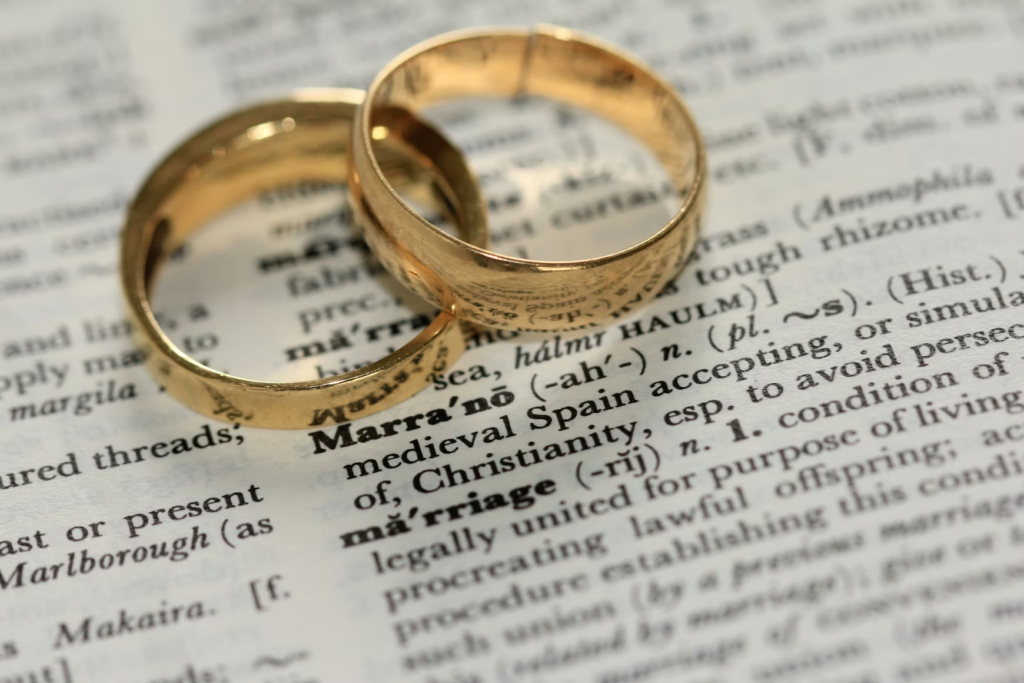
I looked at the ring on my finger. The gold was warm against my skin.
I remembered the note I wrote him in 1979. I hope, someday, you find your way back.
He did. And in finding his way back to me, I found the parts of myself I didn’t know were missing.
So, if you’re reading this, and you’re holding onto a “what if”—don’t let it rot in a box. Open it. Send the message. Take the drive. Forgive the brother. Show the art.
Love isn’t a straight line. It’s a circle. Sometimes it takes forty years to close the loop, but when it clicks shut, it sounds like the most beautiful thing in the world.
It sounds like home.
What do you think of Susan and Daniel’s journey? Does it change your perspective on timing and fate? Let us know in the comments on the Facebook video! And if this story gave you hope, please share it with your friends and family—sometimes love just takes the scenic route.
