
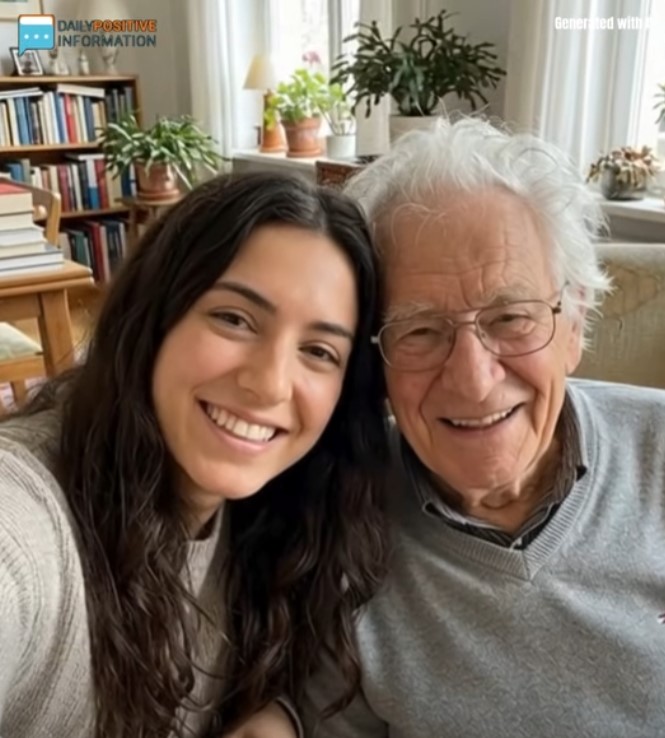
The funeral was over, but the silence it left behind was deafening. It was a physical weight, pressing against the eardrums, the kind of silence that echoes in an empty house at 3 AM, reminding you that you’re the only one breathing in it. The dust motes dancing in the afternoon sun looked like static electricity.
I was six years old when I lost my parents. The days that followed were dark, filled with adults whispering about the drunk driver who killed them and debating what to do with me. I sat on the scratchy carpet of my aunt’s living room in a dress that scratched my neck, clutching a stuffed bear that smelled like my mother’s perfume, listening to words like “burden,” “expenses,” and “state custody.”
The words “foster care” floated around the house like smoke. That idea terrified me. I thought I was going to be sent away forever to a place where no one knew my name, a place gray and cold like the orphanage in the movies.
But Grandpa saved me.
Sixty-five years old, tired, already dealing with a bad back and knees that cracked like dry wood when he stood up, he strode into the living room where all the adults were whispering about my fate. He didn’t knock. He just walked in, wearing his work boots and a flannel shirt that smelled of sawdust and Old Spice. He slammed his hand down on the coffee table, rattling the ceramic coasters and silencing the room.

“She’s coming with me. End of story.”
My aunt had looked at him with pity. “Arthur, you’re on a fixed income. You can barely take care of yourself.”
“I said she’s coming with me,” he repeated, his voice like gravel. “She’s family. We don’t outsource family.”
Grandpa became my whole world from that minute on. He gave me his big bedroom—the one with the double windows facing the elm tree—and took the smaller, drafty sewing room for himself. He learned how to braid my hair from YouTube, his calloused fingers fumbling with the strands until he got it right, biting his tongue in concentration. He packed my lunch every day, cutting the sandwiches into triangles because he knew I liked them that way, and always including a napkin with a smiley face drawn in ballpoint pen.
He attended every school play, sitting in the front row in his pressed Sunday shirt, and every parent-teacher meeting, nodding seriously as if my third-grade math scores were matters of national security.
He was my hero and my inspiration.
“Grandpa, when I grow up, I want to be a social worker so I can save children the same way you saved me,” I told him when I was ten years old, sitting on the porch swing as the sun went down, the chains creaking a rhythmic lullaby.
He hugged me so tight I thought my ribs would crack. “You can be anything you want, kiddo. Absolutely anything. The sky isn’t even the limit for you. You’re going to go places I never even saw on a map.”
The Architecture of Scarcity
But the truth was, we never had much.
Our life was defined by the architecture of scarcity. No family trips to Disney World, no takeout pizza on Friday nights, and none of those “just because” gifts other kids seemed to get. As I grew up, I noticed an unsettling pattern emerge in my life with Grandpa. A pattern of “no.”
“Grandpa, can I get a new outfit?” I’d ask, pointing at a catalog that had arrived in the mail. “All the kids at school are wearing these branded jeans, and I want a pair.”
He would look at the price tag, his face tightening just a little around the eyes, a shadow passing over his features. “We can’t afford that, kiddo. Good denim is good denim. The label doesn’t keep you warm.”
That was his answer to every request for anything extra. I hated that sentence more than anything else in the entire world. It felt like a wall he built around us, keeping out all the fun and color of life.
I grew angry at him for always saying NO.
While the other girls wore trendy, name-brand clothes, I wore hand-me-downs from the thrift store that smelled faintly of other people’s detergents. My friends all had new phones with cameras and apps, but mine was an ancient brick that barely held a charge and embarrassed me every time I pulled it out in the cafeteria.
I remember one specific Tuesday in eighth grade. It was the day of the field trip to the science museum. Everyone was buying lunch at the food court. I pulled out a brown paper bag containing a cheese sandwich and an apple. A boy named Kyle laughed and asked if I was saving up for a new personality.
I came home that day and screamed at Grandpa.
“Why are we so poor?” I yelled, throwing my backpack on the floor. “Why can’t you just get a better job? Why do we have to live like this?”
He was sitting in his armchair, mending a hole in his work pants. He didn’t yell back. He just looked at me with sad, tired eyes.
“I’m doing the best I can, Lila,” he said softly. “I promise you, I’m doing the best I can.”
It was an awful, selfish anger, the kind that made me cry hot tears into my pillow at night, hating myself for hating him, but still unable to stop the resentment from bubbling up. Why did he have to be so cheap? Why couldn’t he just try a little harder?
He told me I could be anything I wanted, but that promise started to feel like a lie. How could I be anything when we couldn’t even afford new shoes?
The Slow Decline
Then Grandpa got sick, and the anger was replaced by a deep, sickening fear.
It wasn’t sudden. It was a slow erosion. The man who had carried my whole world on his shoulders suddenly couldn’t walk up the stairs without gasping for air. His strong hands, which used to open pickle jars without effort, started to shake.
We couldn’t afford a nurse or caregiver (of course, we couldn’t, we couldn’t afford anything), so I took care of him alone.
“I’ll be okay, kiddo. It’s just a cold. I’ll be up and kicking next week. You just focus on your final exams,” he’d wheeze, trying to smile, his skin gray against the pillowcase.
Liar, I thought, my heart breaking.
“It’s not a cold, Grandpa. You need to take it easy. Please, let me help.”
I juggled my final semester of high school with helping him get to the bathroom, feeding him spoonfuls of soup, and making sure he took his mountain of medicine. I studied for calculus while listening to his labored breathing in the next room, the sound like dry leaves scraping across concrete.
I learned the rhythm of his illness. The bad days when he couldn’t lift his head. The good days when he could sit on the porch for ten minutes. I learned how to navigate the terrifying bureaucracy of Medicare, fighting on the phone with insurance agents while he slept.
One night, the electricity was cut off. He had forgotten to pay the bill, or maybe he didn’t have the money. We sat in the dark, wrapped in blankets.
“I’m sorry, Lila,” he whispered in the dark. “I’m failing you.”
“You’re not,” I lied, terrified. “It’s just an adventure. Like camping.”
Every time I looked at his face, thinner and paler each morning, I felt the panic rise in my chest. What would become of us both? If he died, I would be truly alone. And broke.
One evening, I was helping him back into bed when he said something that disturbed me.
He was shaking from the exertion of the short walk to the bathroom. As he settled down against the pillows, his eyes fixed on me with an intensity I hadn’t seen before.
“Lila, I need to tell you something. About the house. About… everything.”
“Later, Grandpa. You’re exhausted, and you need to rest.”
“No, listen to me. Under the floorboard in the closet… there’s a box…”
“Shh, Grandpa. We’ll talk tomorrow.”
But we never got a “tomorrow.”
When he finally died in his sleep two days later, my world stopped. The silence rushing back in was heavier than before. It wasn’t just empty; it was final.
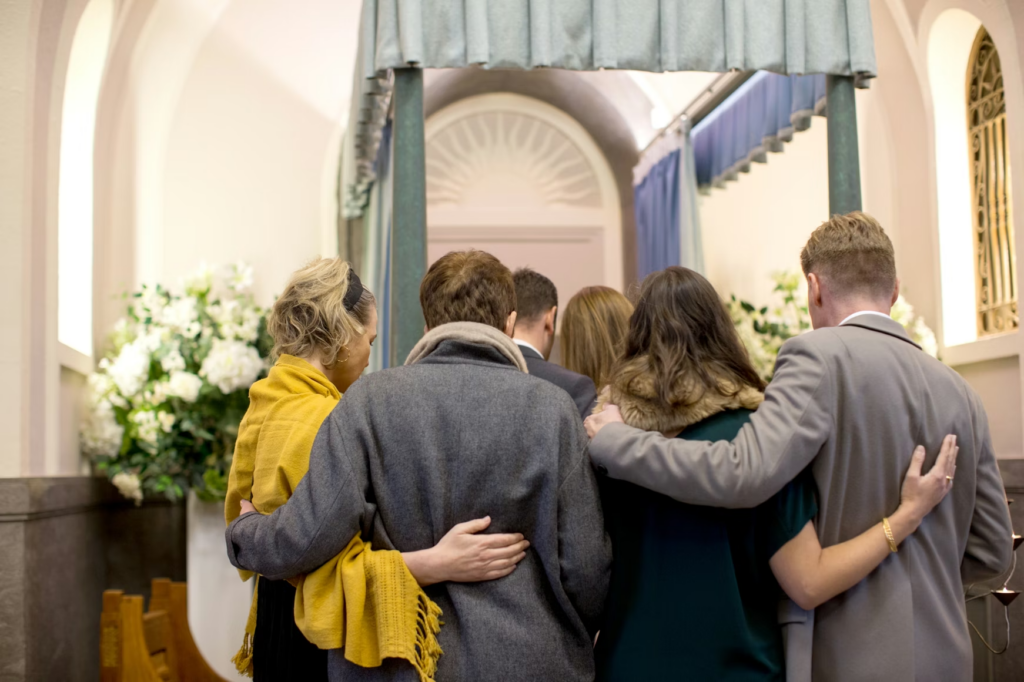
The Abyss of Debt
I had just graduated from high school, and instead of feeling excited or hopeful, I found myself stuck in a terrifying liminal space that felt like drowning. I was eighteen, an orphan twice over, and I had nothing.
I stopped eating properly. I stopped sleeping. I wandered the empty house, touching his things—his reading glasses on the side table, his old coffee mug in the sink with the ring of stain at the bottom.
Then the bills started arriving—water, electricity, property tax, funeral costs. Envelopes piled up on the kitchen table like snowdrifts. Red ink. Final Notice. Past Due.
I didn’t know what to do with them.
Grandpa had left me the house, but how would I afford to keep it? The taxes alone were more than I had in my savings account from my part-time job at the grocery store. The funeral home was calling every day, asking for payment for the simple pine casket I had chosen because it was the cheapest option.
I sat on the floor of the living room, surrounded by paper, and realized I was going to lose the only home I had ever known.
I’d have to get a job immediately, maybe two. College was out of the question. I’d have to sell the house just to buy myself a few months of sheer survival before figuring out my next move. I felt like I had failed him. I felt like I had failed myself.
Then, two weeks after the funeral, I got a call from an unknown number.
I almost didn’t answer. I thought it was a bill collector. I had developed a flinch every time the phone rang.
“Hello?”
A woman’s voice came through the speaker, professional and crisp, but with a hint of warmth I wasn’t expecting. “My name is Ms. Reynolds. I’m from First National Bank, and I’m calling regarding your late grandfather, Arthur Brooks.”
A bank. Those words I’d hated so much, “we can’t afford that,” came rushing back, but with a terrible new twist: he was too proud to ask for help, and now I would be held responsible for some massive, unsettled debt he had hidden from me. He had probably taken out loans to pay for his medicine. Or maybe a reverse mortgage I didn’t know about.
“Yes?” I said, my voice trembling. “Look, I know there are outstanding debts. I’m trying to sell the furniture. I just need time.”
“Ms. Brooks, please listen. Your grandfather wasn’t who you think he was. We need to talk.”
The floor seemed to drop out from under me. “What do you mean, he wasn’t who I think he was? Was he in trouble? Did he owe someone money? Is the house in foreclosure?”
“We can’t discuss the details over the phone, Ms. Lila. It’s a sensitive matter involving a trust. Can you make it to the downtown branch this afternoon?”
“Yes, I’ll be there.”
I hung up, my hands shaking. Your grandfather wasn’t who you think he was. What did that mean? Was he a criminal? A gambler? Had he stolen money?
I put on my best dress—the black one I wore to the funeral—and took the bus downtown. I counted the change in my purse to make sure I had enough for the return fare.
The Meeting in the Glass Office
When I arrived at the bank, the lobby was cool and quiet. It smelled of money—crisp paper and sanitizer. Ms. Reynolds was waiting for me. She looked kind, a woman in her fifties with glasses on a chain, which somehow made me more nervous.
She led me into a small, sterile office with glass walls.
“Thank you for coming in, Lila,” Ms. Reynolds said, folding her hands neatly on the desk. “I know this is a difficult time for you. Arthur spoke of you often.”
“Just tell me how much he owed,” I blurted out, unable to hold it in. “I’ll figure out a payment plan, I promise. I can sell the house if I have to. I just don’t want to lose his good name.”
Ms. Reynolds blinked, looking genuinely surprised. She reached out and touched my hand. “He didn’t owe anything, dear. Quite the contrary. Your grandfather was one of the most dedicated savers I’ve ever had the pleasure of working with. He was… intense about it.”
“I don’t understand. We never had money. We struggled to pay the heating bill. I wore thrift store clothes. We ate oatmeal for dinner three times a week.”
She leaned forward, and what she told me next made me realize Grandpa had been lying to me for my whole life. But not the kind of lie I expected.
“Lila, your grandfather came in here eighteen years ago, right after he took custody of you. He set up a very specific, restricted education trust in your name. He deposited his pension checks. He deposited the money he made doing odd jobs on weekends. He invested aggressively. He made deposits into that account every month. Religiously. He never missed a single one, even when the market crashed.”
The truth hit me like a train.
Grandpa hadn’t been poor; he had been intentionally, methodically, brutally frugal. Every time he said, “We can’t afford that, kiddo,” he was really saying, “I can’t afford that right now because I’m building you a dream.” Every refused toy, every skipped meal out, every patch on his old jeans, every moment of my resentment was a deposit in my future.
He had lived in poverty so I wouldn’t have to.
Then Ms. Reynolds held out a thick cream envelope to me.
“He insisted I give you this letter when you came in. It was written several months ago, when he knew he wasn’t getting better. He made me promise not to give it to you until the trust was activated.”
I picked up the envelope. My name was written on the front in his shaky, familiar handwriting. My fingers trembled as I unfolded the single sheet of paper inside.
My dearest Lila,
If you are reading this, it means I can’t walk you to campus myself, and that breaks my old heart. I’m so sorry, kiddo. I wanted to be there to see you in the cap and gown.
I know I said “no” a lot, didn’t I? I know you were angry sometimes. I saw the way you looked at your friends’ new clothes. I hated doing that. I hated seeing you go without the things your friends had. It broke me every time I had to deny you.
But I had to make sure you got to live your dream of saving all those children, just like you told me you wanted to when you were ten. Social work degrees aren’t free, and the pay isn’t high. I wanted you to start your life without the weight of debt. I wanted you to have a safety net I never had.
This house is yours, free and clear. The bills are paid for a while. And the trust is more than enough for your tuition, books, and a nice, new phone, too! Get the one with the good camera. Take pictures of everything.
I’m so proud of you, my girl. You saved me just as much as I saved you. I’m still with you, you know. Always.
All my love, Grandpa.
I broke down right there in the office. I cried for the jeans I never got, and for the love that was behind every “no.” I cried for the man who sacrificed his own comfort for twelve years so I wouldn’t have to struggle for the rest of my life. I cried for the misunderstanding, for the anger I had held onto.
When I finally lifted my head, my eyes were swollen, but for the first time since Grandpa died, I didn’t feel like I was drowning. I felt buoyant.
“How much is in the trust?” I asked Ms. Reynolds, my voice thick.
She tapped a few keys on her computer and turned the screen toward me.
“Lila, he made sure you are completely taken care of. Full tuition, room, board, and a generous living allowance for four years at any state university. Plus a nest egg of two hundred thousand dollars for after graduation.”
I stared at the numbers. It wasn’t just money. It was freedom.

The Transformation
I spent the next week researching schools. I applied to the best social work program in the state.
I was accepted two days later.
But the story didn’t end there. I had to learn how to live in this new reality.
I went to the mall. I walked into the store with the expensive jeans. I picked up a pair. I looked at the price tag. I could afford them now. I could buy ten pairs.
But I put them back.
I realized I didn’t want them anymore. I bought a sturdy pair of work pants and a good winter coat instead. I realized his frugality had taught me something valuable—the difference between what I wanted and what I needed.
I hired a contractor to fix the roof of the house. I paid off the funeral home. I put a headstone on his grave that read: Arthur Brooks. He gave everything.
College and the Imposter
College was a culture shock. I was surrounded by kids who had never worried about an electric bill. They complained about the cafeteria food; I thought it was a feast. They skipped class; I sat in the front row of every lecture, taking notes until my hand cramped.
I felt like an imposter. I felt like I had cheated the system.
One night, during my sophomore year, I was in the library studying for a sociology exam. A girl named Sarah sat down next to me. She was crying.
“What’s wrong?” I asked.
“I can’t register for next semester,” she sobbed. “My financial aid fell through. My dad lost his job. I have to drop out.”
I looked at her. I saw myself. I saw the panic I had lived with for years.
I remembered Grandpa’s letter. You saved me just as much as I saved you.
I didn’t pay her tuition—I wasn’t rich enough for that—but I took her to the financial aid office. I helped her fill out the emergency grant forms. I showed her how to apply for scholarships I had found. I used the knowledge of bureaucracy I had learned caring for Grandpa to fight for her.
She stayed in school.
That was the moment I knew I was in the right field.
The First Case
Four years later, I was a newly minted social worker. My first case was a six-year-old boy named Leo.
His parents had been arrested. He was sitting in the police station, clutching a plastic dinosaur, looking terrified. He was going into emergency foster care.
I walked in. I sat down on the floor next to him.
“Hi, Leo,” I said. “I’m Lila.”
He didn’t look at me. “I want to go home.”
“I know,” I said. “I know it’s scary.”
I reached into my bag. I pulled out a sandwich, cut into triangles.
“Are you hungry?”
He looked at the sandwich. He took it.
“My grandpa used to cut them like that,” I told him. “He said triangles taste better.”
Leo looked at me. “Where is he?”
“He’s in heaven,” I said. “But he taught me how to take care of people.”
I stayed with Leo until the foster family arrived. I made sure he had his dinosaur. I made sure he knew he wasn’t garbage.
As I watched him drive away, I felt a hand on my shoulder. It wasn’t real, but I felt it. A warm, rough hand.
The Secret in the Attic
Five years after graduation, I decided to renovate the old house. It was time. I was getting married to a man named David, a teacher who loved the old porch swing as much as I did.
We were clearing out the attic, moving boxes of Grandpa’s old things.
I found a loose floorboard in the back of the closet. The one he had tried to tell me about the night he got sick.
I pried it open.
Inside was a metal box.
I opened it. It wasn’t money. It was a journal.
It was Grandpa’s journal. He had kept it for the twelve years he raised me.
I sat on the dusty floor and opened it.
June 12th: Lila came home today. She’s so small. She looks just like her mother. I’m scared I won’t be enough. I have $400 in the bank. I need to find more work.
August 4th: She wanted the sparkly shoes. I had to say no. The roof is leaking. It broke my heart to see her face fall. I put $50 in the trust today. It’s for her. It’s all for her.
December 25th: Christmas. I got her the art set she wanted. I skipped my heart medication this month to pay for it. Don’t tell her.
I read through the years. I read his struggles, his fears, his secret joys. I read about the extra shifts he worked as a night watchman that I never knew about—he told me he was playing cards with friends. I read about the hunger pangs he ignored so I could have seconds.
The final entry was dated two days before he died.
Lila is going to be okay. She’s strong. She’s angry at me right now, but that’s good. Anger is fuel. She’ll use it to change the world. I’m tired, but I’m happy. I did my job. I kept her safe.
I closed the book. Tears streamed down my face, but they were happy tears.
David sat down next to me. “What is it?”
“He loved me,” I said. “He loved me so much he starved for me.”
“He sounds like a great man.”
“He was.”
That same evening, I went out onto the porch. The sun was setting, painting the sky in shades of purple and gold, just like the night I found out about the trust.
I looked up at the first stars appearing and whispered the vow I had made to him years ago, now fulfilled.
“I did it, Grandpa.” I didn’t even try to wipe away the tears that slid down my face. “I’m saving them. I’m a social worker. I have a good life. I’m happy.”
The wind rustled the elm tree he had planted when I was seven.
“You were my hero right up until the end,” I whispered. “You got me there. You truly did.”
The lie of scarcity had been the biggest act of love I had ever known. And I was living a life worthy of that sacrifice.
I went back inside, to the warmth, to the light, to the future he had bought for me, one dollar at a time.
Let us know what you think about this story on the Facebook video! If this story touched your heart, please share it with friends and family.
