
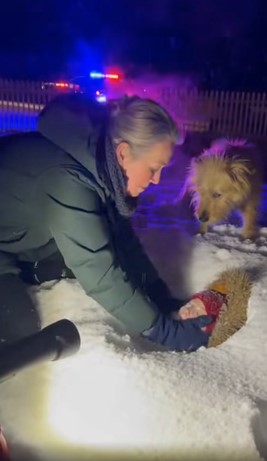
Chapter 1: The White Room
The cold in Minnesota doesn’t just hurt; it steals.
It steals your breath first, sucking the air right out of your lungs before you can even gasp. Then it steals the feeling in your fingertips, turning them from pink to red to a waxy, dead white. Finally, it tries to steal your mind. It makes you sleepy. It tells you that closing your eyes is a good idea.
I knew all of this because my science teacher, Mr. Henderson, had done a whole unit on survival last week.
“Hypothermia is a silent killer,” he had said, pacing the front of the classroom. “You don’t shiver at the end. You just stop.”
I was shivering now. Violent, racking shakes that rattled my bones.
I was crouched in the corner of the patio, wedged between the gas grill and the cedar siding of the house. The grill cover was stiff with ice, crinkling every time I touched it. It offered zero protection from the wind that was whipping around the corner of the house like a lash.
“Mark!” I screamed again, but my voice was thin. Weak.
The sliding glass door was a sheet of black ice reflecting the storm. The blinds were drawn tight. Inside, I knew the television was on. I knew the heater was humming, pushing air heated to exactly seventy-two degrees through the vents.
I looked down at my socks. They were soaked through. My toes were curling in on themselves, trying to find heat that wasn’t there.
I was ten years old. My name is Leo. And I was pretty sure I was going to die in my stepfather’s backyard because I forgot to take my shoes off.
“Leo,” a soft whine vibrated against my chest.
Barnaby.
The dog was the only reason I wasn’t screaming in panic yet. He was a Golden Retriever mix, maybe some Lab in there, with a coat the color of burnt sugar. He was twelve years old—seventy-something in dog years. His hips were bad. He usually groaned when he stood up.
But tonight, he was a statue.
He had positioned himself perfectly. He sat with his back to the wind, creating a living, breathing shield for me. He nudged my chin with his wet nose, forcing me to look at him instead of the dark windows.
Whuff.
He exhaled, and I felt the hot, damp air hit my frozen cheek. It was the best thing I had ever felt.
“I’m sorry, Barnaby,” I whispered, my teeth chattering. “He… he hates me. Not you.”
My mom had married Mark two years ago. At first, it seemed okay. Mark had money. He had a big house in a subdivision called “Oakhaven,” where every lawn was manicured and every car was washed weekly. My mom, Sarah, was a nurse. She was always tired, always worried about bills. When Mark came along with his steak dinners and his promises of “taking care of us,” she cried with relief.
She didn’t see the other side.
She didn’t see how Mark checked the odometer on her car to make sure she only went to work and back. She didn’t see how he rearranged the pantry and punished me if I put a cereal box back facing the wrong way.
She didn’t see him grab my arm when she wasn’t looking, squeezing until his fingers left bruises that looked like shadows.
“Boys need discipline, Sarah,” he would say, flashing that perfect, salesman smile. “Leo is too soft. We need to toughen him up for the real world.”
Is this what he meant? Was this the real world?
The wind howled, a high-pitched shriek that sounded like a woman screaming. Snow was piling up on my jeans. I tried to brush it off, but my hands were clumsy. They felt like they belonged to someone else.
“We have to move,” I told Barnaby.
Mr. Henderson had said that. Keep moving to generate heat.
I tried to stand up.
Pain shot through my feet—sharp, stinging needles. I stumbled. The patio was slick with ice. I slipped, my knees hitting the concrete hard.
Barnaby was there instantly, bracing his shoulder against my side to keep me from falling completely. He licked the tears that were freezing on my face.
I couldn’t walk. I had nowhere to go.
Our backyard was fenced in with a six-foot privacy fence. Mark had installed it last summer so he didn’t have to look at the neighbors. The gate was padlocked. I knew because I had checked it yesterday when I took the trash out. Mark kept the key on his ring.
We were trapped.
The snow was coming down so fast now I couldn’t even see the fence line, just twenty feet away. It was a white curtain, thick and suffocating.
I crawled back to the corner, dragging my numb legs.
“Mom will be home soon,” I whispered to Barnaby, burying my face in the fur of his neck. “She gets off at midnight. She’ll see. She’ll save us.”
I tried to look at my watch—a cheap digital one Mom had bought me for my birthday.
9:15 PM.
Mom wouldn’t be home for almost three hours.
And in this storm, with the roads the way they were, maybe she wouldn’t make it home at all tonight. Maybe she was sleeping at the hospital.
Terror, cold and sharp, pierced through my chest. If Mom didn’t come home… Mark would leave us out here all night. He would say he “forgot.” Or he would say I ran away. He would have a story. Mark always had a story.
My eyes felt heavy. So heavy.
You don’t shiver at the end. You just stop.
My shivering was slowing down.
Barnaby sensed it. He shifted. He didn’t just sit next to me anymore. He climbed over my legs. He lay down across my lap and chest, his eighty pounds of weight pressing me into the wall. It was heavy, but it was heat.
He started to bark.
Not a playful bark. Not a “mailman is here” bark.
This was a rhythmic, desperate sound. WOOF. WOOF. WOOF.
He barked at the dark house. He barked at the wind. He barked at the sky.
“Shhh, Barnaby,” I mumbled, my speech slurring. “Mark will… Mark will get mad.”
Barnaby ignored me. He kept barking. He was calling for help in the only language he knew.
Inside the house, the lights in the living room went out.
Mark was going to bed.
He was going to sleep in his warm, king-sized bed with the down comforter, while his ten-year-old stepson froze to death ten feet away.
I closed my eyes. The darkness was better than the white. The white was too bright.
Just for a minute, I thought. I’ll just rest for a minute.
Barnaby’s barking became a distant rhythm, like a heartbeat. Thump. Thump. Thump.
Then, I stopped feeling the cold.
Chapter 2: The Watcher in the Window
Evelyn Gable lived at 404 Oak Creek Drive, exactly twenty feet and a privacy fence away from the hell that was unfolding next door.
At seventy-two years old, Evelyn didn’t sleep much. Her nights were usually spent in the company of a lukewarm cup of herbal tea and the glowing blue light of the television in her den. Tonight, the local news station was running a twenty-four-hour “Storm Watch” marathon. A weatherman with a flushed face and a parka was standing in downtown Minneapolis, shouting into a microphone about “historic accumulation” and “life-threatening wind chills.”
Evelyn adjusted her glasses and looked out her own sliding glass door.
Her backyard was gone. The weeping willow she had planted with her late husband, George, thirty years ago had vanished into a swirling vortex of white. The wind wasn’t just blowing; it was screaming. It sounded like a freight train derailing over and over again.
She took a sip of her tea. It had gone cold.
She set the mug down on a coaster—George hated water rings on the oak table, and old habits died hard—and muted the TV.
That’s when she heard it.
It was faint at first, a rhythmic disturbance in the chaotic symphony of the storm.
Woof.
Pause.
Woof.
Evelyn tilted her head, her silver hair catching the light of the lamp. She knew that bark. That was Barnaby.
She liked the dog more than she liked the people who owned him. The new husband, Mark, was a man who smiled too much with his teeth and never with his eyes. He drove a black Audi that he parked diagonally in the driveway, and he had once complained to the Homeowners Association because Evelyn’s hydrangeas were “encroaching” on his property line by two inches.
The mother, Sarah, was a sweet girl, but she looked like a ghost these days. Always rushing, always apologizing, always looking over her shoulder. And the boy, Leo… Evelyn’s heart ached for Leo. He was a quiet kid. He read books on the front stoop. He always waved.
Woof. Woof.
Evelyn frowned. She looked at the digital clock on the cable box.
9:45 PM.
“Why are you outside, Barnaby?” she whispered to the empty room.
Barnaby was an indoor dog. Everyone in the neighborhood knew that. He had arthritis. Last summer, Evelyn had watched Leo gently lift the dog’s hind legs to help him get into the car. A dog like that didn’t stay out in a blizzard. Not for this long.
The barking didn’t stop. It wasn’t the frantic yapping of a dog chasing a squirrel. It was monotonous. Persistent. Like a metronome ticking down time.
Woof.
Woof.
Something in Evelyn’s stomach tightened—a knot of instinct she hadn’t felt since her nursing days in the ER. It was the feeling that something was wrong, not just unfortunate, but wrong.
She stood up, her knees popping. She walked to the kitchen and picked up the landline phone. She dialed the number for 406 Oak Creek Drive. She had it written on the emergency list taped to the side of the fridge.
The line rang. And rang. And rang.
“Pick up,” she muttered.
No voicemail. Just ringing until it clicked off.
She dialed again. Still nothing.
Maybe the lines were down? No, she had a dial tone. Maybe they were asleep?
Who sleeps through a dog barking right outside their window?
Evelyn hung up the phone. She walked back to the sliding glass door and pressed her hand against the cold pane. She couldn’t see anything but the reflection of her own worried face and the swirling snow beyond.
But the barking had changed.
It was no longer a rhythm. It was a howl. A long, broken, mournful sound that cut through the wind and settled deep in her bones. It sounded like grief.
“George,” she whispered, looking at the empty recliner where her husband used to sit. “I have to go look.”
If George were here, he would tell her she was crazy. Evie, it’s ten below zero. Stay inside. It’s not your business.
But George wasn’t here. And that dog sounded like he was dying.
Evelyn went to the mudroom. She didn’t hurry—she couldn’t hurry anymore—but she moved with purpose. She pulled on her heavy Sorel boots, the ones she hadn’t worn since the blizzard of ’91. She put on her down coat, wrapped a wool scarf around her face twice, and pulled a thick knit hat over her ears. She grabbed her heavy-duty flashlight, the Maglite George used to keep under the car seat.
She opened her back door.
The wind hit her like a physical blow. It staggered her backward, nearly knocking the breath out of her. The cold was shocking, instant, and violent. It felt like walking into a wall of needles.
“Mercy,” she gasped into her scarf.
She almost turned back. Her hip was aching, and the snow was already drifting up to her shins. But then she heard it again, fainter now, swallowed by the wind.
Woof…
She stepped out.
The trek to the fence was the longest twenty feet of Evelyn’s life. The snow was heavy and wet, sucking at her boots with every step. The wind whipped ice crystals into her eyes, forcing her to squint until her vision was just a blur of gray and white.
She reached the wooden privacy fence that separated their yards. It was six feet tall. Too high to see over.
“Barnaby?” she shouted. Her voice sounded pathetic against the roar of the storm. “Leo?”
No answer. Just the wind.
She moved along the fence line toward the front, hoping to see through the gate. The snow was deeper here, a drift piling up against the wood. She used the flashlight as a cane, jamming it into the snow to steady herself.
She reached the gate. It was a wooden lattice style. She pressed her face against the slats, shining the beam of light into her neighbor’s backyard.
At first, she saw nothing. The beam of light just illuminated falling snow, millions of white flakes creating a dizzying tunnel.
Then, the beam hit the patio doors of the neighbor’s house.
The house was dark. Pitch black. The blinds were drawn tight.
Evelyn swept the light down, toward the ground.
She saw a mound.
It looked like a snowdrift, but it was the wrong color. It was tan. And it was moving.
“Barnaby?” she called out, her heart hammering against her ribs.
The mound shifted. A head lifted up. It was the dog. He was covered in a layer of ice. His eyes reflected the flashlight beam—two glowing green orbs in the darkness. He didn’t bark this time. He just looked at her, then looked down at what he was lying on.
Evelyn squinted, wiping the snow from her eyelashes.
Barnaby was lying on something blue. A lump of denim. And… a hand. A small, pale hand resting on the concrete.
The air left Evelyn’s lungs.
“Oh my God,” she choked out. “Leo.”
She rattled the gate. Locked. A heavy padlock held the latch shut.
“Mark!” she screamed. She didn’t care about being polite anymore. She screamed with the full force of her lungs. “MARK! OPEN THE DOOR!”
The house remained silent. The wind laughed at her.
She looked back at the boy. He wasn’t moving. The dog was nudging his face, licking his cheek, but the boy was still.
Evelyn knew what hypothermia looked like. She had been a nurse for forty years. She knew that when the shivering stops, the clock is ticking on the last few minutes of life.
She couldn’t climb the fence. She couldn’t break the padlock.
She turned and looked at her own house, warm and safe. Then she looked at the boy.
She didn’t go back for the phone. There wasn’t time for 911 to navigate the unplowed roads.
Evelyn Gable, seventy-two years old, with an artificial hip and cataracts in her left eye, did the only thing she could do.
She walked to the section of the fence where the wood was rotting near the bottom—the spot Mark had complained about last year. She dropped to her knees in the snow.
She began to dig.
She used her gloved hands like shovels, tearing at the frozen earth and the snow beneath the fence boards. Her breathing came in ragged gasps. Her chest burned.
“Hang on, baby,” she whispered, tears freezing instantly on her cheeks. “Hang on, Leo. Evelyn is coming.”
She dug until her fingers hit the bottom of the fence board. She grabbed the wood with both hands and pulled. It held fast.
She groaned, a guttural sound of frustration. She grabbed the flashlight and smashed it against the wood. Once. Twice. The wood splintered.
She kicked it. She kicked it with her heavy boot, sending a jolt of pain up her bad leg that made her see stars.
Crack.
The board gave way.
It wasn’t a big hole. Maybe ten inches wide. But it was enough to see through clearly now.
She shined the light directly on them.
Leo was curled in a fetal position against the brick wall of the house. His skin was the color of blue skim milk. His eyes were closed. His eyelashes were frosted white. He looked like a porcelain doll left out in the rain.
Barnaby was draped over him, his body shaking violently now. The dog looked at Evelyn through the hole in the fence. He didn’t move off the boy. He just whined, a high, pleading sound.
“I can’t get to you,” Evelyn sobbed. “I can’t get in.”
She looked at the glass patio door of Mark’s house. It was right there, just five feet from where Leo lay. Behind that glass was heat. Life.
She needed to break that glass.
But she was on the wrong side of the fence.
She scrambled to her feet. She couldn’t get in, but she could wake the monster up.
She grabbed a decorative garden stone from her flowerbed—a heavy piece of granite. She walked to the spot in the fence nearest to the house’s master bedroom window. She knew which one it was.
She hurled the stone over the fence.
It hit the siding of the house with a loud THUD.
“WAKE UP!” she screamed.
Nothing. The wind drowned it out.
She found another stone. Heavier this time. She threw it with everything she had.
It sailed over the fence. She heard a crash.
The sound of shattering glass.
She had hit a window.
Evelyn waited, panting, her heart feeling like it was going to explode in her chest.
A light flickered on inside the house.
Finally.
“GET UP!” she shrieked. “GET UP YOU SON OF A BITCH!”
She ran back to the hole she had kicked in the fence. She peered through.
Inside the patio doors, the blinds moved.
Mark appeared.
He was wearing flannel pajama bottoms and a t-shirt. He looked confused, angry. He was rubbing his eyes. He slid the patio door open, looking around wildly.
“Who the hell…” he started, stepping out into the cold, the wind instantly whipping his hair.
Then he looked down.
He froze.
He looked at his feet. At the dog. At the boy curled up in the snow, half-buried.
Evelyn shined her flashlight right into Mark’s face, blinding him.
“You look at him!” she screamed from her side of the fence. “You look at what you did!”
Mark stumbled back, shielding his eyes from the beam. He looked terrifyingly sober now. The arrogance was gone, replaced by a dawn of horror. He looked at Leo.
“Leo?” Mark’s voice was small.
He dropped to his knees. He reached out and touched Leo’s arm.
“Leo?”
Leo didn’t move. He didn’t flinch. He was stiff.
Barnaby growled—a low, dangerous rumble from deep in his chest. He snapped at Mark’s hand, his teeth clicking inches from Mark’s fingers. Even freezing to death, the dog was holding the line.
“Don’t you touch him!” Evelyn yelled. “Don’t you dare touch him unless you’re bringing him inside!”
Mark looked toward the fence, squinting into the darkness where Evelyn’s voice was coming from.
“Mrs. Gable?”
“Get him inside, Mark! Or so help me God, I will burn your life to the ground!”
Mark scrambled. He didn’t argue. Panic had finally set in. He shoved Barnaby aside—gently this time—and scooped Leo up in his arms.
Leo’s head lolled back. His arms dangled limply. He looked like a ragdoll.
“He’s cold,” Mark stammered, his voice rising in pitch. “He’s… he’s really cold. He’s not waking up.”
“Bring him inside! Now!”
Mark turned and ran into the house, carrying the boy. Barnaby scrambled up on his frozen legs and followed them in, limping heavily, leaving a trail of paw prints in the snow that were quickly filling up.
The sliding door was left wide open.
Evelyn slumped against the fence. The adrenaline crashed out of her system, leaving her shaking and nauseous. She dropped the flashlight into the snow.
She was alone in the dark again.
But she wasn’t done.
She pulled herself up. She trudged back to her house, fighting the wind that seemed determined to knock her down. She got inside, her fingers fumbling with the lock.
She didn’t take off her boots. She didn’t take off her coat.
She walked straight to the phone and dialed 9-1-1.
“911, what is your emergency?”
“I need an ambulance at 406 Oak Creek Drive,” Evelyn said, her voice turning to steel. “And send the police. I want to report a murder attempt.”
Chapter 3: The Coldest Lie
The silence of the blizzard was replaced by a cacophony that tore the neighborhood apart.
It wasn’t just the wind anymore. It was the wail of sirens—a piercing, hysterical sound that bounced off the frozen houses of Oakhaven subdivision. Red and blue lights strobed against the falling snow, turning the white world into a violent, pulsing bruise.
Inside the house, the perfect temperature of seventy-two degrees felt like an oven.
Mark paced the living room floor, his hands shaking. He had laid Leo on the beige sectional sofa. The boy was so still. Too still. Mark had thrown a blanket over him—an expensive cashmere throw that Sarah loved—but he was afraid to do anything else.
“Leo?” Mark whispered. “Come on, kid. Wake up. Don’t do this to me.”
Don’t do this to me.
Even now, with a ten-year-old potentially dying on his couch, Mark was the protagonist of his own movie. He wasn’t thinking about Leo’s frozen lungs; he was thinking about the questions. The police. The neighbors. Sarah.
How do I explain this?
Barnaby, the dog, was lying on the floor next to the couch. The animal was shivering violently, his wet fur matting the expensive rug. He let out a low, painful whimper, but he refused to close his eyes. He watched Mark. His gaze wasn’t soft anymore. It was predatory.
The front door burst open.
It wasn’t locked. Mark had forgotten to lock it after dragging Leo inside.
Two paramedics rushed in, bringing a blast of arctic air with them. They were followed by a police officer, his hand resting instinctively on his belt.
“Where is he?” the lead paramedic, a woman with snow melting in her hair, demanded.
Mark pointed to the couch, his voice cracking. “He… I found him outside. He must have sleepwalked. I don’t know…”
The paramedics ignored him. They swarmed the couch.
“Male, approx ten years old. Skin is cyanotic. Unresponsive,” the woman barked into her radio. She placed a hand on Leo’s chest, then his neck. “Pulse is thready. Bradycardic. We need to move. Now.”
They began cutting.
Scissors sliced through Leo’s wet t-shirt and stiff jeans. The sound of fabric tearing was loud in the room.
“Core temp is likely critical,” the second paramedic said, his face grim. “Watch for afterdrop. Don’t rub the extremities. Get the thermal blanket.”
Mark backed away, hitting the wall. “Is he… is he okay?”
The police officer, a tall man with a badge that read Officer Miller, stepped into Mark’s space. He smelled like cold air and stale coffee.
“Sir, I need you to step into the kitchen,” Miller said. It wasn’t a request.
“I need to be with my son,” Mark lied.
“Step into the kitchen. Now.”
As Mark was herded away, the front door opened again.
This time, it was Sarah.
She was wearing her blue scrubs, her hospital ID still clipped to her chest. She had abandoned her car in the middle of the street, the driver’s side door left wide open. She had run through the snow in her nursing clogs, slipping and scrambling, drawn by the terrifying beacon of the ambulance lights in her own driveway.
She stopped in the entryway, breathless, her hair wild.
She saw the mud on the floor. She saw the snow melting on the rug. She saw the paramedics huddled over the small form on the couch.
“Leo?”
Her voice was a ghost.
The paramedic looked up, her eyes sympathetic but urgent. “Ma’am, are you the mother?”
“Leo!” Sarah screamed. It was a primal sound, a sound that made the police officer flinch. She lunged forward, falling to her knees beside the couch.
She reached for his hand, but the paramedic caught her wrist. “Don’t touch his skin yet, ma’am. He’s severely hypothermic. We’re trying to stabilize his heart rhythm before we move him.”
Sarah looked at her son. He looked like he was made of blue wax. His lips were purple.
“What happened?” Sarah gasped, turning her head wildly. Her eyes found Mark in the kitchen doorway. “Mark? What happened?”
Mark stepped forward, his face a mask of tragic concern. He was good at this. He was a salesman. He knew how to close a deal, even when the product was a lie.
“Sarah, baby,” he said, his voice trembling just the right amount. “I don’t know. I was watching TV… I must have dozed off. I woke up and the door was open. He… he must have gone outside. Maybe he saw something? Maybe the dog got out and he chased him?”
He gestured to Barnaby, who was still shivering on the floor.
“I ran out,” Mark continued, tears actually welling in his eyes. “I found him in the snow. I brought him in as fast as I could.”
Sarah looked at Mark, then at Leo. Confusion warred with panic in her eyes. “He went out? In a blizzard? Without a coat?”
“You know how he is,” Mark said softly, stepping closer to put a hand on her shoulder. “He’s been… acting out lately. The sleepwalking?”
Sarah shook her head. “He doesn’t sleepwalk, Mark.”
“We’re moving!” the paramedic shouted. “We’re losing his rhythm. V-fib! Get the paddles ready just in case, but we need to get to the ER. Now!”
They lifted Leo onto the stretcher. His small arm flopped over the side, lifeless.
“I’m coming,” Sarah cried, scrambling up.
“Ma’am, you can ride in the front,” the driver said.
As they rushed Leo out the door into the swirling white chaos of the night, Mark grabbed his coat. “I’ll follow in the car,” he called out.
“Hold on, sir,” Officer Miller said, blocking the doorway. His face was unreadable. “We have a few questions before you leave.”
“My son is dying!” Mark shouted, indignation rising. “You can’t keep me here!”
“Stepdad,” a voice came from the open door.
Everyone turned.
Evelyn Gable stood there.
She looked like an avenging spirit from an old folktale. She was covered in snow from head to toe. Her face was red from the wind, her silver hair plastered to her forehead. She was leaning heavily on a cane she didn’t usually use, breathing hard.
But her eyes were burning.
She pointed a gloved finger at Mark. The finger trembled, not from cold, but from rage.
“He is the stepfather,” Evelyn rasped. “And he is a liar.”
Mark’s face went pale. “Evelyn? Go home. You’re confused.”
“I am not confused,” Evelyn said, stepping into the house. She didn’t care about the mud. She walked right up to the police officer.
“He didn’t find the boy,” Evelyn said, her voice gaining strength. “He locked him out.”
The room went deadly silent. The only sound was the beep of the heart monitor fading as the ambulance crew loaded Leo into the back outside.
Mark laughed—a nervous, jagged sound. “Officer, she’s senile. She’s seventy-two years old. She hates me because of a property line dispute.”
“I saw you,” Evelyn said, her voice dropping to a whisper that carried more weight than a scream. “I heard the dog barking for an hour. I went to the fence. I saw the boy curled up in the snow. I saw the padlock on the gate.”
She turned to the officer. “Check the back gate. It’s padlocked from the outside. The boy couldn’t have gotten out of the yard if he wanted to. And he couldn’t get back in because that man,” she pointed at Mark again, “locked the glass door and closed the blinds.”
Officer Miller looked at Mark. The sympathy was gone. His hand moved closer to his radio.
“That’s absurd,” Mark stammered. “Why would I lock my kid out in a blizzard?”
“Because you’re a monster,” Evelyn spat. “And because he walked on your carpet.”
She reached into her pocket and pulled out a piece of glass. It was a shard from the window she had broken.
“I had to throw a rock through his bedroom window to wake him up,” Evelyn said. “If I hadn’t… that boy would be dead right now.”
Officer Miller turned to his partner, who had just entered. “Check the back gate. Check the master bedroom window for damage.”
“Wait,” Mark said, backing up toward the kitchen island. “You’re listening to a crazy old lady? Sarah! Sarah, tell them!”
But Sarah wasn’t there. She was in the ambulance, speeding away to save her son. Mark was alone.
The radio on Officer Miller’s shoulder crackled. “Dispatch, back gate is secured with a heavy-duty padlock. Master bedroom window is shattered. Rock found on the floor inside.”
Officer Miller looked at Mark. The look was cold. Professional. Dangerous.
“Sir,” Miller said, unclipping his handcuffs. “Turn around and place your hands behind your back.”
“You’re making a mistake!” Mark yelled. “I’m a respected member of this community! I have a lawyer!”
“You’ll need him,” Miller said, spinning Mark around and slamming him against the wall—harder than necessary. Click. Click.
As they dragged Mark out of his perfect house, past the white rug stained with mud and melting snow, Evelyn stood by the door.
She watched him go.
Then, she looked down.
Barnaby was still there. The dog had pulled himself up. He was swaying on his feet, weak and freezing, but he was standing. He looked at the door where Leo had been taken out.
Evelyn knelt down, ignoring the pain in her hip. She wrapped her arms around the wet, shivering dog.
“He’s gone, Barnaby,” she whispered into his fur. “The bad man is gone.”
Barnaby let out a long sigh and leaned his heavy head against her chest.
But the nightmare wasn’t over.
Because five miles away, at Hennepin County Medical Center, a monitor was flatlining.
Chapter 4: The Warmth of a Beast
The beep on the monitor was the loudest sound in the world.
Beep… Beep… Beep…
It wasn’t a flatline anymore. It was a rhythm. A fragile, stumbling rhythm, like a bird trying to fly with a broken wing, but it was there.
Sarah sat in the hard plastic chair of the ICU waiting room at Hennepin County Medical Center. Her scrubs were stained with mud from when she had fallen in the driveway. She hadn’t washed her hands. She stared at them—her palms were gray, shaking.
“Mrs. Davis?”
Sarah looked up. A doctor in a white coat stood there. He looked exhausted. His name badge read Dr. Aris.
“Is he…” Sarah couldn’t finish the sentence.
“He’s stable,” Dr. Aris said gently, sitting down opposite her. “We managed to get his core temperature back up to ninety-five degrees. It was touch and go. His heart stopped twice in the ambulance.”
Sarah let out a sob that sounded like something tearing inside her chest. She covered her mouth.
“The frostbite on his toes and fingers is severe,” the doctor continued, his voice professional but kind. “We’re treating it. It’s too early to say if there will be permanent tissue loss, but he’s young. Kids are resilient.”
He paused, looking at his clipboard, then back at Sarah.
“I need to tell you something, Sarah. Something about how we found him.”
“I know,” Sarah whispered. “My husband… he said Leo wandered out.”
Dr. Aris shook his head slowly. “I’m not talking about that. That’s for the police. I’m talking about the physics of his survival.”
He leaned in. “Based on the ambient temperature and the wind chill, Leo should have been dead an hour before you found him. His body mass is too small to generate heat in those conditions.”
Sarah stared at him. “Then how?”
“The paramedics said he was covered in dog hair,” Dr. Aris said. “And his chest—the area where his heart and lungs are—was significantly warmer than his extremities. Someone, or something, was acting as a heat source. Laying right on top of him. Shielding his core.”
Sarah closed her eyes. She saw Barnaby. Old, arthritic Barnaby, who groaned when he had to climb the stairs. Barnaby, who Mark called a “useless waste of dog food.”
“The dog saved him,” Dr. Aris said softly. “Kept his heart warm enough to keep beating. Literally.”
Three hours later, Officer Miller came back.
He held a styrofoam cup of coffee. He looked at Sarah with a mixture of pity and judgment. It was a look mothers feared more than anything—the look that said you failed to protect your young.
“We’ve booked your husband—sorry, your stepfather to the boy—at the precinct,” Miller said, remaining standing. “Attempted murder. Child endangerment. Cruelty to animals. The District Attorney is already drafting the charges. He’s not getting bail.”
Sarah nodded. She didn’t feel relief yet. She just felt a hollow, aching void where her life used to be.
“He told us everything,” Miller said, his voice hardening. “Once we showed him the photos of the boy in the ICU, he cracked. Said he was trying to ‘teach him a lesson’ about respect. Said he didn’t think it was that cold.”
“He knew,” Sarah said, her voice trembling. “He checks the weather app every morning to see if he needs to pre-heat his Audi. He knew.”
“We also have the witness statement from Mrs. Gable next door. She’s the one who broke the window.” Miller paused. “She’s in the lobby, by the way. She refuses to leave until she sees the boy.”
Sarah stood up. Her legs felt like lead. “And the dog? Barnaby?”
Miller’s face softened. “Animal Control took him initially, but Mrs. Gable threw a fit. Showed them her vet records, said she’d foster him. He’s at the emergency vet clinic down the street. Treatment for hypothermia and exhaustion. He’s going to make it.”
Sarah began to cry again. Not the hysterical screaming of earlier, but the quiet, steady weeping of a woman waking up from a long, bad dream.
“I let him do it,” she whispered. “I let him hurt my son. I saw the bruises on Leo’s arm last month. Mark said Leo fell off his bike. I believed him. I wanted to believe him because… because I didn’t want to be alone again.”
Officer Miller didn’t offer false comfort. He just nodded. “You’re not alone now, Ma’am. You’ve got a hell of a neighbor. And a hell of a dog.”
Leo woke up on the second day.
The storm had passed. The window of his hospital room showed a brilliant, blindingly white Minneapolis morning. The sky was that crisp, impossible blue that only happens after a blizzard.
Sarah was asleep in the chair next to his bed, her hand resting on the rail.
Leo blinked. His throat felt like he had swallowed broken glass. His fingers were wrapped in thick white bandages. He couldn’t feel his toes.
“Mom?” he croaked.
Sarah shot awake. She looked at him, her eyes wide, red-rimmed.
“Leo! Oh, baby. You’re awake.”
She hovered over him, afraid to hug him too tight, afraid to hurt him. She kissed his forehead, her tears falling onto his face.
“I’m sorry,” Leo whispered. The first words out of his mouth were an apology. “I’m sorry I walked on the rug.”
That sentence broke Sarah. It shattered whatever was left of the denial she had been clinging to.
She gripped the bed rail, her knuckles white. “No. No, Leo. You listen to me. You never apologize for that again. You hear me? Never.”
“Is Mark mad?” Leo asked, his eyes darting to the door.
“Mark is gone,” Sarah said, her voice fierce, a growl rising in her throat. “He is in jail. He is never, ever coming near you again. I promise you, Leo. I will kill him before I let him look at you again.”
Leo looked at her. He saw the fire in her eyes—a fire that had been extinguished for two years. He believed her.
“Where is Barnaby?” he asked.
Sarah smiled through her tears. “He’s okay. He’s a hero, Leo. He’s famous. The nurses are all talking about him.”
“He stayed,” Leo said softly, staring at the ceiling. “He was cold, but he stayed.”
It was a week before Leo was discharged.
He left the hospital in a wheelchair. His feet were healing, but walking was still painful. The doctors said he would keep all his toes, though they would always be sensitive to the cold.
Sarah pushed the wheelchair toward the sliding glass doors of the main entrance.
“We aren’t going back to the house,” Sarah said. “I’ve already rented a temporary apartment near the hospital. And I put the house on the market yesterday. I don’t care if we lose money on it. I’m never stepping foot in there again.”
“Okay,” Leo said. He didn’t care where they lived. As long as there were no white rugs.
The automatic doors slid open. The cold air hit Leo’s face, and he flinched. He shrank back into his coat.
“It’s okay,” Sarah said, rubbing his shoulder. “Look who’s here.”
Parked at the curb was an old, beat-up station wagon. Standing next to it was Evelyn Gable.
She looked smaller without her winter coat, just a fragile old woman in a cardigan and slacks. But she stood tall.
And sitting next to her, wearing a ridiculous blue dog sweater, was Barnaby.
The dog saw the wheelchair.
He didn’t run—his hips were too stiff, and he was still recovering. But his tail started to thump. Thump, thump, thump against the side of the car. He let out a sharp bark.
“Barnaby!” Leo yelled, struggling to sit up.
Sarah pushed the wheelchair faster.
Barnaby hobbled forward. He met them halfway on the sidewalk.
He didn’t jump up. He knew better. He simply buried his face in Leo’s lap. He pressed his snout into the blankets covering Leo’s legs, whining soft, high-pitched sounds of pure joy.
Leo wrapped his bandaged hands around the dog’s neck. He buried his face in the golden fur that smelled like vet shampoo and home.
“I got you,” Leo whispered, repeating the silent promise the dog had made to him in the snow. “I got you.”
Evelyn walked over. She reached out and patted Leo’s cheek with a wrinkled, trembling hand.
“You’re a tough kid, Leo,” she said, her voice raspy.
“Thank you, Mrs. Gable,” Sarah said, stepping forward to hug the older woman. Sarah held on tight, sobbing into Evelyn’s shoulder. “Thank you for saving him.”
Evelyn patted Sarah’s back awkwardly. “I didn’t save him, dear. I just made the phone call.”
She pointed to the dog, who was currently licking the tears off Leo’s face.
“Mark called him an animal,” Evelyn said, looking at the Golden Retriever with immense respect. “He said, ‘He’s just an animal, he doesn’t have feelings.’”
She shook her head, watching the boy and the dog, two survivors huddled together against the cold world.
“That man didn’t know a damn thing,” Evelyn said softly. “That dog has more humanity in one paw than Mark had in his whole life.”
Leo looked up, his hand resting on Barnaby’s head. The dog looked back, his brown eyes warm, ancient, and full of a love that didn’t ask for anything in return.
The snow was melting on the sidewalk. The sun was shining.
“Let’s go home, Barnaby,” Leo said.
And for the first time in a long time, he knew exactly what that word meant.
THE END.
