
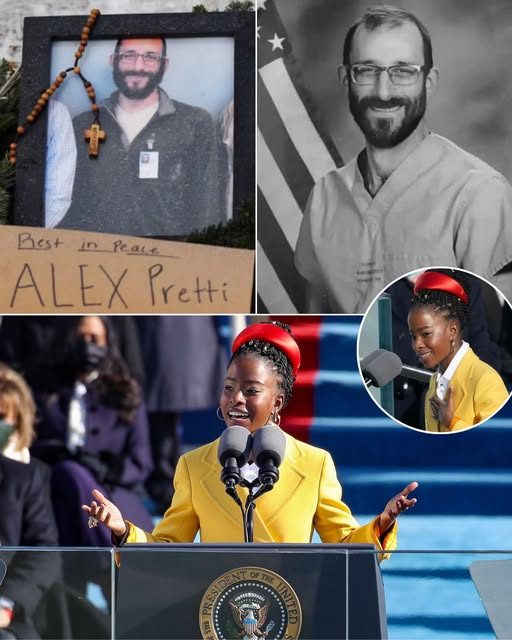
The poem hit the internet like a siren.
Not a speech. Not a slogan. A wound, written down.
Amanda Gorman has broken her silence on the fatal shooting of ICU nurse Alex Pretti, and the country is not ready for what she’s saying. Her words cut through politics and land where it hurts most: trust, mercy, betrayal, and what it means when the state shoots one of its own — in the back — on American soil.
Amanda Gorman’s “For Alex Jeffrey Pretti” arrives not as a calm reflection but as a reckoning. By turning to verse instead of punditry, she gives shape to a grief many are struggling to name: the horror of watching institutions meant to protect life become agents of irreversible harm. In stark, measured lines she calls it what many Minnesotans and protestors have been saying: not just brutality, but betrayal. Her poem doesn’t simply mourn Pretti; it interrogates the fracture his death reveals between communities and the power that polices them.
“We wake with / no words, just woe & wound,” she begins — a line that reverberates like an indictment. “Our own country shooting us in the back is not just brutality; it’s jarring betrayal; not enforcement but execution.” In weaving grief with outrage, Gorman frames Pretti’s death as part of a deeper rupture in the social contract: when the people tasked with safety become harbingers of fear.
As vigils, protests, and demands for an independent investigation intensify across the country, Gorman’s words offer neither easy catharsis nor tidy answers. Instead, she insists on the hard work of collective care: refusing to look away, insisting that empathy can be an act of resistance, and daring readers to imagine a country where accountability is not the enemy of safety. Her poem is not comfort — it is a confrontation with what we have witnessed on the streets of Minneapolis and what many communities fear could happen again.
In a moment thick with outrage and fear — as videos circulate, memorials grow, and the names of Pretti and Renee Good are chanted in protests nationwide — her poem becomes a fragile but determined place to stand. It reminds us that poetry, when it speaks the truth of the moment, can do what policy debates often fail to do: translate grief into shared language and demand that justice be answered — not evaded.
