

They started calling her “Doomsday Diane” the week the cement trucks arrived.
In Pine Hollow, Wyoming—a town of barely 1,200 people where gossip traveled faster than the wind across the prairie—there wasn’t much that qualified as breaking news. So when Diane Harper, a 42-year-old widowed nurse with quiet eyes and a habit of minding her own business, began excavating her backyard in late August, it might as well have been a celebrity scandal.
Three days in, half the town had driven past her property at least once.
“She building a swimming pool?” asked Trina from the diner, squinting across the street as she refilled coffee mugs.
“In Wyoming?” laughed Carl, a rancher with sunburned cheeks. “She’s building a bunker. I heard it from Pete’s cousin who delivers gravel.”
The word bunker stuck.
By September, when the steel-reinforced concrete walls began to take shape underground, the nickname had already spread.
Doomsday Diane.
No one bothered to ask her why.
Diane didn’t correct them. She had grown used to being misunderstood.
After her husband Mark died in a highway pileup three winters ago, she had learned two things: first, that life could change in a single whiteout; and second, that most people preferred comfort over preparation.
That winter had been brutal. A sudden blizzard swallowed Interstate 80 in under an hour. Forty-seven vehicles were stranded. Mark had been trying to help push someone’s truck off the shoulder when another car lost control.
The official report called it “an unavoidable weather-related incident.”
Diane called it preventable chaos.
In the aftermath, she’d worked double shifts at the hospital while raising her fourteen-year-old son, Caleb. She had treated frostbite cases from stranded motorists, elderly neighbors who ran out of heating oil, and one diabetic man whose insulin had frozen when the power went out.
Every year, Pine Hollow said the same thing.
“We’ve never seen a storm like that before.”
Every year, they were wrong.
So when meteorologists began predicting a La Niña winter—colder than average, heavier snowfall, prolonged Arctic fronts—Diane didn’t roll her eyes.
She started planning.
The shelter wasn’t a panic room.
It wasn’t a conspiracy fantasy.
It was a 400-square-foot underground living space reinforced with insulated concrete forms, equipped with a wood-burning backup stove, battery storage linked to rooftop solar panels, a hand pump well connection, a small pantry, and cots for six.
Six.
That detail confused Caleb at first.
“Mom,” he said one evening as they reviewed the layout spread across the kitchen table. “It’s just us.”
“For now,” she replied gently.
Caleb had inherited Mark’s kindness and Diane’s quiet thoughtfulness. He didn’t argue, but he didn’t fully understand either.
The town, on the other hand, thought it understood perfectly.
“She thinks the world’s ending,” Trina told customers between slices of cherry pie.
“She’s scaring that boy,” someone muttered at church.
“She probably watches too much cable news,” Carl said loudly one afternoon as Diane loaded plywood into her truck at the hardware store.
Diane met his eyes, gave a polite nod, and kept loading.
Construction lasted eight weeks.
By late October, the entrance hatch was discreetly concealed beneath a wooden garden shed painted sage green. From the outside, it looked like a place for tools and potting soil. Inside, beneath a trapdoor reinforced with steel, a staircase led down into warm, insulated safety.
Caleb helped install shelving. Diane stocked it slowly: canned beans, rice, freeze-dried vegetables, powdered milk, first aid supplies, spare blankets.
She didn’t tell anyone the access code to the digital lock.
But she memorized it in her sleep.
The first snow came early—November 3rd. Just a dusting.
The second storm lingered for three days.
Then December arrived like a warning.
Meteorologists on Denver stations began using words like “historic” and “once-in-a-generation.” An Arctic air mass descended from Canada, colliding with a Pacific system heavy with moisture. Pine Hollow sat directly in its path.
Still, the town wasn’t worried.
“We’ve handled worse,” Carl said, tightening the straps on his snowplow.
The grocery store shelves thinned but didn’t empty.
Kids went sledding.
Diane filled the water barrels beneath her sink and charged every battery she owned.
The blizzard hit at 2:17 a.m.
The wind screamed first—howling against the windows, rattling frames. Then the snow came sideways, thick as smoke. Within two hours, drifts swallowed porch steps. By dawn, visibility dropped to near zero.
At 9:43 a.m., the power grid failed.
Transformers exploded across the county as ice coated the lines.
Caleb looked up from his phone. “No signal.”
Diane nodded. “Get your boots.”
They moved calmly.
By noon, the temperature outside had plunged to negative 18 degrees Fahrenheit—with wind chill pushing it past negative 40.
Inside their house, the furnace died with the electricity. The temperature began to fall.
Across town, panic followed.
Carl’s snowplow stalled when fuel lines froze.
Trina’s diner lost power mid-morning; pipes burst by evening.
The grocery store closed its doors as refrigeration units shut down.
By nightfall, emergency services were overwhelmed. Roads were impassable. The National Guard couldn’t reach Pine Hollow.
And the storm wasn’t moving.
Forecast models predicted seventy-two hours of sustained blizzard conditions.
Diane and Caleb descended into the shelter just before dusk.
The heavy hatch sealed above them.
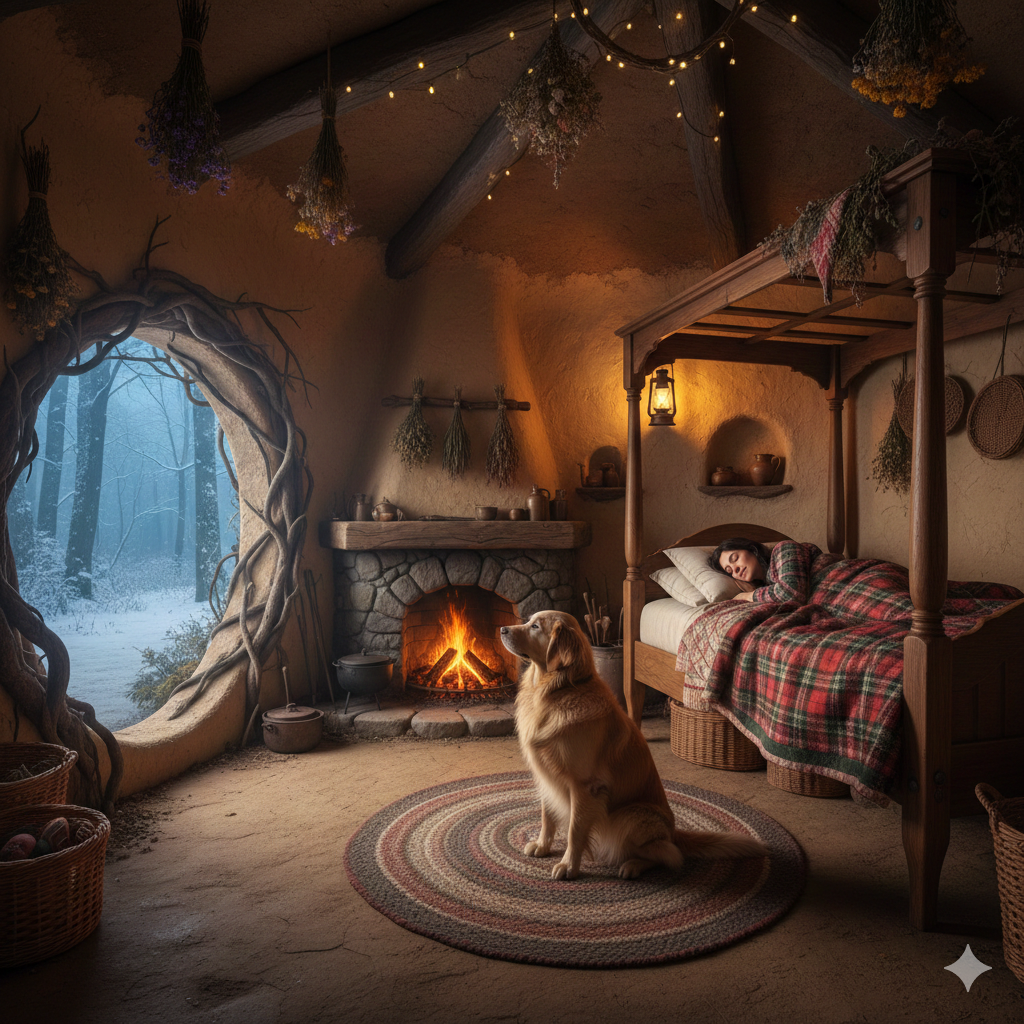
Inside, LED lanterns powered by battery banks cast a steady glow. The air was dry, insulated from the bitter cold above. Diane lit the small wood stove—not because they needed the heat yet, but because routine kept fear at bay.
Caleb exhaled slowly. “It’s quiet.”
“Exactly,” Diane said.
They listened to the storm rage overhead like a distant ocean.
On the second day without power, Pine Hollow changed.
Temperatures inside homes dropped below freezing. Water pipes cracked. Elderly residents huddled under blankets.
Carl tried to start his generator; it coughed once and died.
By mid-afternoon, desperation replaced pride.
It was Trina who remembered first.
“Diane,” she whispered, staring out at the snow-buried street. “The bunker.”
Carl resisted the idea.
“I’m not begging that woman.”
But by sunset, when his wife’s lips turned blue and their propane tank sputtered empty, pride thawed faster than ice.
Three figures struggled through waist-high drifts toward Diane’s house.
Carl.
His wife, Marianne.
And Trina.
They pounded on the door.
No answer.
For a terrifying moment, Carl thought the house was empty.
Then the garden shed door creaked open from inside.
Diane stood there, bundled but steady.
She didn’t say I told you so.
She didn’t mention the jokes.
She simply said, “Come in. Quickly.”
Inside the shelter, warmth embraced them like forgiveness.
Marianne wept openly when she felt heat on her hands.
Trina looked around in stunned silence. “You built all this… for us?”
“For whoever needed it,” Diane replied.
Carl couldn’t meet her eyes.
“I was wrong,” he muttered.
Diane handed him a mug of hot broth. “We don’t have time for that.”
They settled onto cots. Caleb shared playing cards with Trina to distract her shaking hands.
Above them, the storm intensified.
On day three, more knocks came.
An elderly couple from two houses down.
A single mother with a six-year-old boy.
By nightfall, all six cots were filled.
Diane rationed supplies carefully—measured portions, strict water management, shared chores. She organized warmth rotations near the stove, monitored oxygen flow from the ventilation system, and kept everyone moving just enough to maintain circulation.
No one mocked her now.
Carl volunteered to shovel the hatch every few hours to prevent snow from sealing them in. He did it without complaint.
The little boy called the shelter “the secret castle.”
Caleb smiled for the first time in days.
When the storm finally passed on the fourth morning, Pine Hollow looked unrecognizable.
Snowdrifts reached second-story windows. Power lines sagged like broken ribs. The town was silent except for the distant hum of emergency snowcats arriving from Cheyenne.
The shelter door opened slowly.
Six people emerged into a frozen world—but alive.
Across the street, another house had gone dark permanently. An elderly man who had refused to leave his recliner didn’t survive the cold.
Two others were airlifted later with severe frostbite.
But everyone inside Diane’s hidden shelter walked out on their own feet.
In the weeks that followed, Pine Hollow rebuilt.
Insurance adjusters arrived. Utility crews worked overtime. The diner reopened with limited hours.
But something deeper shifted.
At the town council meeting in January, Carl stood up first.
“I’d like to propose we establish a community storm shelter,” he said, clearing his throat. “Modeled after Diane Harper’s design.”
Murmurs of agreement filled the room.
Trina added, “And maybe we stop calling people crazy when they’re just prepared.”
All eyes turned to Diane.
She felt heat rise to her cheeks—not from embarrassment, but from the weight of attention she had never sought.
“I didn’t build it because I thought the world was ending,” she said quietly. “I built it because winter always comes.”
Silence followed.
Then applause.
By spring, volunteers were pouring concrete on the edge of town for a shared underground facility.
Carl worked every weekend.
Caleb helped install insulation panels.
Diane supervised but didn’t take credit.
The nickname faded.
In its place, a new one emerged—not whispered, but spoken with respect.
“Guardian Diane.”
She didn’t love that either.
She preferred simply being a mother who had learned the cost of waiting too long.
One evening in April, as snowmelt carved muddy rivers along Maple Creek Road, Caleb sat beside her on the porch.
“Do you think they’ll forget?” he asked.
“Forget what?”
“That you were right.”
Diane smiled faintly.
“They don’t need to remember I was right,” she said. “They just need to remember to be ready.”
The wind carried the last chill of winter across the plains.
But beneath the quiet town, reinforced in concrete and humility, safety waited.
And no one laughed anymore.
Spring thaw came slow to Pine Hollow.
Snow didn’t melt so much as surrender in patches—gray crust collapsing into rivulets that cut across yards and ditches. The town smelled of wet earth, diesel exhaust, and something else harder to name: humility.
For weeks after the blizzard, people moved differently.
They checked forecasts twice. They stocked pantries earlier. They asked neighbors if generators worked.
And when they passed Diane Harper on the street, they no longer looked away in polite dismissal.
They nodded.
Some stopped to thank her.
Others didn’t know how.
Diane accepted both with the same quiet grace she had always carried.
But inside, something had shifted.
Not pride.
Not vindication.
Something heavier.
Because preparedness had saved lives—but it had also reminded her, sharply, of the one person she hadn’t been able to save.
Mark.
Grief, she had learned, didn’t vanish when you helped others survive. It just changed shape.
The first time she walked back into the shelter after the storm, she went alone.
Caleb was at school—classes had resumed in the church basement while the building’s heating system was repaired. The house aboveground still smelled faintly of smoke from the days they’d relied on the fireplace.
She lifted the shed door, entered, and keyed the code.
The lock clicked open.
Warmth greeted her.
The shelter looked exactly as it had when the others left: folded blankets stacked, mugs washed and drying, cots aligned. Carl had insisted on repairing a loose hinge before they’d sealed up that final morning.
Diane descended slowly, hand trailing along the wall.
She stood in the center of the room and closed her eyes.
For four days, this space had held fear, relief, shame, gratitude, and something like rebirth.
Now it held silence.
She walked to the far cot—the one Marianne had used. The woman had slept curled tight, lips blue the first night, whispering thank-yous even in half-consciousness.
Diane adjusted the blanket.
Not because it needed adjusting.
Because routine comforted her too.
Town reconstruction meetings filled evenings through March and April.
Power lines were replaced with reinforced poles. Emergency sirens were installed near the school. The council approved funding for a municipal shelter, and volunteers showed up in boots and gloves before sunrise on Saturdays.
Carl was always first.
He never spoke much while working. He poured concrete, hauled rebar, checked measurements with a seriousness that bordered on penance.
One morning, Diane arrived with thermoses of coffee for the crew.
Carl accepted a cup, hands rough and reddened from cold water.
He didn’t drink immediately.
“Marianne would’ve died,” he said quietly.
Diane looked at the concrete slab stretching across the ground—the future community shelter’s foundation.
“She didn’t,” she replied.
“That’s because of you.”
She shook her head. “Because you came.”
Carl swallowed. “I almost didn’t.”
Silence settled between them, broken only by shovels scraping gravel.
“I kept thinking,” he continued, “if I’d knocked sooner… maybe that old man across town—”
Diane’s voice was gentle but firm. “Survival isn’t math, Carl. We don’t get to calculate perfect outcomes.”
He nodded slowly.
Then he took a long drink of coffee and returned to work.
At home, Caleb changed too.
The storm had carved something deeper into him than fear—it had etched awareness.
One evening, he sat at the kitchen table sketching designs on graph paper.
“What’s that?” Diane asked.
“Ventilation,” he said. “For the community shelter.”
She leaned closer.
He had drawn airflow channels, intake grates, insulation layers—concepts he’d absorbed simply by helping her.
“You’re thinking about this a lot,” she said.
He shrugged. “It mattered.”
She studied him—Mark’s jawline, her steady gaze.
“You know,” she said softly, “most kids your age don’t want to spend afternoons planning emergency infrastructure.”
Caleb smiled faintly. “Most kids my age didn’t watch their town freeze.”
She rested a hand on his shoulder.
“I’m proud of you,” she said.
He nodded once, eyes dropping back to the paper—but his ears reddened slightly.
By June, the nickname shift was complete.
No one said “Doomsday Diane” anymore.
Not even jokingly.
Instead, she heard it first from the little boy who’d sheltered with them—Evan, the six-year-old who’d called the bunker a castle.
She was loading groceries into her truck when he ran up, backpack bouncing.
“Hi, Guardian Diane!” he announced.
She blinked.
His mother flushed. “I’m sorry, he just—”
“It’s okay,” Diane said, smiling gently. “Hi, Evan.”
He saluted her.
Actually saluted.
She returned the gesture, deadpan serious, and he beamed before sprinting off.
Diane shook her head softly.
She never asked him to stop.
Summer brought rebuilding completion.
The community shelter opened in late July with a modest ribbon-cutting ceremony. No band. No speeches longer than necessary. Pine Hollow preferred quiet recognition to spectacle.
Still, the turnout was nearly the entire town.
The structure sat half-submerged into a hillside beyond the school—reinforced concrete, insulated earth berming, solar backup, ventilation shafts disguised as weathered fence posts.
Modeled, unmistakably, after Diane’s design.
The mayor handed her ceremonial scissors.
She hesitated.
“I didn’t build this,” she said.
Carl spoke from the crowd. “You built the idea.”
Murmurs of agreement followed.
Diane exhaled, cut the ribbon, and stepped aside immediately so others could tour the interior.
She never lingered in front.
She never needed to.
That autumn, the first frost returned.
Pine Hollow watched the sky differently now.
Weather alerts triggered preparation, not dismissal. Supply shelves stayed fuller. Generators were tested monthly. Emergency drills became routine at school.
On October 28th—almost exactly a year after Diane began construction—snow fell again.
Light.
Soft.
The town didn’t panic.
But people noticed.
Carl drove past Diane’s house that evening and saw the shed door slightly ajar while she carried in wood.
He pulled over.
“You expecting something?” he asked.
“Winter,” she replied simply.
He nodded.
After a pause, he said, “Marianne baked too much bread. She says bring some over or she’ll freeze it all.”
Diane accepted the loaf.
Not as repayment.
As connection.
That night, after Caleb went to bed, Diane stood on the porch alone.
Snow dusted the yard. The air smelled clean and sharp.
She closed her eyes.
Memory overlapped with present—the whiteout that had taken Mark, the storm that had almost taken the town, the shelter that had changed everything.
Grief rose again.
But this time it carried something else beside it.
Meaning.
“You would’ve liked this,” she whispered into the cold.
Wind moved softly through the grass.
She imagined Mark’s laugh—warm, teasing.
You always did overprepare, Di.
She smiled through tears.
“Yes,” she murmured. “And this time it helped.”
Years passed, as years do in quiet towns.
Caleb grew taller, left for engineering school in Laramie, and returned summers to help maintain the shelter systems. Carl retired the snowplow business and volunteered as winter readiness coordinator. Evan grew into a lanky teenager who still waved when he saw Diane.
Pine Hollow faced other storms.
None as catastrophic.
All survived without loss of life.
The shelters—hers and the town’s—were used twice more in severe cold snaps.
Each time, doors opened without hesitation.
No pride barrier remained.
On a late winter afternoon nearly a decade after the original blizzard, Diane walked the perimeter of the municipal shelter during a routine inspection.
Snow drifted lightly.
She moved slower now—gray threaded her hair, lines softened her face—but her gaze remained clear.
She checked seals, ventilation, battery indicators.
Everything functioned.
Of course it did.
Preparation, she had learned, was simply love applied forward in time.
As she emerged back into the pale sun, she saw a group of elementary students touring with their teacher.
The teacher gestured toward her.
“That’s Diane Harper,” she said. “She’s why we have this.”
The children turned, wide-eyed.
One girl raised her hand timidly. “Are you the bunker lady?”
Diane smiled.
“I suppose,” she said.
The girl studied her. “Were you scared?”
Diane considered the question carefully.
“Yes,” she said. “But I was more scared of not being ready.”
The teacher nodded approvingly.
Another child piped up. “My dad says you saved the town.”
Diane shook her head gently.
“No,” she replied. “The town saved itself. I just built a door.”
The children accepted that answer with the uncomplicated certainty of youth.
That evening, Diane returned home and unlocked the small shed behind her house.
The original shelter remained intact.
She still stocked it yearly.
Still tested systems.
Still descended occasionally to sit in the quiet.
Not because she expected disaster.
Because preparedness had become part of who she was—like nursing, like motherhood, like survival after loss.
She lit the small stove briefly, watching flame catch wood.
Warmth filled the space.
She sat on the center cot and let silence settle around her.
Aboveground, Pine Hollow lived without fear now—not because storms had ended, but because readiness had replaced denial.
Diane closed her eyes.
Life, she had learned, never guaranteed safety.
But care could build it.
And sometimes the person mocked for preparing is simply the one who loves far enough ahead to see what others refuse.
When she finally climbed back into the fading daylight, wind brushed across the plains—cold, steady, familiar.
Winter would come again.
It always did.
But beneath Pine Hollow, reinforced in concrete and memory, readiness waited.
And no one laughed anymore.
