
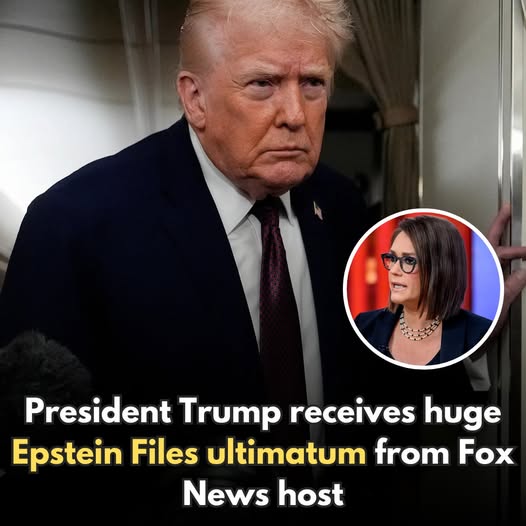
A sharp political clash erupted after President Donald Trump declared himself “totally exonerated” following the release of newly unsealed documents connected to Jeffrey Epstein. His remarks quickly sparked criticism — including from figures within conservative media — and reignited debate over transparency, accountability, and the broader political impact of the Epstein files.
Speaking to reporters aboard Air Force One, Trump framed the document release as a clear vindication. “I’m the expert in a way, because I’ve been totally exonerated,” he said. “Nobody used to speak about Epstein when he was alive, but now they speak. I’m the one that can talk about it, because I’ve been totally exonerated. I did nothing.”
The statement prompted immediate pushback. Jessica Tarlov, co-host of The Five on Fox News, responded on X with a pointed message: “Then release all the files.” Her brief comment reflected a broader demand for full transparency and questioned whether the public has truly seen the complete record.
The controversy centers on the Epstein Files Transparency Act, legislation signed into law by Trump that required the United States Department of Justice to release documents related to Epstein. While millions of pages — including flight logs, emails, and other records — have been made public, debate continues over whether the disclosure was comprehensive.
Attorney General Pam Bondi stated that all required materials had been released. However, Representative Thomas Massie, a Republican who co-authored the legislation, has expressed skepticism. Massie argues that the law was intended to include internal government communications, memos, and deliberations regarding decisions to prosecute or investigate Epstein and related individuals.
Bondi’s submission to Congress included explanations for redactions based on “deliberative-process privilege,” a legal doctrine allowing agencies to withhold certain internal discussions. Critics contend that invoking this privilege may undermine the spirit of the law, while supporters maintain that such redactions are legally justified and necessary to protect institutional processes.
Beyond Washington, the fallout has reached international headlines. Prince Andrew — formally Andrew Mountbatten-Windsor — has faced renewed scrutiny following the document release. Buckingham Palace issued a statement from King Charles III emphasizing support for a “full, fair, and proper process” as authorities review matters connected to Epstein’s network.
The files themselves span decades and reference numerous public figures across politics, entertainment, business, and royalty. Inclusion in the records does not equate to criminal wrongdoing, a point repeatedly emphasized by the Justice Department. However, the scale of the release has intensified public and media scrutiny.
Trump’s claim of “total exoneration” has become a flashpoint because it intersects with broader questions about what exoneration truly means. Supporters note that he faces no charges related to the matter and argue that the absence of incriminating findings justifies his characterization. Critics counter that self-declared vindication is not equivalent to an independent legal ruling and caution against oversimplifying complex investigative materials.
The debate also underscores deeper partisan divides. For some, the controversy reflects concerns about government transparency and the limits of redaction. For others, it represents political spin amplified by media narratives. Legal analysts suggest that disputes over the completeness of the document release could prompt further congressional oversight or litigation.
Ultimately, the Epstein files continue to cast a long shadow over public life. Trump’s assertion of innocence, Tarlov’s call for fuller disclosure, and renewed international attention all illustrate how the documents remain central to discussions about accountability and trust in institutions.
As investigations, political commentary, and public scrutiny continue, the situation highlights the delicate balance between transparency, legal protections, and public perception — and how quickly high-profile statements can intensify an already volatile national conversation.
