
When you make a promise at thirty, you think you will keep it because thirty doesn’t feel far from forever. You believe time will stay manageable, that faces will remain familiar, and that friendships forged in the fires of youth will survive simply because they once felt unbreakable. You think you are the protagonist of a story that will never change genres.
But thirty years is a strange, shifting thing. It doesn’t rush in all at once like a tidal wave; it slips by quietly, like a slow leak in a tire, taking pieces of your memory and your agility with it, until one day you wake up and realize how much the landscape has changed without asking your permission.
Waiting for a ghost in the neon glow of Christmas morning
“Man, I hope they show up,” I whispered to myself, the condensation from my breath fogging up the glass in front of me.
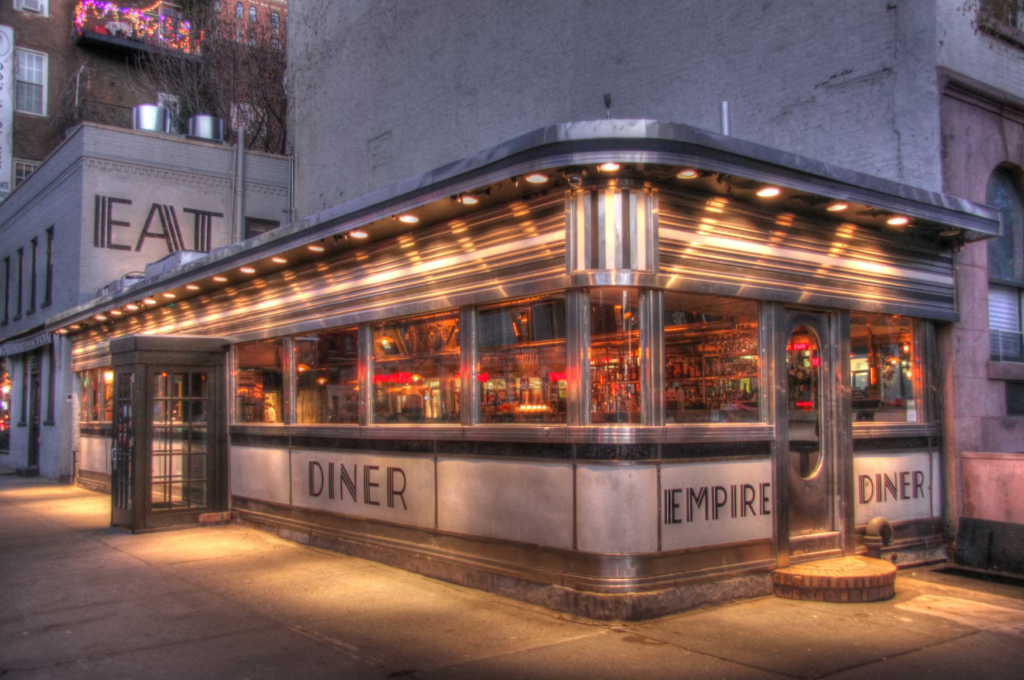
I was standing outside May’s Diner on Christmas morning, watching a shelf of gray snow slide from the edge of the corrugated metal roof and melt into the cracked pavement below. The air smelled of woodsmoke and exhaust, that specific perfume of small-town America in the winter.
The place looked exactly the same as it had when we were barely men. The red vinyl booths were still visible through the front window, cracked and patched with duct tape. The bell still hung crooked above the door, and the faint, greasy scent of hash browns and coffee drifted out, reminding me of hangovers and heartbreaks from a lifetime ago.
This was the coordinate. This was the anchor point. This was where we said we would meet again.
I checked my watch. 11:55 AM.
I adjusted my scarf, feeling a distinct tightness in my chest. It wasn’t just the cold. It was the crushing weight of expectation. What if we had nothing to say? What if the men we had become couldn’t recognize the boys we had been?
I pushed the door open. The jingle of the bell was a time machine.

The reunion that felt familiar and foreign all at once
Ted was already there.
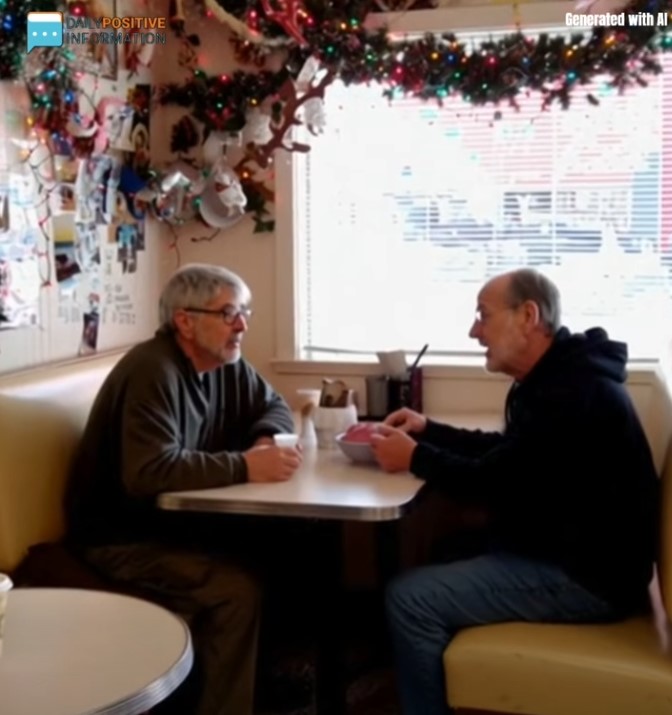
He was sitting in the back corner booth, the one we used to claim as our sovereign territory after high school football games. His coat was draped neatly beside him, a stark contrast to the chaotic pile of jackets we used to make. His hands were wrapped around a thick ceramic mug like he’d been warming them for a while.
“Ted,” I said, the name feeling heavy on my tongue.
He looked up. The recognition took a second—a microsecond where his eyes scanned my hairline and my waistline—before the smile broke through. His hair had gone silver at the temples, giving him a distinguished, professorial look, and there were deeper lines etched around his eyes, maps of the decades I hadn’t witnessed.
“Ray,” he said, standing up. The voice was deeper, raspy from years of what I assumed were cigarettes and boardroom arguments. “You actually made it, brother!”
“It would’ve taken something really serious to keep me away,” I replied, stepping forward and pulling him into a hug. It was a firm, back-patting embrace—the kind men give each other to show affection without lingering too long. “What, you think I’d break the only pact I ever made?”
He laughed under his breath, a sound that scraped against the quiet hum of the diner, and slapped my shoulder.
“I wasn’t sure, Ray. You didn’t reply to my last email about it.”
“I figured I’d just show up. Sometimes that’s the only answer worth giving, you know?”
We slid into the booth. The vinyl groaned under our weight. It felt surreal, sitting across from a man who knew all my childhood secrets but didn’t know the names of my children. We ordered coffee without even looking at the laminated menus.
“I need another cup,” Ted said to the waitress, a young girl who looked like she’d rather be anywhere else on Christmas. “This one is icy.”
The empty seat that screamed louder than our conversation
The conversation started with the easy, surface-level lubrications of social interaction. Jobs. Wives. Ex-wives. The cost of college tuition. The cholesterol numbers our doctors warned us about.
But the seat across from us stayed empty.
It was a physical presence, that emptiness. My eyes kept drifting toward it, expecting to see a ghost materialize.
“Do you think he’ll come?” I asked, cutting through Ted’s story about his golf handicap.
Ted stopped. He looked at the empty setting. “He better. This was his idea to begin with.”
I nodded, but my stomach tightened. I hadn’t seen Rick in three decades. We’d texted a few times over the years—generic birthday wishes, forwarded memes, the occasional photo of a milestone. But we hadn’t spoken. Not really. Not about the things that matter.
“Do you remember when we made the pact?” I asked.
“Christmas Eve,” Ted said, smiling faintly, his eyes unfocusing as he looked into the past. “We were standing in the parking lot behind the gas station. It was freezing.”
The memory of the night we thought we were immortal
Thirty years ago, the world was smaller. It was just after midnight. The pavement was slick with black ice and snowmelt, and we were leaning against the hoods of our beat-up sedans, passing a bottle of cheap whiskey back and forth.
Rick was shivering. I remembered that vividly. He was wearing that flimsy windbreaker he always wore, the blue one with the broken zipper, pretending he wasn’t cold because he didn’t want to kill the vibe.
Ted had his car stereo turned up too loud, blasting classic rock into the silent winter night. I kept trying to untangle a cassette tape that had unraveled in the player, cursing at the plastic ribbon.
Rick laughed every time I swore at it. It was a high, genuine laugh.
We were loud, a little drunk, and feeling invincible in the way only twenty-year-olds can. We thought we had conquered the town, the night, and our futures.
“I say we meet again in 30 years,” Rick had said suddenly, his breath fogging in the crisp air. He looked at us with an intensity that seemed out of place for a parking lot party. “Same town, same date. At noon. The diner? No excuses. Life can take us in all directions, but we’ll come right back. Okay?”
Ted and I had laughed like idiots. 30 years? That was a lifetime. That was science fiction. But Rick held his hand out, his eyes shining.
“Promise me,” he urged.
So we shook on it. A drunken, sacred oath under the fluorescent hum of a streetlamp.
A stranger arrives carrying the weight of bad news
Back in the diner, the nostalgia evaporated. Ted’s fingers tapped a nervous rhythm against his coffee mug.
“He was serious about that night,” Ted said quietly. “Rick was serious in a way we weren’t. We were just living. He was… documenting.”
At twenty-four minutes past noon, the bell above the door rang again.
I looked up sharply, expecting to see Rick’s familiar slouch, that apologetic grin he always wore when he was late—like he wasn’t sorry enough to rush, but sorry enough to feel bad about it afterward.
Instead, a woman stepped inside.
She looked about our age, perhaps a few years younger. She was dressed in a dark blue wool coat that looked expensive, clutching a black leather bag close to her side as if it contained state secrets. She paused just inside the doorway, scanning the diner with the kind of uncertainty you just can’t fake.
When her eyes landed on our booth—two middle-aged men staring at an empty seat—something changed in her expression. It wasn’t relief. It wasn’t recognition, either. It was something heavier. Resignation. Like she had rehearsed this moment in front of a mirror but still wasn’t ready for the stage.
She walked toward us slowly, her steps careful and measured on the linoleum. She stopped just beside the table, keeping a polite, professional distance.
“Can I help you?” I asked, trying to keep my voice neutral, though my heart had begun to hammer against my ribs.
“My name is Jennifer,” she said, nodding once. Her voice was steady, but her hands were trembling slightly. “You must be Raymond and Ted. I was Rick’s… therapist.”
Ted shifted beside me. His posture tightened instantly. I felt it more than I saw it—a defensive wall going up.
“I need to tell you something important,” Jennifer said.
I gestured to the empty seat across from us, the vinyl still cold. “Please, sit down.”
She lowered herself into the booth with a kind of careful grace, as if the very act of sitting might set off a landmine. She placed her bag beside her feet, folded her hands in her lap, and then unfolded them again. She looked at us, really looked at us, studying our faces as if looking for traces of the stories she had heard.
“Rick died three weeks ago,” she said. “He’d been living in Portugal. It was sudden. A massive heart attack.”
The silence that followed was louder than the diner
Ted leaned back against the vinyl seat like someone had punched him straight in the ribs. The color drained from his face.
“No,” he said softly, shaking his head. “No, that can’t be right… We were just… we were waiting for him.”
“I’m sorry,” Jennifer said. Her eyes were wet, but she didn’t cry. “I wish I were here for a different reason. I wish he was sitting here instead of me.”
I stared at her, blinking once, twice, trying to make the geometry of the world make sense again. Rick was dead. The third point of our triangle was gone.
“We didn’t know…” I stammered. “Did he have a cardiac problem? Was he sick?”
“He didn’t. That was part of the shock. He was hiking when it happened.”
The waitress came over then, cheerfully unaware of the crater that had just opened up in the middle of booth four. She asked if Jennifer wanted coffee. Jennifer declined with a polite wave of her hand. The interruption felt cruel, like the world hadn’t received the memo that something fundamental had just shifted.
When the waitress left, Jennifer looked back at us, her gaze intensifying.
“But Rick told me about this pact,” she said. “Christmas, noon, this diner. All of it. He talked about it for months leading up to this. He made me promise that if he couldn’t come himself, someone had to come in his place. He didn’t want the seat to be empty.”
“And he picked you?” Ted asked, his jaw tightened, a mix of grief and confusion. “Why?”
“Because I knew the things he never said to you,” she replied softly. “And because I promised him I would come.”
Uncovering the hidden layers of a friendship we thought we understood
We stayed there for what felt like hours, though I couldn’t say how long it actually was. The snow outside turned from gray to blue as the afternoon wore on. Time had started to fold in on itself. Nothing moved outside that booth except the soft ripple of Jennifer’s voice and the weight of what she was telling us.
She explained that she had met Rick just after he moved overseas five years ago. Therapy eventually ended, but their conversations didn’t. Over time, she became his closest friend, and eventually, his partner. She was the one person, she said, he trusted enough to be fully himself with.
“He talked about you both all the time,” she said, tracing the grain of the table with her finger. “Mostly with warmth. Some sadness, too, but never bitterness. He said there were years when the two of you made him feel like he was part of something golden.”
Ted shifted beside me, arms crossed over his chest. “We were kids. None of us knew what we were doing. We were just… friends.”
“That’s true,” Jennifer agreed, nodding slightly. “But Rick felt like he was always watching from the edge. Close enough to feel the warmth of the fire, but never quite in the circle.”
I leaned forward, trying to process the space between her words. It felt like an accusation, though her tone was gentle.
“That’s not how it was,” I insisted, defensiveness rising in my throat. “We weren’t perfect, sure, but we included him in everything. We were a trio.”
“You thought you did,” Jennifer said. “But that’s not how he experienced it.”
She reached into her black leather bag and pulled out a photograph, sliding it face-up across the laminate table.
It was a picture I hadn’t seen in years. It was the three of us at fifteen, standing beside Rick’s father’s old rusted Ford truck. Ted and I stood shoulder to shoulder, arms slung around each other, grinning like conquerors.
Rick stood just a step to the side. He was smiling, yes, but there was a gap between his shoulder and mine. A physical distance that mirrored an emotional one I had never noticed before.
“He kept this on his desk,” she said. “Until the day he died.”
“I don’t remember him standing off like that,” Ted said, studying the photo, his brow furrowed deep. “I remember us all leaning on the truck.”
Jennifer didn’t look away. “Do you remember the day at the lake? The summer after graduation? When he said he forgot his towel?”
I racked my brain. The memories were hazy, sun-bleached. “Yeah, I remember. I think I made fun of him for it. I thought he was being dramatic. It was hot enough for him to dry off in the sun.”
“He walked home that day,” Jennifer said quietly. “He walked three miles in wet shorts because you and Ted were talking about girls, and he realized you’d never once asked him who he liked. You never asked what he was into. He felt invisible. He told me he stood there dripping water, waiting for one of you to turn around and include him in the joke, and you never did.”
The silence that followed was heavy. That hit something deep inside me. I saw Ted’s hand curl tighter around his mug until his knuckles turned white.
“Shouldn’t you have an oath or something, Jennifer?” Ted snapped, his voice cracking. “Confidentiality and all that? You shouldn’t be telling us all of this. It feels… wrong.”
“Yes,” Jennifer said with a small, sad smile. “But that was when I was Rick’s therapist. That ended when we developed feelings for each other. I’m here as his… long-term partner. And as the person keeping his promise.”
She sighed deeply, softening.
“Look, he knew you didn’t mean any harm. He loved you. But he carried that silence for years. He once told me that being near the two of you felt like standing in a house where the door was open, but he was never sure if he was welcome inside the living room.”
The letters that were written but never sent
She told us stories we had forgotten. She told us about the high school dance Rick never attended, even though we were convinced that he had been there in the corner. She told us about the Christmas party where he sat outside on the porch until the music stopped because he felt like an intruder in his own friend group.
And she told us about the postcards we sent him over the years. The generic “Happy Holidays” and “Hope you’re well” notes.
“He kept every one of them,” she said. “He wrote replies to all of them. Long replies. Asking you about your lives, telling you about his fears, his art, his life in Europe. But he never mailed them.”
I rubbed my hands together, the friction creating heat, trying to stay grounded in the present.
“Why did he never say anything?” I asked, my voice barely a whisper. “Why didn’t he just tell us to be better friends?”
“He was afraid, Raymond,” she said, looking me dead in the eye. “He was afraid the silence would confirm what he already believed.”
“And what was that?” Ted asked, staring down at the table, refusing to meet her gaze.
“That he mattered less to you than you mattered to him.”
Jennifer reached into her bag one last time. She placed a folded letter in front of us. It was sealed in a cream envelope, the edges soft and fuzzy from having been handled over and over again.
“He wrote this for you,” she said quietly. “He wrote it before he went on that hike. He asked me not to read it aloud. He said it was yours.”
I hesitated before picking it up. My fingers felt clumsy, thick, and unworthy as I broke the seal and unfolded the page.
A final message from the other side of the world
Ted leaned in slightly, his shoulder brushing mine, his eyes scanning the shape of Rick’s handwriting like it was a language he used to speak fluently but had forgotten.
Ray and Ted,
If you’re reading this, then I didn’t make it to our pact. But I still showed up, I guess. In a way.
I know time changes things. I know we aren’t the kids in the parking lot anymore. But I carried you with me everywhere I went, even when I didn’t know where I fit in your lives. You were the best part of my youth, even when I felt like a footnote in the story.
I spent a lot of years wondering if I was really your friend, or just the guy who was around. But in the end, I realized it didn’t matter. Because you were my friends. You were the witnesses to my life.
I remembered the lake, the music, the jokes, and the way it felt to belong to something once. I held onto that.
I just didn’t know if I belonged to it still. Thank you for loving me in the ways you knew how. I forgive you for the things you didn’t know you were doing.
You were the brothers I always wanted.
I loved you both. I always did.
— Rick.
My hands trembled as I passed the letter to Ted. I couldn’t look at him. I couldn’t look at Jennifer. I stared out the window at the snow, which was falling harder now, blurring the edges of the world.
For a while, neither of us said anything. The diner noise—the clatter of plates, the sizzle of the grill—seemed to fade into a dull roar.
Ted read it slowly, then again. When he finally spoke, his voice was tight, constricted by a lump in his throat.
“He forgave us,” Ted whispered. “He forgave us for things we didn’t even know we needed forgiveness for.”
“He did, hon,” Jennifer said gently. “He just said it in his death. He couldn’t say it in his life.”
The pilgrimage to the house where it all began
Later that evening, after the sun had dipped below the horizon and the Christmas lights on Main Street flickered on, we drove to Rick’s childhood home.
Jennifer had told us it would be sold soon. The “For Sale” sign was already buried in a snowdrift in the front yard. The house was dark, the windows hollow eyes staring out at the street.
We parked the car and walked up the driveway, the snow crunching loudly under our dress shoes.
We sat on the front concrete steps, just like we used to when we were sixteen and waiting for Rick to sneak out. Our knees brushed against each other. The cold crept up our backs, but neither of us moved.
Ted reached into his coat pocket and pulled out a small, retro cassette player Jennifer had given us before she left the diner.
“He made a tape,” Ted said. “For the drive home.”
He pressed play. The gears whirred, a mechanical sound from a bygone era.
Then, Rick’s voice filtered through the static. It was softer than I remembered, tinged with an accent he had picked up in Europe, but still undeniably him.
“If you’re hearing this, then I didn’t break the pact… I just needed help keeping it,” the recording said. Rick sounded calm. Happy. “Don’t turn this into regret, guys. Please. Turn it into memory. That’s all I ever wanted. To be a good memory for you. There’s a playlist here, all our favorite songs from the parking lot nights. Listen to it. Drink a beer for me.”
Music started to play. It was the same song that had been stuck in my tape deck thirty years ago.
“He was always late,” Ted said, wiping his eyes with the back of his glove and letting out a soft, broken laugh.
“Yes,” I said, looking up at the empty windows of the house where our friend used to live. “But he still came, in his own way.”
We sat there for a long time, two old friends and the ghost of a third, listening to the music fade into the winter night. We realized then that the pact wasn’t about the diner. It wasn’t about the time. It was about acknowledging that we had shaped each other, for better or worse, and that even when the people are gone, the imprint they leave on your soul remains forever.
Sometimes the reunion doesn’t happen the way you imagined.
Sometimes, it happens when you finally learn how to listen to the silence.
I hope this story about friendship, missed connections, and forgiveness resonated with you. It’s a reminder to reach out to the people we love, to ask the deeper questions, and to make sure no one in our circle feels invisible.
Let us know what you think about this story on the Facebook video and “if you like this story share it with friends and family” to remind them how much they mean to you.
