
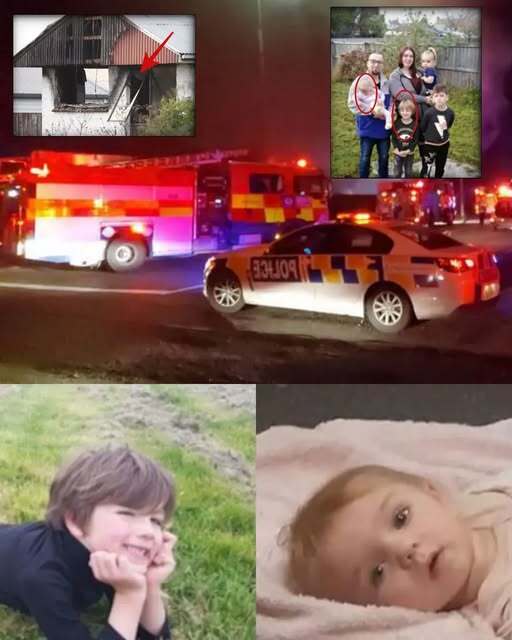
On a quiet Tuesday night in Christchurch, a routine act of motherhood turned into a nightmare no family should ever face.
A late-night supermarket run, meant to put breakfast on the table, ended with a mother returning to a street glowing orange with flames.
Inside that burning house were two children who would never make it out.
Nine-month-old Arianna and eight-year-old Brayden lost their lives, leaving a community stunned and a family shattered.
Nicole Mulligan had done what countless parents do every week.
She tucked her four children into bed, waited for her pay to land, and decided to grab groceries so the morning would be easier.
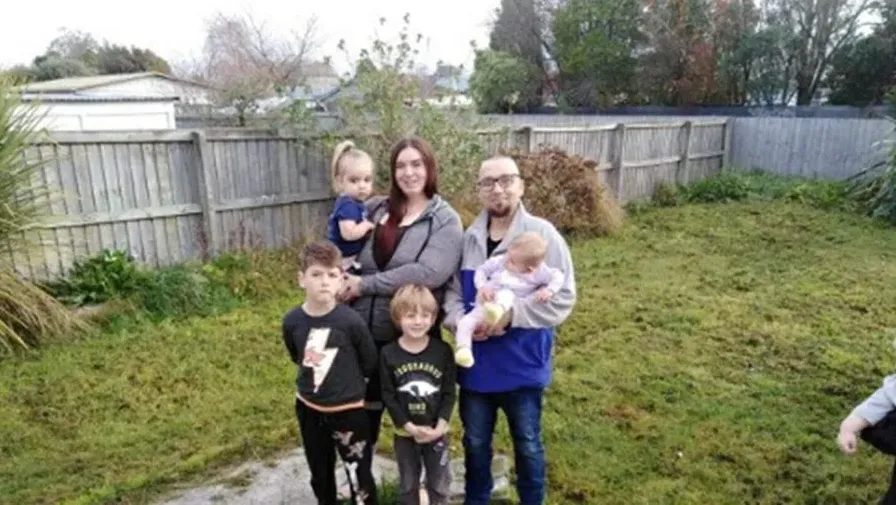
She was gone for about an hour.
An hour that would split her life into before and after.
As she turned onto her street, she saw the fire.
In that moment, she prayed with everything she had that it was not her house.
It was.
And nothing could prepare her for what she would see next.
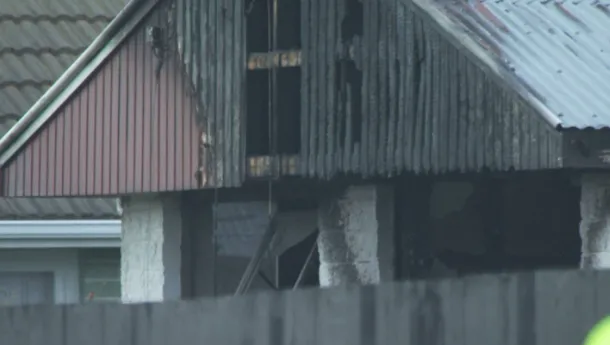
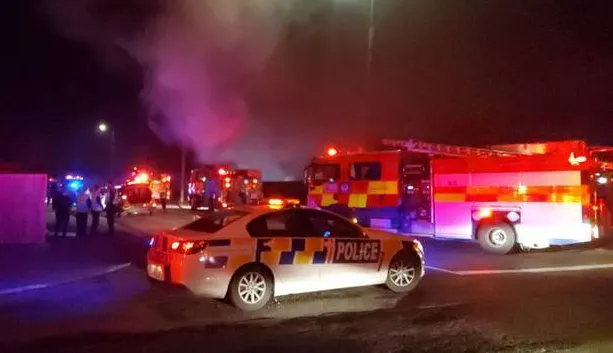
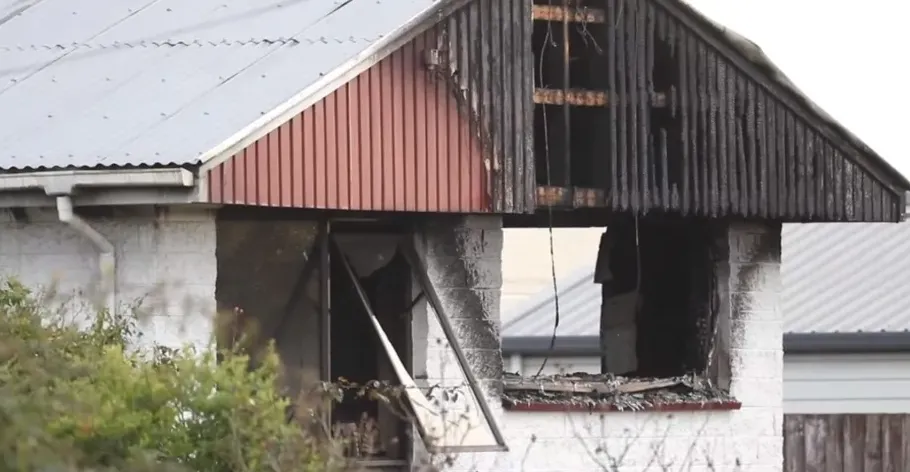
Flames tore through the home where her children had been sleeping.
Smoke poured into the night sky as neighbors gathered, shouting, crying, and scrambling for garden hoses.
Nicole ran toward the chaos, not yet understanding the full horror unfolding.
Somewhere inside, her partner was trying to do the impossible.
Des Cooke, Arianna’s father, had rushed back into the burning house.
He dropped to the floor, crawling through smoke and heat in a desperate attempt to reach the children.
He made it to the bedroom door.
When he tried to open it, a wall of fire exploded outward.
The force threw him back against the wall.
The heat was so intense that he never heard his baby cry.
“She was already gone,” Nicole would later say, her words heavy with a grief that feels impossible to measure.
In that instant, hope collapsed into horror.
Des tried again.
The flames and smoke were unbearable, pushing him back each time he tried to move forward.

A neighbor dragged him out before he could be overcome.
People later called him a hero, but he rejected the word.
“I don’t feel like one,” he said.
“I let two children down.”
Emergency calls flooded in just before 10:45 p.m.
Fire crews raced to the scene as the house continued to burn.
Firefighters entered the home during search and rescue operations.
They pulled eight-year-old Brayden out, clinging to the hope that he might survive.
Despite every effort, Brayden later died.
Nine-month-old Arianna was found in what officials would later describe as an unsurvivable bedroom.
Fire and Emergency New Zealand assistant area commander Mike Bowden confirmed the grim reality.
The conditions inside Arianna’s room left no chance.
Brayden was found near the doorway outside his sister’s bedroom.
To his mother, that detail says everything about who he was.
She believes her son was trying to save his baby sister.
A child acting on instinct, love, and courage far beyond his years.
Neighbors stood outside, helpless.
Some grabbed hoses, spraying water toward the flames even as they knew it would not be enough.
They heard screaming.
They saw fire consume the place where children had been sleeping minutes earlier.
The street became a scene of raw human anguish.
Strangers held each other as emergency lights flashed against smoke-filled air.
When the fire was finally out, nothing felt settled.
Two young lives were gone, and answers would never bring them back.
In the days that followed, Nicole spoke through tears that rarely stopped.
She replayed the night over and over, trapped in what she described as a nightmare she cannot wake up from.
“I lost two babies in one night,” she said.
“And I blame myself because I wasn’t there.”
Her words cut deep.
They echo a question no grieving parent should ever have to ask.
She went shopping because her pay had just landed.
She wanted food in the house when her kids woke up.
It was an act of care.
But grief has a way of turning love into guilt.
“I should’ve been there,” she said.
“I feel like I could’ve saved them.”
Those close to the family say she barely sleeps.
When she does, the images return.
The silence in the house is unbearable.
Every corner holds memories that now hurt to touch.
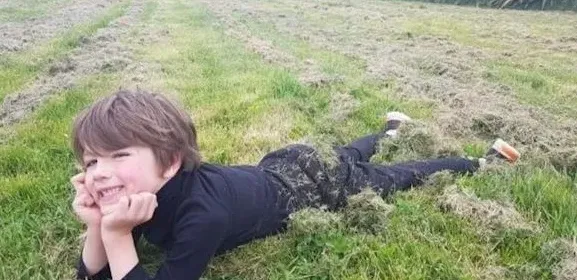
Brayden had been kind, sweet, and funny.
He was the sort of child who made rooms feel lighter just by being in them.
He adored his little sister.
Friends say he was gentle in a way that made adults pause and notice.
Arianna was only nine months old.
But her smile, her parents say, lit up their entire world.
“She was gorgeous,” Nicole said.
“Her smile lit up my whole heart.”
Des remembers her as his precious girl.
He talks about her smile like it was a force of nature.
“I tried my absolute best to save my baby,” he said.
The words sit heavy, unfinished, as if no sentence could ever close that thought.
Investigators believe the fire may have been caused by a heater used to keep Arianna warm.
It’s a detail that adds another layer of pain to an already unbearable story.
A simple device meant to protect a baby.
Instead, it may have sparked a tragedy.
The community responded almost immediately.
Flowers, candles, and notes appeared near the burned home.
A Givealittle page set up by Brayden’s aunt saw donations pour in.
Within days, the total soared past $130,000.
People who never met the children wanted to help.
They wanted to say, in some small way, that these lives mattered.
Local charities stepped forward.
Neighbors organized drop-offs, meals, and support without being asked.
For Nicole, the outpouring was overwhelming.
She had believed they were alone in their grief.
“It’s so heartwarming to know people cared about my babies,” she said.
“That their lives matter to everyone.”
Yet no amount of support can fill the silence left behind.
No donation can replace a laugh, a cry, or the sound of footsteps in the hall.
The house fire has sparked conversation across New Zealand.
Parents are questioning heaters, routines, and the thin line between safety and disaster.
Some argue about responsibility.
Others focus on prevention and education.
But beneath the debate is a family drowning in loss.
A mother who stepped out to buy food and came home to a lifetime of grief.
A father who ran into flames and was forced back by fire.
A brother who may have tried to save his sister.
Two children whose names are now carried far beyond their street.
Arianna and Brayden.
Their story spreads because it is terrifyingly ordinary.
It could have happened in any neighborhood, on any night.
That is what makes it so unsettling.
And that is why people cannot stop talking about it.
Every detail feels like a warning.
Every quote feels like a punch to the chest.
In the aftermath, investigators will finish their work.
Officials will release findings and recommendations.
But for this family, time has frozen.
Life now moves in slow, painful steps.
Mornings no longer begin with four children waking up.
Bedtime no longer means tucking everyone in.
Nicole says her days were built around caring for her kids.
Now she is learning how to exist without two of them.
The house fire will eventually fade from headlines.
Another story will take its place.
But for those who read it, something lingers.
A knot of fear, empathy, and unanswered questions.
Was it just bad luck.
Was it preventable.
What would any parent have done differently.
And how do you live with the answers you invent at three in the morning.
Arianna and Brayden are gone.
But their story has forced thousands to pause, argue, grieve, and reflect.
In that pause, their lives are remembered.
In the noise of public debate, their names remain.
And in one quiet family, grief continues long after the flames are gone.
