
There is a specific kind of light that hits the streets of Madrid in the early winter—a golden, diffused glow that makes everything look a little bit like a film set. It was in this light that Isabella Strahan, the 21-year-old daughter of television icon and NFL legend Michael Strahan, stepped out recently.
She wasn’t walking the red carpet, and she certainly wasn’t walking the sterile, fluorescent-lit hallways of a hospital ward, which had been her reality for the better part of a year. Instead, she was walking the pavement of Spain, looking less like a patient and more like a young woman who has fundamentally conquered her own narrative.
When the photos hit Instagram, they didn’t just garner likes; they sparked a collective sigh of relief from thousands of strangers who have been holding their breath for this family. Isabella, having battled a malignant brain tumor with a ferocity that belied her age, wasn’t just surviving. She was thriving. The images showed a transformation that went far beyond the physical. We were witnessing the re-emergence of a spirit that had been tested by fire and came out distinct, refined, and undeniably radiant.
This isn’t just a story about a celebrity kid recovering from an illness. It is an American story of resilience, the complex relationship women have with their self-image, and the beautiful, terrifying journey of finding a “new normal” after life pulls the rug out from under you.

A Madrid Afternoon and a New Definition of Style
The photo that stopped the scroll was, on the surface, just a travel snap. Isabella was captured standing on a Madrid street, flanked by the classic European architecture that makes the city feel timeless. She wore a rich, oversized coat trimmed with faux fur, layered effortlessly over a cream turtleneck that looked soft enough to sleep in. She paired it with relaxed denim, gold hoop earrings, and dark sunglasses—the kind of outfit that says “I’m here, but I’m keeping a part of myself for me.”
But the focal point wasn’t the fashion; it was the hair.
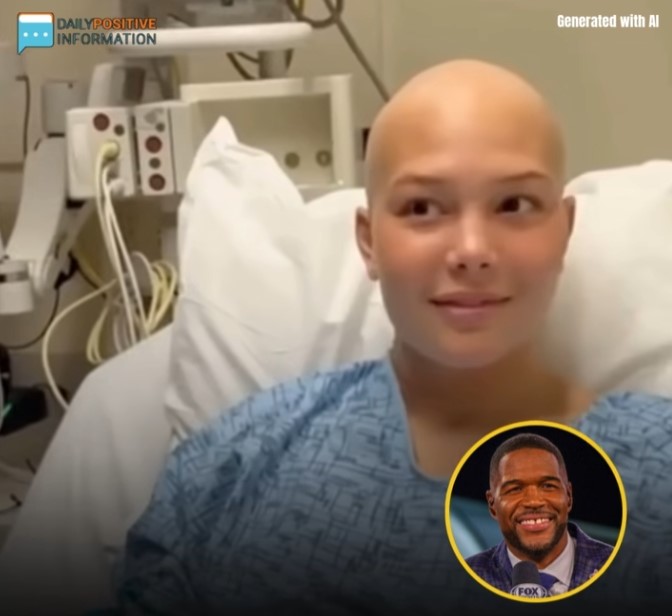
For months, the public had seen Isabella in various stages of hair loss, a side effect of the grueling chemotherapy and radiation required to treat medulloblastoma. We had seen the shaved head, a look she rocked with a brave face but one that symbolized the battle she was fighting. Now, framing her face in the Spanish sun, were soft, defined ringlets. Her natural curls were back, shorter than before, but vibrant and healthy.
She captioned the moment simply: “& @sophialstrahan take on Madrid.”
The simplicity of the caption belied the magnitude of the moment. She was abroad with her twin sister, Sophia. Just a year prior, such a trip would have been a logistical impossibility, a daydream deferred by doctors’ appointments, scans, and the debilitating fatigue of treatment.
The comment section on her post became an immediate testament to how invested the public has become in her well-being. It wasn’t just “you look great.” It was a chorus of validation regarding her new look.
“Dude keep ur hair like this forever ur an icon,” one follower wrote, capturing the sentiment of many. The short, slicked-back style wasn’t just a “growth phase”—it was a look. It was intentional.
“Isabella you are thriving! You are Beautiful! God Bless You Always!” another commenter added. The energy in the digital room was palpable. People weren’t just happy she looked good; they were relieved she looked healthy. There is a specific brightness in the eyes of someone who has come out the other side of a health crisis, and Isabella has it in spades.
The Complex Emotional Geography of Hair Loss
To understand why a photo of a girl with short curls in Spain matters so much, we have to look back at what was lost. In American culture, and particularly for young women, hair is rarely just hair. It is armor. It is identity. It is a security blanket.
In an emotionally raw interview with People magazine this past October, Isabella pulled back the curtain on the psychological toll of losing her hair. Now serving as the first ambassador for F.A.S.T. Haircare’s new line, she opened up about how her self-worth had been inextricably tied to her long locks.
“It was strawberry, red auburn and people would always comment on the color, the length, the texture,” she explained. It was her signature. In a world of filters and influencers, her hair was the thing that made her, her. “So when I didn’t have it,” she confessed, “I was like, ‘Oh no. I’m never gonna be pretty again.’”
That sentence is a heartbreaker. It speaks to the universal fear that illness doesn’t just take your health; it takes your personhood.
The regrowth process was not a straight line. Anyone who has gone through chemotherapy, or watched a loved one go through it, knows about the phenomenon of “chemo curls.” The medication targets rapidly dividing cells—cancer cells, yes, but also hair follicles. When the hair returns, the texture, color, and behavior can be radically different.
Isabella noted that her hair first came back pin-straight and black—a stark contrast to her previous reddish-auburn waves. Then, as her body continued to recover, the texture shifted again, becoming curlier and lighter. She is currently rocking a short, curly afro, a style she admits comes with a learning curve.
“I really value my hair now because I do think I took it for granted before,” she said. It’s a sentiment that echoes through every aspect of the cancer survivor’s life. You take nothing for granted—not a breath, not a day without nausea, and certainly not a good hair day.
She admits to missing the ease of a ponytail—the ability to just tie it back and forget it—but she is learning to love the reflection in the mirror. She is realizing that her beauty was never actually about the hair; the hair was just the frame. The picture is the resilience, the humor, and the grace she carries.
The Long Road from Diagnosis to the Bell
While the photos from Spain are full of light, the shadow of the last year still looms large, giving context to her joy. The journey began in October 2023, a time when most 19-year-olds are worrying about midterms or homecoming. Isabella was diagnosed with a malignant brain tumor known as medulloblastoma.
What followed was a crash course in adulthood. Emergency surgery. Radiation. Rounds of chemotherapy that leave the body feeling hollowed out. It is a grueling regimen that strips you of your physical strength while demanding every ounce of your mental fortitude.
Isabella, belonging to a generation that values transparency, chose not to hide. She didn’t retreat behind the gated privacy of her father’s fame. Instead, she picked up a camera. She vlogged.
Her YouTube series became a window into the reality of pediatric and young adult cancer. She showed the bad days. She showed the tears. But she also showed the moments of profound hope.
The climax of this documented journey came in June 2024. In a video that feels almost cinematic in its emotional arc, Isabella captured her final day of chemotherapy. The vlog opens with her in a hospital bed, wearing pink and white striped pajamas. She looks exhausted—the deep, bone-weary exhaustion that sleep doesn’t fix. She is hooked up to machines, the steady beep providing the soundtrack to her morning.
“This is a long journey, but made it,” she whispered to the camera. Her voice was soft, conserving energy. It was a stark reminder that “winning” against cancer doesn’t always look like Rocky Balboa at the top of the stairs. Sometimes, it looks like a young girl lying in bed, just holding on.
But then, the scene shifted.
Later that day, the hospital hallway transformed. The sterile medical center became a parade route. Isabella, having traded her pajamas for a chic black outfit, walked down the corridor. Confetti rained down—little flecks of color against the white linoleum. Nurses, those unsung heroes who had become her second family, lined the walls, clapping and cheering.
And there was the bell.
In cancer wards across America, the bell is a totem. It signifies the end of active treatment. It is the finish line.
With her father, Michael Strahan, beaming with a pride that seemed to fill the entire hallway, and her twin sister Sophia by her side, Isabella reached out and rang it. She wore a gold paper crown. It was a moment of pure, unadulterated triumph.
“My confetti parade is really fun, and I love all my nurses… It’s a great day,” she told her camera.
Michael, usually the one commanding the screen on Good Morning America, was happily relegated to a supporting role. He held a sign, cheered, and looked at his daughter with the kind of awe that only a parent who has almost lost a child can understand. It was a reminder that behind every celebrity headline is a family just trying to get through the night.
The Paradox of Recovery and the “All Clear”
Recovery, however, is a tricky beast. It is not a binary switch where you go from “sick” to “well” overnight.
A few weeks after the bell ringing, Isabella was back on camera, this time sitting in a car. She was wearing a white tank top, her nails painted a vibrant red. She had just come from an MRI—the terrifying quarterly ritual that dictates the future of every cancer survivor.
“It was a great, great scan. Everything was clear, cancer-free, and everything is great,” she announced, flashing an “Okay” hand sign.
The relief was immense. But then, she said something that caught many viewers off guard, something incredibly human and deeply insightful.
“I miss my doctors already,” she admitted. “And everyone who’s helped me because they’re all so nice. Like I feel like I’m just saddened today knowing that I wasn’t going to be going back for a while.”
It sounds counter-intuitive. Who misses the hospital? But for months, that hospital was her world. The doctors and nurses were her protectors. They were the ones keeping the monster at bay. Stepping away from that constant surveillance, back into the “regular” world, can feel like walking a tightrope without a net. It is a form of Stockholm Syndrome peculiar to survivors—you hate the disease, but you grow to love the safety of the ward.
This admission showed a maturity beyond her years. It highlighted that the emotional recovery takes longer than the physical one.
A Family United by Fire
Throughout this entire ordeal, the Strahan family dynamic has shifted and strengthened in full view of the public. Michael Strahan, a man known for his jovial personality and gap-toothed smile, has shown a different side—a vulnerable, fiercely protective father.
The bond between Isabella and Sophia, her twin, has also been a focal point. Twins often share a connection that defies explanation, and seeing Sophia by Isabella’s side in Madrid feels like the closing of a circle. They are back to doing what 21-year-old sisters should be doing: traveling, dressing up, and taking photos that make their friends jealous.
But there is a weight to it now. They aren’t just traveling; they are celebrating life. Every dinner in Madrid, every walk down a cobblestone street, carries the subtext of a second chance.
What Comes Next?
Isabella has made it clear she intends to reclaim the life that was interrupted. She has spoken about returning to the University of Southern California (USC), getting back to her studies, and resuming the college experience that was so rudely paused.
But she is returning as a different person. You cannot walk through the valley of the shadow of death and come out caring about the same trivialities as your peers. She carries a perspective now that usually takes a lifetime to acquire.
She is also stepping into a new role: advocate. By sharing her story so publicly, she has become a beacon for other young people facing similar diagnoses. She has demystified the process, showing that you can lose your hair, lose your strength, and still keep your spirit.
Her partnership with F.A.S.T. Haircare is a part of this. It’s not just a brand deal; it’s a way to normalize the conversation around post-chemo recovery. It’s a way to tell other girls, “It’s okay if your hair comes back weird. It’s okay if you don’t recognize yourself for a while. You’re still you.”
The Golden Hour
Back to Madrid. Back to that photo.
When we look at Isabella Strahan in that fur-trimmed coat, basking in the Spanish sun, we aren’t just seeing a celebrity update. We are seeing a victory banner. We are seeing the result of modern medicine, the power of prayer, the strength of family, and the indomitable will of a young woman who refused to let a tumor define her.
Her hair is growing back. Her smile is back. And for the first time in a long time, the horizon looks wide open.
Isabella’s story is a reminder to all of us to check our own priorities. To value the hair on our heads, yes, but also to value the simple, boring, beautiful privilege of waking up healthy enough to go for a walk.
As she navigates this re-entry into the world, one thing is certain: Isabella Strahan isn’t just Michael Strahan’s daughter anymore. She is Isabella Strahan, survivor, icon, and a young woman who knows exactly how good the sun feels after a long, dark winter.
We’d love to hear your thoughts on Isabella’s incredible journey. Drop a comment on the Facebook video to let us know how this story inspired you. And if her resilience touched your heart, please share this story with your friends and family—you never know who might need a little hope today.
