

The winter air in Ohio has a way of finding the gaps in your clothes. It was late December, just days before Christmas, and the wind had teeth.
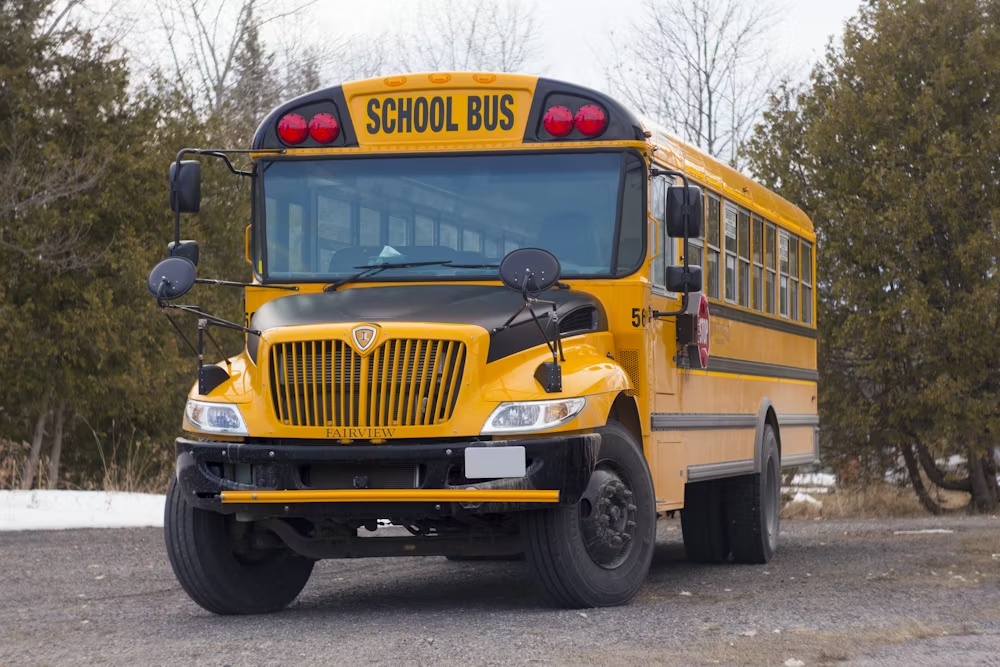
I was twenty-five then, driving a school bus for the county. It wasn’t a glamorous job. The seats smelled like old vinyl and stale lunches, the heater rattled like a dying tractor, and the pay was just enough to keep the lights on in my small apartment. But I liked the rhythm of it. I liked the quiet moments between routes when the world was just grey sky and empty road.
That evening, I had just dropped off the last straggler at the high school—a kid who had fallen asleep in the back row. I was driving the empty bus back to the depot, the wheels crunching over the salt and grit on Route 9. The sun had already dipped below the horizon, leaving the world in that bruised purple twilight that feels lonely if you let it.
That’s when I saw him.
He was just a smudge against the snowbank at first. A small, dark figure moving slowly under the flickering orange glow of a streetlamp that was fighting a losing battle against the gathering dark.
My foot hovered over the brake.
As I got closer, the smudge resolved into a boy. He couldn’t have been more than six years old. He was wearing a coat that was too thin for the weather, zipped up to his chin. But what caught my attention—what made my stomach drop—was the backpack. It was enormous, a bright blue thing that looked like it was trying to swallow him whole. And clutched tight to his chest, white-knuckled and desperate, was a stuffed bunny with one ear flopped over.
This didn’t look like a kid who’d slipped out of his yard to build a snowman. This little boy was walking with a grim determination that belonged to someone much older.
This little boy was running from something.
I slammed the brakes. The bus hissed and shuddered to a stop on the shoulder, gravel spraying. I threw the lever to open the door, the accordion panels folding back with a groan.
“Hey, buddy,” I called out, leaning over the rail. “Are you okay?”
He stopped. He didn’t run, but he didn’t come closer. He stood there on the asphalt, shivering. Under the streetlight, his face was pale, his eyes red-rimmed but dry. They were the eyes of a kid who had already cried himself empty.
“My mom died today,” he said. His voice was small, flat, matter-of-fact.
The words hit me like a physical blow. Oh, God. This poor kid.
“They wanted to take me somewhere,” he continued, staring at his boots. “But I didn’t want to go. So I ran away.”
I knew immediately what “they” meant. Social services. Police. The system.
I had to be careful. If I spooked him, he might bolt into the woods, and in this temperature, that was a death sentence.
“You look cold,” I said gently. “You want to get on the bus? It’s warm inside. I have the heater on high. Maybe I could take you somewhere safe?”
He eyed the bus warily. He looked over his shoulder, scanning the dark road behind him as if expecting a pursuit vehicle.
After a long, agonizing moment, he nodded.
He climbed the steps, struggling with the weight of the backpack. I reached out to help him, but he flinched away, so I let him do it. I sat him in the front seat, right behind me, and cranked the heater until the windows fogged up.
“What’s your name, kid?” I asked, keeping my voice low.
“Gabriel,” he whispered, burying his face in the bunny’s fur.
“I’m Marcus. And I promise you’re safe right now, okay? Nobody is going to hurt you.”
He didn’t respond. He just pulled his knees to his chest and stared out the windshield at the snow beginning to fall.
I stepped outside, pulling my coat tight, and called dispatch on my personal cell.
“I found a child on Route 9,” I told Shirley, the dispatcher. “He says his mom died. He’s running.”
“Oh, honey,” Shirley sighed, the crackle of the radio in the background. “Stay put. I’m calling the police and CPS. Don’t let him leave.”
I climbed back onto the bus. Gabriel hadn’t moved. In fact, he had curled tighter, turning himself into a ball of blue nylon and grief. His eyes were open, staring at nothing.
I took off my heavy work jacket and draped it over him. He didn’t flinch this time. He just accepted the weight.
Fifteen minutes later, dispatch called back. They directed me to the emergency foster intake center across town—a nondescript brick building I had driven past a thousand times without noticing.
“Someone is waiting for us,” I told Gabriel.
He didn’t react. He had gone somewhere inside his head, a place where the world couldn’t touch him.
I drove slowly, treating the bus like it was carrying fine china. When we pulled into the parking lot, Gabriel had fallen asleep, his breathing hitching every few seconds. I scooped him up—backpack, bunny, and all—and carried him inside.
The lobby was fluorescent-bright and smelled of cleaning solution. A woman in a grey cardigan hurried up to us.
“Gabriel!” she exclaimed, her face a mask of relief. “I was so worried about you!”
And that’s when he exploded.
His eyes snapped open, wide with terror. He writhed in my arms, kicking his legs, screaming with a ferocity that echoed off the linoleum floors.
“I want to go home! I want my mom! Let me go!”
The woman reached for him. “It’s okay, sweetie. You’re safe now. We’re going to take care of you.”
But he twisted harder, his small hands gripping my shirt so tight I thought the fabric might tear. He buried his face in my neck, sobbing.
“Please, don’t let them take me!”
He clung to me like I was a lifeline in a storm.
It was heartbreaking. This woman was just doing her job, trying to help, but all Gabriel could see was another stranger trying to drag him into a system that had already failed him by taking his mother.
“Okay, bud, just try to relax, okay?” I murmured, swaying him gently. I felt stupid—I didn’t know anything about kids—but instinct took over.
“I want to go home,” he repeated, his voice breaking into a whimper. “Please take me home.”
The woman stopped reaching. She looked at me, seeing the way the boy had attached himself to the only solid thing he could find.
“Would you mind staying a while?” she asked softly. “Just until we can get him settled? He trusts you.”
Of course, I said yes. What else was I supposed to do? Peel him off me and leave him screaming in a stranger’s arms?
So I stayed.
I stayed while phone calls were made. I stayed while forms were signed. I stayed while adults spoke in careful, hushed voices in the hallway, discussing the tragedy of Gabriel’s life while he sat pressed against my side on a plastic chair, trembling.
I listened. I learned the truth.
His mother had collapsed at her job at the diner—a brain aneurysm. It was instant. No warning. No goodbye. There was no father listed on the birth certificate. No grandparents. No aunts or uncles. Gabriel was alone in the world.
The woman, his caseworker, had gone to his house to collect him, but in the confusion, he had panicked. He grabbed his backpack and ran out the back door while the police were talking in the front yard. He had been walking for two hours before I found him.
Two hours in the dark. Alone.
They set him up in a temporary room with a bed and some donated toys. When it was finally time for me to leave, I knelt in front of him.

“I have to go now, Gabriel,” I said.
Panic flared in his eyes.
“But I promise,” I said quickly, “I’ll come visit you. Tomorrow. You won’t be alone.”
He looked at me like he didn’t believe it. Like he expected everyone to leave eventually.
But I came back.
The next day, I drove the bus to the depot, clocked out, and drove my car straight to the center. When I walked into the rec room, Gabriel looked up from a puzzle. He didn’t smile, but he ran to me and wrapped his arms around my leg.
I told myself I was just checking in. Just being a good Samaritan.
But the truth was, he reminded me of my twin brother, Lucas.
Lucas had the same quiet way of watching people. The same habit of pretending to be fine when he wasn’t. The same way of making himself smaller so he wouldn’t be too much trouble.
I’d lost Lucas when we were twelve. A summer trip to the river. The water looked calm, glass-flat under the July sun. Lucas slipped on a mossy rock. One second he was there, laughing. The next, he was gone. The current took him before anyone could react. I’d spent my whole life wishing I could go back to that moment, wishing I had been faster, stronger, closer. Wishing I could grab his hand.
Losing Gabriel to the currents of the foster care system felt unbearable. It felt like watching Lucas slip away all over again.
So, before Christmas, I filed the papers.
I told myself it was fate. I told myself the universe was giving me a second chance to save the boy in the water. I swore I’d never let him slip away.
That was my first mistake. Not the adoption—that was the best thing I ever did. My mistake was thinking I could protect him from everything, including himself.
The adoption went through quietly. The system was overcrowded, and they were happy to find a willing, background-checked adult who wanted a six-year-old boy.
Gabriel moved into my apartment. For the first few weeks, he was a ghost. He barely spoke. He followed me from room to room, sitting on the floor while I cooked, standing in the doorway while I brushed my teeth. He clutched that stuffed bunny like it was an oxygen tank.
But slowly, the ice thawed.
He started asking questions. Can we have pizza? Can I watch cartoons? He started helping with dinner, standing on a chair to stir the sauce. It felt like a massive victory the day he left his backpack in his room instead of carrying it to the breakfast table.
For years after that, I worked myself to the bone.
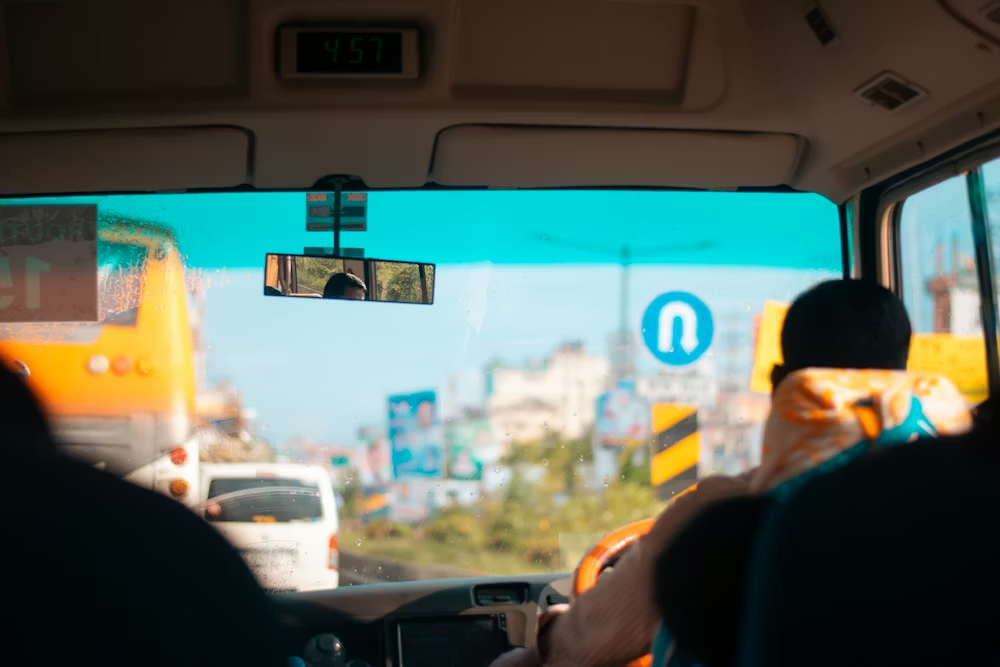
I kept the bus route during the day because the benefits were good. At night, I drove a taxi. On weekends, I rented out my car on Turo. I saved every penny. I wanted to build a fortress of security around us. I wanted Gabriel to know he would never, ever be out in the cold again.
I was always tired. My hands were calloused, my back ached, and I lived on coffee and sandwiches. But Gabriel never lacked. He had new sneakers for school. He had a warm coat. He had me.
I gave him everything I had. And in my desperation to keep him safe, I never once noticed how carefully he was keeping a secret from me.
Thirteen years passed in a blur of report cards, growth spurts, and quiet dinners.
Then came the Tuesday that changed everything.
I came home early from my shift—the bus had blown a radiator hose—and found the front door unlocked. I walked into the living room and froze.
Gabriel was sitting on the couch. He was nineteen now, tall and lanky, but in that moment, he looked six again.
He was crying. Silent, shaking sobs.
Next to him sat a woman I didn’t know. She was in her forties, wearing a sharp blazer and holding a thick manila folder. Her expression was deadly serious.
“What’s going on here?” I asked, dropping my keys on the table. The sound echoed in the quiet room.
Gabriel looked up at me. His eyes were red and swollen.
“Dad,” he choked out. “I have to go. We’ll never see each other again. I love you. Thank you for everything.”
The room spun. My heart hammered against my ribs.
“What?” I demanded. I rounded on the woman. “Who are you? And what did you tell my son?”
She didn’t flinch. She folded her hands calmly on top of the folder.
“I’d sit if I were you, Mr. Wright,” she said. “You’ve been living a lie for thirteen years. And you’re not going to like what comes next.”
I didn’t sit. I stood there, rooted to the spot, feeling like the floor might give way beneath me.
“A lie?” I repeated. “What are you talking about? Who are you?”
The woman gestured to the armchair across from them. “Please.”
I sat down, purely because my legs felt weak. I glared at her.
“Speak,” I commanded. “Now.”
“I’m Patricia,” she said. “I’m the senior guidance counselor at Gabriel’s high school.”
“His counselor?” I looked at Gabriel. “Gabe, what’s going on? Are you in trouble?”
Patricia looked at Gabriel, not me. Her gaze was stern but not unkind. “Tell him, Gabriel. Tell him what you’ve been doing.”
Gabriel shook his head hard, wiping his eyes with his sleeve. “You said you would. I can’t.”
“I will,” she said gently. “But he needs to hear it from you, too.”
He swallowed hard, his Adam’s apple bobbing. He looked at the floor.
“Dad… I didn’t mean to lie. I just… I didn’t want to leave you.”
“Leave me?” I asked, my voice rising. “Why would you leave me?”
Patricia leaned forward. “For thirteen years, your son has been trying to protect you from the truth.”
“Protect me?” I scoffed. “I protect him. That’s how this works.”
“That’s exactly the problem,” she said.
She opened her folder, pulling out papers and laying them out on the coffee table. I leaned in.
They were letters. Recommendation letters. Dozens of them. From teachers I knew, and some I didn’t.
“Gabriel is a generational talent…” “His aptitude for physics is unlike anything I’ve seen…” “We strongly urge him to consider…”
“Gabriel, what is this?” I asked, picking up a letter from a summer program at MIT. It was dated three years ago. “Why would you hide this from me?”
Gabriel wouldn’t look at me. He was picking at a loose thread on the couch cushion.
I turned back to Patricia. “How long has this been going on?”
“Far too long,” she said. “Your son is valedictorian. He has a 4.0 GPA. He’s brilliant, Mr. Wright. For years, his teachers have been begging him to apply to programs out of state. Summer engineering camps. Academic decathlons. Even a chance to travel with his debate team to nationals in D.C.”
“He told me he didn’t want to go,” I whispered, the memory surfacing. “He said he hated travel. He said he wanted to stay home and help me fix up the car.”
“Why?” I asked him, my voice cracking. “Why did you lie?”
Gabriel finally looked up. His face was anguished.
“Because every time I thought about leaving,” he whispered, “I pictured you alone in this house. I pictured you eating dinner by yourself. I pictured you working two jobs for nobody.”
He took a shaky breath.
“I knew… I knew it would be too much for you. You saved me, Dad. You gave up your whole life for me. How could I leave you? How could I be the reason you were lonely again?”
My chest tightened until I couldn’t breathe properly. The air felt thin.
“He learned very young how much you feared loss,” Patricia added softly. “He saw how you held on to him. He saw the grief you carry for your brother. He internalized it. He decided that his job was to be your anchor, even if it meant drowning himself.”
“You gave me everything, Dad,” Gabriel said, tears spilling over again. “How could I betray you by walking away?”
I buried my head in my hands. The shame washed over me, hot and heavy. I had held him so tight I had crushed him. I had tried to save him from the current, but instead, I had built a dam that stopped him from flowing.
“What have I done?” I mumbled into my palms.
Patricia cleared her throat. The sound was crisp, cutting through the emotion.
“But that’s not the whole reason I’m here today,” she said.
I looked up.
“Last month, Gabriel was awarded the Presidential Scholarship to Stanford University,” she said. “It’s everything. Tuition. Housing. Books. A stipend. It is a golden ticket, Mr. Wright.”
She paused, letting the weight of it settle.
“He was going to turn it down. He didn’t even tell you. He was going to enroll in the local community college so he could live at home.”
“I convinced him to let me come here,” Patricia continued. “To tell you the truth. But you need to support him. You need to tell him it’s okay to go. Or I fear he won’t commit to it. He will stay here, and he will resent you, and he will wither.”
Patricia rose, smoothing her skirt. She placed the acceptance letter on the table.
“He’s earned this opportunity. It would be a tragedy if he threw it away because he loves you too much.”
She walked to the door. “I’ll let you talk.”
She left, and the silence rushed in behind her like water filling a hole.
Gabriel sat there, shoulders hunched, bracing for the impact.
“I wasn’t trying to hurt you,” he whispered. “I swear, Dad. I want to go. I really do. But I don’t have to—”
I stood up. I crossed the room before I realized I was moving. I pulled Gabriel up from the couch and wrapped him in a hug that was fierce and desperate and full of thirteen years of love.
“You’re going,” I said into his ear. “You are going to Stanford. And you are going to be brilliant.”
He stiffened at first, surprised. Then he broke. His whole body shook as the weight he had been carrying finally dropped. He sobbed into my shoulder, clutching me just like he had that first night at the intake center.
“Don’t you worry about me,” I told him, tears streaming down my own face. “I’m tough. I can handle a quiet house. I can handle missing you.”
“I’m going to miss you,” he choked out. “Every single day.”
“I’ll miss you too,” I said. “But that’s the deal, kid. That’s the deal.”
I pulled back just enough to look at him. He wasn’t the little boy I’d found on the side of the road anymore. He wasn’t the scared kid clutching a bunny. He was a man. A brilliant, compassionate man who had loved me enough to sacrifice his dreams.
And now, I had to love him enough to give them back.
“Just… promise me something,” I said, wiping his face with my thumb.
“What?” he sniffled.
“Come home for the holidays,” I said. “Don’t make me eat turkey alone.”
A tear slipped down his cheek, but he smiled through it. A real smile.
“Of course I will, Dad,” he said. “This is still home. It’s always home.”
I held him tighter. For the first time in my life, I understood the paradox of parenting. I wasn’t losing him. I was launching him. I wasn’t letting him go to be lost; I was letting him go to be found.
And maybe that’s what love is supposed to be. Not a cage, but a runway.
Let us know what you think about this story on the Facebook video! Did Marcus do the right thing by letting Gabriel go? If you have ever had to let go of someone you love so they could grow, tell us your story in the comments. And if you like this story share it with friends and family to remind them that love sometimes means saying goodbye.
