
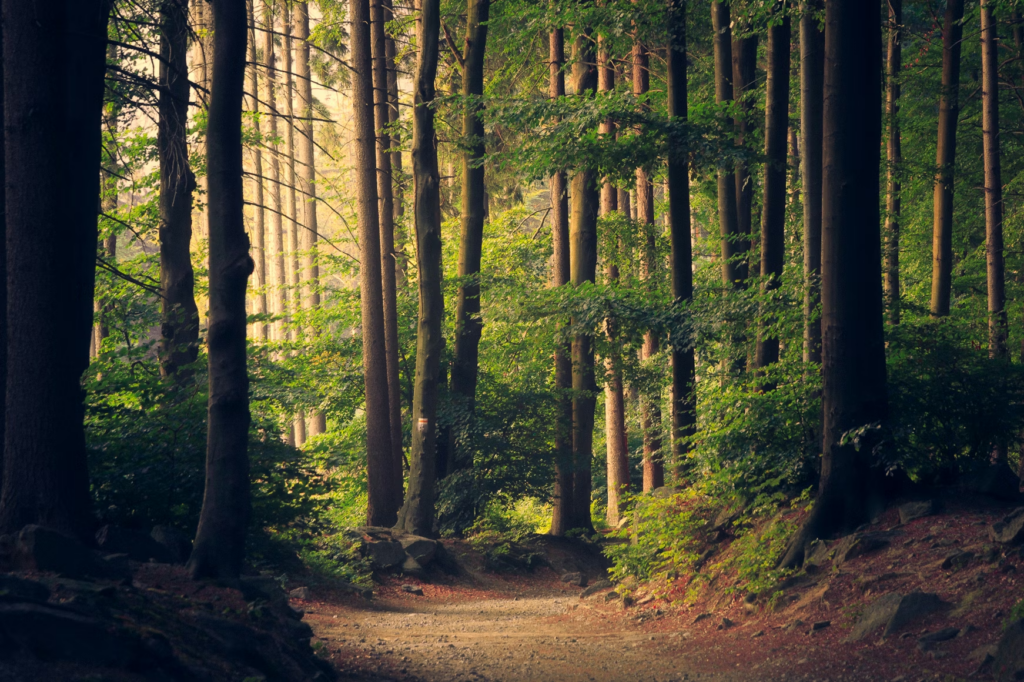
The woods behind my house have always been a place where sound goes to die. It’s a dense thicket of oaks and maples, their roots tangling like old arthritic fingers, the ground perpetually soft with decaying leaves. On foggy mornings, the mist clings to the trees like damp cotton, swallowing everything whole.
I’m Mike. I’m 36 years old, and for the last year, I’ve been living in a fog of my own.
A year ago, my life was a picture you’d see in a frame at a department store. My wife, Lara, was beautiful in that effortless way that made grocery shopping look like a magazine shoot. She smelled like vanilla and sawdust—she was a carpenter, I was a plumber. We built things. We fixed things. Our son, Caleb, was six months old, a squirming bundle of noise and potential. We were tired, we were broke, and we were obscenely happy.
Then came the Tuesday.
It was icy. A freak cold snap in late November turned the roads into glass. Lara was driving home from the pharmacy with Caleb’s prescription for an ear infection. She stopped at the sign on Route 9. The driver of the F-150 didn’t. He was drunk at 4:00 p.m., sliding through the intersection like a missile.
The police said she died instantly. They always say that. I hope it’s true. I hope she didn’t have time to be afraid.
Caleb wasn’t in the car. Thank God. My sister had him. But sometimes, in the darkest hours of the night when the house is too quiet and the radiator pipes are banging, I wonder if it would have been kinder if we had all gone together. Grief is a selfish thing. It makes you bargain with the universe for things you can’t have.
Now, Caleb is eighteen months old. He’s all elbows and energy, a toddler who climbs furniture like it’s an Olympic sport and laughs at jokes only he understands. He has Lara’s chin and my stubbornness. Some mornings, his laughter is the only thing that pulls me out of bed.
The Sound in the Silence
That particular morning, the air was crisp, smelling of wet earth and pine. I had dropped Caleb off at my sister Sarah’s place because I had back-to-back plumbing calls scheduled.
My truck, a battered Chevy that had seen better decades, was making a rattling noise in the transmission, so I decided to walk to my first job. Mrs. Gable, three streets over, had a leaking pipe that was threatening to turn her basement into an indoor pool.
The quickest route was the narrow deer trail cutting through the woods. I’ve walked it a hundred times, toolbox in hand, thinking about nothing more dramatic than PVC fittings and water pressure.
It was just an ordinary morning. Same path. Same silence.
Until it wasn’t.
About two minutes into the trail, a sound cut through the quiet. It wasn’t a bird. It wasn’t a fox. It was a sound that triggers a primal alarm in any parent’s brain.
A cry.
At first, it was faint, a thin reed of noise almost swallowed by the wind rustling the dead leaves. I stopped, my boots sinking into the mud. My heart hammered a sudden, violent rhythm against my ribs.
“Hello?” I called out. My voice sounded flat and intrusive in the woods. “Is anyone there?”
Silence answered. Then, the cry came again. Stronger this time. Desperate.
It was coming from off the path, deep in a cluster of thorny brambles near the creek bed.
I pushed through the bushes, the thorns snagging my jeans, my boots slipping on the damp moss. The canopy was thick here, blocking out the morning sun, casting everything in a gloom that felt heavy and wrong.
And that’s when I saw it.
An infant carrier. It was tucked low under the low-hanging branches of a spruce tree, almost invisible unless you were looking for it. It was placed carefully, leveled on a patch of dry leaves. It wasn’t abandoned; it was hidden.
For a second, my brain short-circuited. It refused to process the data. A baby? Here?
Then I saw the tiny face inside.
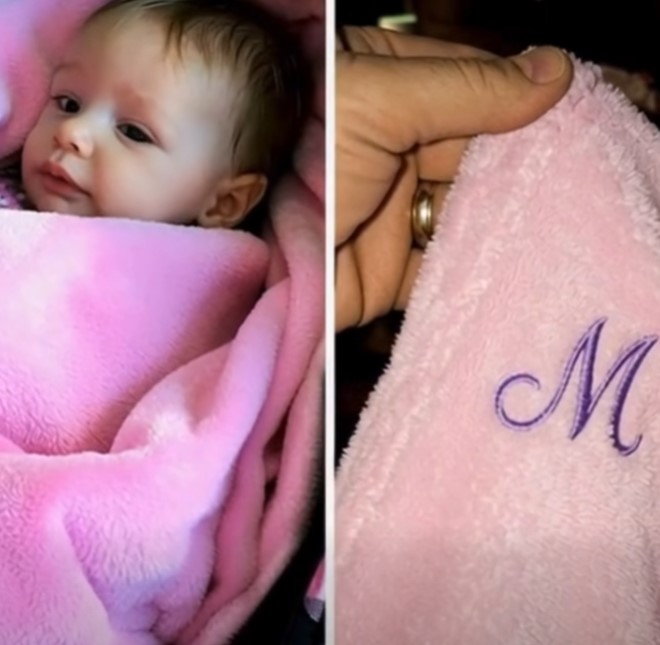
A newborn baby girl. She couldn’t have been more than a few days old. She was wrapped in a thin, pink blanket that looked completely inadequate for the forty-degree weather. Her lips were tinged a terrifying shade of blue. Her cheeks were blotchy and red from screaming, streaks of tears freezing on her skin.
And the second I touched her hand, the cold transferred to my skin like a shock.
My brain didn’t form a plan. My body just moved. The plumber vanished; the father took over. The part of me that remembered holding Caleb in the NICU, the part of me that remembered the fragility of life, surged to the surface.
I lifted the carrier, swinging it into my arms. I pulled the thin blanket tighter around her, shielding her from the wind with my own flannel jacket.
“I got you,” I whispered, my voice shaking. “I got you. Stay with me.”
I started running.
The Rescue
I didn’t care that I probably looked insane, a grown man sprinting down a gravel road with a baby carrier, toolbox abandoned in the mud. All I knew was that she was freezing. Hypothermia in infants isn’t a slow fade; it’s a cliff. And she was on the edge.
I burst through my front door and kicked it shut behind me. I laid the carrier on the couch, my hands shaking so badly I fumbled with the straps.
“There you go,” I kept whispering, a mantra against the panic. “You’re okay. You’re safe now.”
I grabbed the space heater from the hallway closet—the one I used to warm the bathroom for Lara—and plugged it in, setting it a safe distance away. I grabbed one of Caleb’s thick, plush towels from the dryer, still warm. I wrapped the tiny girl in it, rubbing her back, trying to generate friction, trying to share my own heat.
She was so small. Impossibly small.
Then I ran to the kitchen.
I still had bottles. I still had formula. I kept everything from Caleb’s newborn stage, unable to throw it away because it felt like throwing away the last months Lara was a mother. I had cans of formula in the pantry that were dangerously close to expiration, but still good.
I mixed a bottle so fast I spilled powder all over the granite counter. I tested it on my wrist—warm, not hot—and ran back to the couch.
I pressed the nipple gently to her mouth.
She didn’t take it at first. She was too cold, too lethargic.
“Come on,” I urged, tears pricking my eyes. “Please. Drink.”
And then, she latched. It was a fierce, desperate hunger. She sucked greedily, her eyes squeezed shut, her tiny hand gripping my finger with surprising strength.
I sat there on the floor, holding her close, watching her swallow and breathe. I watched the blue fade from her lips, replaced by a healthy pink. I watched the shivering stop.
Only when I felt warmth radiating back from her skin did I allow myself to think about what to do next.
I grabbed my phone.
“911, what is your emergency?”
“My name is Mike,” I said, my voice sounding strangely calm, detached from the adrenaline coursing through me. “I found a newborn in the woods behind Oak Creek. She was freezing. I brought her home. She’s alive. Please send someone.”

The Clue in the Blanket
The paramedics arrived in six minutes. They didn’t scold me for moving her. One of them, a woman named Sarah who had attended my wife’s funeral, checked the baby’s temperature and looked at me with wide eyes.
“You did the right thing, Mike,” she said, checking the baby’s vitals. “Her temp is low, but rising. If you’d left her out there another twenty minutes… she wouldn’t be here.”
I just stood there, numb, watching them load the tiny bundle into the ambulance. The sudden emptiness of my arms felt heavy.
“Is she going to be okay?” I asked.
“She’s strong,” Sarah said. “She’s going to the hospital, then Child Protective Services will take over until they find the parents.”
The parents. The word tasted like bile. Who leaves a baby in the woods? Who leaves a life behind a tree like trash?
As they packed up, Sarah handed me the pink blanket. “Evidence,” she said. “Police will want this. Don’t wash it.”
I looked at it before placing it in the plastic bag she provided. It was a cheap, fleece blanket, the kind you buy at a drugstore. But in the corner, embroidered in slightly crooked, hand-stitched letters, was a single initial: “M”.
It didn’t feel random. It felt deliberate. A mark of identity left by someone who cared enough to stitch it but was desperate enough to leave her. It wasn’t machine-made. Someone had sat with a needle and thread and put a name—or a part of one—on this child.
That night, the house felt too quiet. Caleb was still at my sister’s; I told her I had a plumbing emergency and would pick him up in the morning. I couldn’t face him yet. I was too shaken.
I sat on the couch where the baby had been, staring at the spot. I couldn’t sleep. Every time I closed my eyes, I saw her blue lips. I saw the “M”.
And then a thought crept in, unbidden and terrifying: Maybe someone didn’t want to leave her there. Maybe she was hidden for a reason.
The Ghost from the Past
The next afternoon, there was a knock at my door.
It wasn’t the police. It wasn’t a neighbor. It was a hesitant, barely-there knock.
I opened the door.
A woman stood on my porch. She looked to be in her late twenties. Her hair was pulled back in a messy, frantic bun. Her eyes were red-rimmed and swollen, the skin beneath them bruised with exhaustion. She wore a coat that was too thin for the weather, and her hands were clenched so tightly at her sides I could see the white of her knuckles.
She looked like a woman who was vibrating apart. Like a wire pulled so tight it was humming.
“Hi,” she whispered. Her voice was shredded. “Are you… Mike?”
“Yes,” I said, stepping onto the porch, blocking the doorway instinctively. I was big—six-foot-two, broad shoulders from years of manual labor. I knew I could be intimidating.
She swallowed hard, her throat clicking. “Did you… did you find a baby yesterday?”
I didn’t answer right away. I looked at her face. Really looked at her.
And then the world tilted.
I knew that face. Not from my life now. Not from the neighborhood. I knew it from the boxes of photos stored in my closet—Lara’s college albums.
I stared at her, my brain flipping through dusty memories. Summer 2012. The beach trip. The girl with the bright laugh and the sunhat. The girl Lara used to study with.
“Wait…” I said slowly, the name surfacing from the deep. “Marissa?”
Her whole body went still. She looked at me, confusion warring with panic. “You… you know me?”
“Lara,” I said. “You were Lara’s roommate. Junior year. University of Illinois.”
Marissa let out a sound that was half sob, half gasp. She covered her mouth. “Oh my God. Mike? Lara’s Mike?”
We stood there, two ghosts staring at each other across a chasm of years and tragedy.
“She died,” I said bluntly. I didn’t know how else to say it. “A year ago. Car accident.”
Marissa flinched as if I’d slapped her. She grabbed the porch railing for support. “I didn’t know. I… I fell off the map. I’ve been… gone. Oh God, Mike. I’m so sorry.”
The grief on her face was real. It mirrored my own. But then the panic returned, sharper than before.
“Marissa,” I said, my voice hardening. “The baby. Is she yours?”
She nodded, tears spilling over her hands. “She’s my daughter. Her name is Mila.”
“Mila,” I repeated. “M.”
I stepped back and opened the door. “Come in.”
The Truth About the Woods
She sat at my kitchen table, her hands wrapped around a mug of coffee she wasn’t drinking. She looked small. Broken. The adrenaline that had driven her to my door was fading, leaving her trembling.
“I wasn’t trying to abandon her,” she said, her voice shaking so hard the words fractured. “I was trying to save her.”
I sat opposite her. “Explain. Because from where I stood, it looked like you left a newborn to die.”
She flinched, but she met my eyes. “The father,” she began, staring into the black coffee. “He’s… he’s not a good man. His name is Julian Henderson. His family… they own half the county. They have money. Influence. When I told him I was pregnant, he laughed. He said I was trash. He blocked my number. I did this alone. I went through the pregnancy alone.”
She took a breath, her fingers tracing the rim of the mug.
“Then, two weeks ago, he showed up. With his parents. They had changed their minds. They decided a grandchild would be good for their image. They’re running for something—city council, maybe? I don’t know. But they wanted the baby.”
“They offered to buy her?” I asked, disgusted.
“They offered me money to sign over custody. When I refused, they threatened me. They said they would declare me unfit. They said they had judges in their pocket. They said they would take her and I would never see her again. They knew where I lived. They knew my schedule.”
She looked up at me, her eyes wild with the memory.
“Yesterday morning, they came to my apartment. I saw their car. Julian and his father. They were banging on the door, shouting that they had a court order—which I knew was a lie, but I was terrified. I grabbed Mila and ran out the back. I didn’t know where to go. I just ran toward the woods. I heard them following me.”
I leaned forward. “So you hid her?”
“I thought… I thought if I hid her, just for a minute, I could lead them away. I tucked her under the spruce tree. I ran to the other side of the trail and made noise. I drew them off. But then… I fell. I hit my head.”
She touched a bruise on her temple I hadn’t noticed under her hair. It was purple and ugly.
“I woke up an hour later. I was disoriented. I ran back, but she was gone. I thought they had her. I thought I’d lost her forever. I was screaming her name. Then I saw the ambulance leaving your driveway. I saw you talking to the police. I hid in the bushes.”
She started to weep, deep, racking sobs that shook the table. “I’m a monster. I left my baby in the cold. I should have just fought them.”

I reached across the table and took her hand. It was ice cold.
“You’re not a monster,” I said firmly. “You were hunted. You made a split-second decision to protect her.”
“What do I do?” she whispered. “If I go to the police, they’ll arrest me for abandonment. If I don’t, they’ll foster her out. Or the Hendersons will find her.”
I looked at this woman, my dead wife’s best friend, terrified and alone. I thought about Lara. Lara, who saved stray cats. Lara, who never turned anyone away. Lara, who would have ripped the world apart to help Marissa.
“We fix this,” I said. “Today.”
The Legal Battle
We didn’t go to the police alone. I called my lawyer—Robert Sterling. He was the shark who handled the settlement with the drunk driver’s insurance company. He was expensive, aggressive, and hated bullies.
“Meet us at the 4th Precinct,” I told him.
We told the truth. All of it.
The police were skeptical at first. The officer, a guy named Miller, looked at Marissa with open suspicion. “You left a baby in the woods, ma’am. That’s endangerment, regardless of the reason.”
But then Marissa unlocked her phone. She showed them the texts.
Sign the papers or we take her. You’re unfit. We’ll ruin you. We’re outside. Open the door.
There were voicemails from Julian’s mother saying, “We will destroy you. You are nothing.”
The narrative shifted. It wasn’t abandonment; it was a desperate flight from imminent danger. It was self-defense.
Sterling went to work. He filed emergency injunctions. He got the police report amended.
The next day, we walked into Family Court.
The Hendersons were there. Julian looked like a man who bought his way out of trouble—expensive suit, arrogant posture, checking his watch like this was a waste of his time. His parents were there, looking down their noses at everyone, radiating entitlement.
But when they saw me—a local business owner, a widower with a spotless reputation—standing next to Marissa, their confidence faltered. They didn’t expect her to have backup.
My lawyer was brilliant. He didn’t just defend Marissa; he went on the offensive. He painted a picture not of a negligent mother, but of a woman terrorized by a powerful family. He played the voicemails for the judge in chambers.
The judge, a stern woman named Judge Halloway who had clearly seen enough bullying in her courtroom to last a lifetime, came back out with a face like thunder.
She looked at Julian Henderson.
“Mr. Henderson,” she said, peering over her glasses. “The evidence presented regarding your harassment of Ms. Davies is disturbing. This court does not look kindly on intimidation tactics.”
“She’s lying,” Julian blurted out. “She abandoned my child!”
“She hid the child from you,” the judge corrected sharply. “And given the threats on this phone, I might have done the same.”
The gavel came down hard.
“If you or your family contact Ms. Davies again, I will have you arrested for harassment. Custody remains with the mother. Child support will be garnished from your wages immediately. We are done here.”
He signed the papers. He agreed to walk away. He didn’t want the public scandal.
When we walked out of the courthouse, into the bright afternoon sun, Marissa collapsed onto a bench and breathed for the first time in three days.
“It’s over,” she whispered.
“It’s over,” I said.
The Month In-Between
Marissa didn’t have anywhere to go. Her apartment wasn’t safe—the Hendersons knew where it was.
“Stay with us,” I said. “Just for a few days. Until you find a new place.”
She stayed for three weeks.
It was… strange. And healing.
Having a baby in the house again brought back memories of Caleb that I had suppressed. The smell of milk. The late-night cries. But instead of hurting, it felt like I was reclaiming those memories.
Marissa and I fell into a routine. She took care of Mila; I took care of the house repairs she needed to get her deposit back on her old place. We spent evenings sitting on the porch after the kids were asleep, talking about Lara.
“She was the only one who didn’t judge me,” Marissa told me one night, looking at the stars. “I was a mess in college. Partying. Making bad choices. Lara just… anchored me. She used to talk about you all the time. ‘Mike is the good one,’ she’d say. ‘Mike is the oak tree. He doesn’t break.’”
I swallowed hard. “I broke,” I admitted. “When she died. I shattered.”
“But you put yourself back together,” she said. “Look at you. You saved my daughter. You saved me. An oak tree might lose its leaves, Mike, but the roots hold.”
Those weeks changed me. I stopped just going through the motions. I started living again. I fixed the leaky faucet I’d ignored for six months. I painted the nursery. I started laughing with Caleb, really laughing, not just performing happiness for his sake.
When Marissa finally found a new apartment—a secure complex two towns over—it was bittersweet. I helped her move. I installed new locks on her door, checking them three times. I checked the windows.
“You’re safe here,” I told her, handing her the keys.
“Because of you,” she said.

The Gift
A month passed.
Life went back to its usual rhythm—Caleb throwing toys, me juggling work and diapers. But the house felt different. Less empty. The ghosts were friendlier now.
Then, one Saturday morning, there was a knock at my door.
Marissa stood there. But this time, she didn’t look like a woman falling apart. She looked steady. Strong. Her hair was down, shining in the sun. She wore a dress that Lara would have loved.
And in her arms was Mila.
The baby was bundled in a soft cream sweater, cheeks pink and full. She was healthy. She was warm. She was growing.
“Hi,” Marissa smiled. “I just wanted you to see her. Really see her. Not in a crisis.”
I stepped aside. “Come in.”
Mila blinked up at me with huge, dark eyes. She gurgled, blowing a spit bubble. Something in my chest, a knot I hadn’t realized was there, loosened completely.
“She’s doing amazing,” Marissa said, bouncing her gently. “We’re okay now. My mom came up to help. We’re settling in.”
“I’m glad,” I said. And I meant it.
She reached into her diaper bag and handed me an envelope. “I know you didn’t do any of this for a reward,” she said. “But I need you to take this.”
I opened it. Inside were two things: a handwritten letter on thick stationery and a small key fob.
I stared at the fob. It was for a truck. A Ford.
“Marissa…”
“My grandmother,” she said quickly. “She passed away last month. I didn’t mention it because… well, there was a lot going on. She left me some money. A trust.”
She gestured to the driveway. My old Chevy was there, rust eating the wheel wells, duct tape holding the side mirror on.
“I bought a used car for myself,” she continued. “But… I saw your truck, Mike. I heard it starting in the mornings when you stayed with us. It sounds like it’s dying.”
“I can’t accept this,” I said, trying to hand the keys back. “It’s too much.”
“Yes, you can,” she cut in, her voice fierce. She stepped closer. “Mike, listen to me. You ran home with my baby. You warmed her up. You fed her. You stood up to a bully for me. You hired a lawyer I couldn’t afford. You saved her life. And you helped me keep her. You gave me a chance to be her mom.”
She touched my arm.
“Lara would have wanted you to have a safe truck for Caleb,” she said softly. “Please. Let me do this. Let me be the oak tree for a minute.”
I looked at the key fob. Then I looked at Mila, safe in her mother’s arms. I looked at Caleb, who had waddled into the room and was trying to offer the baby a Cheerio.
I realized fighting her on it would be like refusing a miracle. It would be rejecting the grace that had finally found its way back into my life.
“Okay,” I said, my voice thick with emotion. “Okay. Thank you.”
Marissa smiled, wiping her eyes. “No. Thank you. For everything.”
We walked outside. In the driveway sat a charcoal grey pickup. It was beautiful. Solid. Safe.
I put Caleb in his car seat in the back. He squealed with delight.
The Echo
Sometimes life hands you moments you never saw coming. I didn’t go into those woods looking to be a hero. I was just a plumber trying to get to a leaky pipe. I was a man trying to outrun his own grief.
But finding Mila changed something in me.
It reminded me that grief isn’t the end of the story. It reminded me that even when your world has burned down, you can still build a shelter for someone else.
We still see them. Marissa and Mila come over for dinner every Sunday. Caleb treats Mila like a little sister he has to protect. We talk about Lara. We laugh. The four of us make a strange, patchwork family, bound together by a terrible day that turned into a beautiful life.
The woods aren’t silent anymore. They’re just woods. And the path through them doesn’t lead to fear; it leads to a second chance.
And maybe, just maybe, that’s what Lara would have wanted all along.
Let us know what you think about this story on the Facebook video in the comments! Did Mike do the right thing by getting involved? And if you like this story share it with friends and family—you never know who might need a reminder that sometimes, the wrong turn leads to the right place.
