
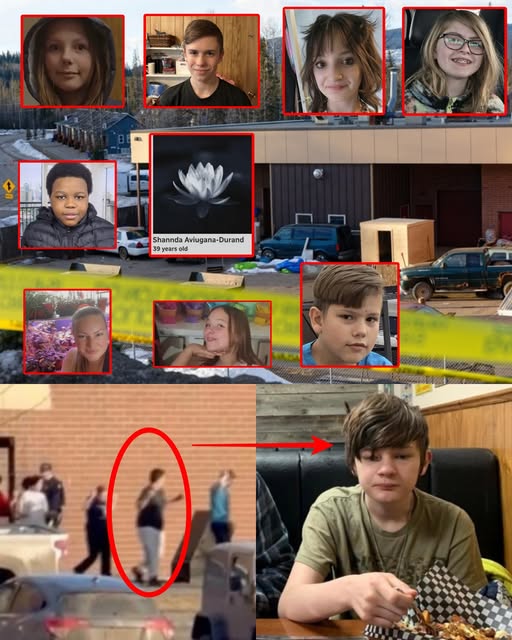
Canada is struggling to come to terms with a tragedy that has shaken its sense of safety and left families facing unimaginable loss. The deadly shooting at a high school in Tumbler Ridge, British Columbia, has claimed multiple lives and injured others, marking one of the most devastating acts of violence in recent Canadian memory.
Authorities have identified the suspect as 18-year-old Jesse Van Rootselaar, a former student who had left the school four years earlier. Police confirmed the suspect died at the scene from a self-inflicted gunshot wound after carrying out the attack. In the days since, investigators have been working to understand how such a tragedy unfolded — and why.
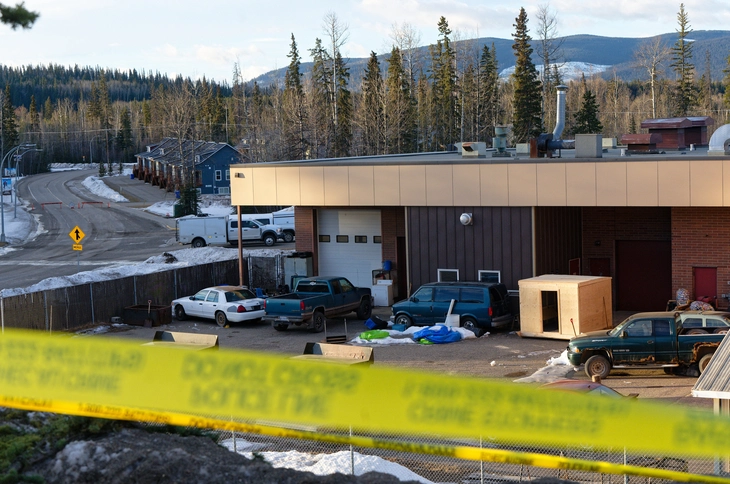
According to the Royal Canadian Mounted Police, the suspect had a documented history of mental health challenges. Officials stated that the individual had previously been detained under the Mental Health Act for evaluation and that police had responded to multiple calls at the family residence over the years related to mental health concerns and self-harming behavior. Authorities also confirmed the suspect once held a valid firearms license that expired in 2024. Weapons had reportedly been seized from the home two years earlier but were later returned after a successful appeal.
The violence began at a private residence, where two family members were found deceased. From there, the suspect entered the high school armed with a long-barreled rifle and a modified handgun. Inside the school building, chaos unfolded in minutes. A teacher and several young students lost their lives, and others were critically injured before police arrived and secured the scene.

In total, eight victims were confirmed dead following clarification from authorities regarding earlier reports. Two additional individuals remain hospitalized with serious injuries. Police have stated that, at this stage, there is no evidence suggesting the suspect specifically targeted any individual, and the motive remains under investigation.
For a country where school shootings are rare, the impact has been profound. Tumbler Ridge is a small, close-knit community where families know one another and the school serves as a central gathering place. The idea that such violence could erupt within its walls has left residents stunned and heartbroken.
Prime Minister Mark Carney addressed Parliament with visible emotion, describing the country as “shocked and in mourning.” He ordered flags across Canada to be flown at half-mast for seven days and canceled an international trip in order to remain in the country during the national period of grief. “Parents took their children to school,” he said, “and some will never hold them again.” His words captured the collective sorrow felt across the nation.

King Charles III, Canada’s head of state, also expressed deep sadness, noting that in small communities like this one, every loss is deeply personal. When a tragedy strikes, it reverberates through classrooms, neighborhoods, and generations.
In the days following the shooting, students were seen leaving the building with their hands raised as police escorted them to safety. The images — quiet lines of young faces marked by fear and confusion — quickly spread across the country, becoming a painful symbol of innocence disrupted. Schools in the region have closed temporarily to allow time for grief counseling and psychological support.
Experts say that while Canada has experienced far fewer mass shootings than some other nations, each event leaves a lasting scar. This tragedy now joins a short but haunting list of mass violence incidents that have prompted renewed discussions about mental health systems, firearm access, and early intervention strategies.

Investigators continue to analyze digital communications, personal history, and prior interactions with authorities in an effort to understand what warning signs may have existed. Officials have urged the public to avoid speculation as evidence is reviewed. The goal, they say, is clarity — not blame — and a commitment to preventing such heartbreak in the future.
Yet beyond policy debates and investigative details lies a deeper human story. Families are planning funerals instead of graduations. Classrooms hold empty desks. Parents are holding their children a little tighter at night, trying to process a grief that feels both distant and uncomfortably close.


This tragedy is not defined solely by the identity of the suspect, but by the lives that were lost — teachers who dedicated themselves to guiding young minds, students who carried dreams of futures that will never unfold. Their names, their stories, and their memories now shape the true legacy of this moment.

As Canada mourns, one truth remains painfully clear: healing will take time. Communities will rebuild, conversations will continue, and policies may evolve. But for the families at the center of this heartbreak, the loss is permanent.
In the quiet after the headlines fade, what remains is a nation united in sorrow — and a collective hope that such a tragedy will never be repeated.


