
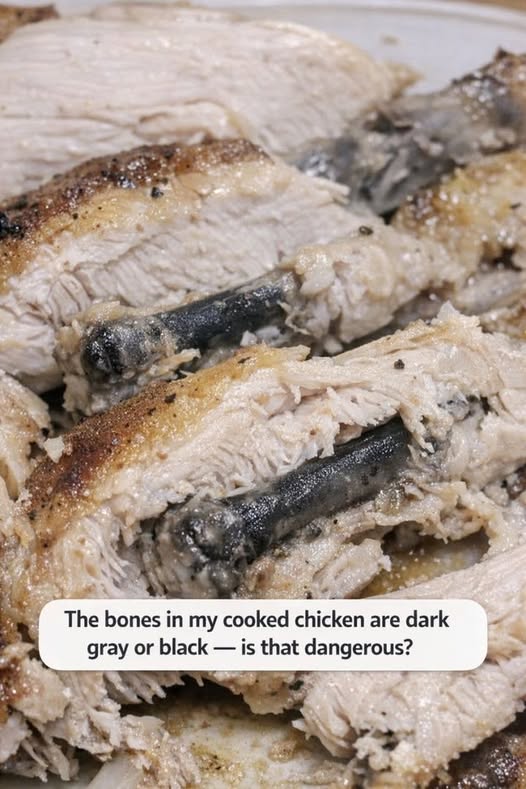
Cooking chicken is a staple in many households, and often, the joy of preparing a delicious meal can be tarnished by unexpected surprises. One such surprise is the discovery of dark gray or black bones in your cooked chicken. This can be alarming, especially for those unfamiliar with what causes this discoloration.
Understanding whether these dark bones indicate a health risk is crucial for ensuring food safety. This article aims to demystify the phenomenon, exploring the reasons behind it, whether it’s a cause for concern, and how to handle situations when you encounter these darkened bones.
1. What That Dark Gray or Black Color in Chicken Bones Really Is
The dark coloration in chicken bones is primarily due to the presence of bone marrow, which can appear darker when exposed to heat during cooking. This is especially common in younger birds whose bones are more porous, allowing marrow to seep through more easily. The discoloration is not an indication of spoilage or disease but rather a natural occurrence in the bone structure.
In young chickens, the bones have not fully ossified, meaning they are still in a transitional phase between cartilage and bone. This porosity allows blood to seep into the bone, and when cooked, the iron in the blood oxidizes, causing the color change. This is purely a cosmetic issue and does not affect the safety or taste of the meat.
2. The Science of Bone Marrow Pigment Reactions Explained Simply
Bone marrow contains hemoglobin and myoglobin, two proteins that are responsible for transporting and storing oxygen in blood and muscle tissues, respectively. When heated, these proteins undergo chemical changes that can result in dark pigmentation. In particular, the iron in hemoglobin can oxidize, leading to the dark coloration observed in the bones.
These pigment reactions are more pronounced in younger chickens due to their higher bone porosity and increased blood flow in the bone marrow. This is why the phenomenon is more commonly observed in poultry compared to other meats like beef or pork.
3. When Dark Bones Are Perfectly Normal — And Not Dangerous
Dark bones in cooked chicken are typically not a sign of danger. As mentioned, they are a result of natural processes involving bone marrow and are especially common in young chickens. This is a normal occurrence and does not indicate that the meat is unsafe to consume.
It’s important to note that as long as the chicken is cooked to an internal temperature of 165°F (74°C), it is safe to eat. The USDA specifies that this temperature effectively kills any harmful bacteria, ensuring the meat is safe for consumption regardless of the bone color.
4. How Age, Breed, and Processing of the Chicken Affect Bone Color
The age of the chicken plays a significant role in bone color. Younger chickens, often used for broilers, have softer, more porous bones that allow bone marrow to seep through more easily. This is why their bones might appear darker when cooked.
The breed of chicken can also influence bone color. Some breeds have naturally darker bones due to higher levels of pigmentation in their marrow. Additionally, processing methods like freezing and thawing can cause blood in the bone marrow to migrate and oxidize, resulting in darker bones when cooked.
5. The Role of Blood, Hemoglobin, and Oxygen in Turning Bones Dark
The dark color in bones is largely due to the oxidation of hemoglobin, a component of blood. When chicken is cooked, the heat causes hemoglobin in the bone marrow to oxidize, turning it a dark color. This is a similar process to how meat browns when cooked.
Oxygen plays a crucial role in this process. When blood is exposed to oxygen, it begins to oxidize, and cooking accelerates this reaction. This is why the bones of cooked chicken can sometimes appear dark gray or black, especially near the ends where the bone is more porous.
6. Signs Your Chicken Is Actually Undercooked or Unsafe
While dark bones are usually safe, there are other signs to watch for to ensure your chicken is properly cooked. Chicken that is pink or has a rubbery texture can indicate it is undercooked. Always use a meat thermometer to check that the internal temperature has reached 165°F (74°C).
If the chicken has an off smell, slimy texture, or shows signs of mold, these are indicators of spoilage, and the chicken should be discarded. Proper storage and handling are crucial to prevent contamination and ensure food safety.
7. Visual, Smell, and Texture Checks to Tell Safe Chicken from Spoiled
Visual checks involve looking for any unusual colors in the meat itself, such as green or iridescent hues, which can indicate spoilage. The smell is another critical factor; fresh chicken should have a mild, neutral scent. Any sour or sulfur-like odors suggest the chicken is no longer fresh.
Texture is also important. Fresh chicken should be firm to the touch and not sticky or slimy. If any of these signs are present, it is best to err on the side of caution and not consume the chicken.
8. Cooking Techniques That Reduce Dark or Bloody-Looking Bones
Certain cooking techniques can minimize the appearance of dark or bloody-looking bones. Pre-soaking chicken in a brine solution can help draw out excess blood from the bones, reducing discoloration. Slow cooking methods, such as braising, can also help reduce the appearance of dark bones by allowing the marrow to cook thoroughly.
Additionally, ensuring the chicken is thoroughly thawed before cooking can prevent uneven heating, which sometimes leads to darker bones. Using a meat thermometer to confirm the correct internal temperature ensures the chicken is cooked safely.
9. Why Dark Bones Happen More in Roasted, Grilled, and Frozen Chicken
Roasting and grilling apply direct heat to the chicken, which can cause the marrow inside the bones to heat up and oxidize, leading to darker bones. This is particularly noticeable in chicken that has been frozen because freezing and thawing can cause the blood in the marrow to move and oxidize upon cooking.
The intense heat from these cooking methods can exacerbate the darkening of bones compared to other methods like poaching or steaming, where the heat is more gentle and uniform.
10. When to Call a Doctor or Throw the Chicken Away
If you experience symptoms like nausea, vomiting, diarrhea, or fever after consuming chicken with dark bones, it’s important to contact a healthcare professional as these may be signs of foodborne illness.
Throw the chicken away if it has a foul smell, unusual color, or slimy texture before cooking, as these indicate spoilage. When in doubt, it’s always safer to discard questionable chicken rather than risk illness.
11. How to Shop, Store, and Prep Chicken to Avoid Alarming Bone Color
When shopping for chicken, choose cuts that are fresh and have a uniform color. Avoid packages with excessive liquid, which can be a sign of poor storage. Always check the expiration date and ensure the chicken is stored at 40°F (4°C) or below to prevent bacterial growth.
For preparation, ensure the chicken is thawed properly and cooked to the correct temperature. Using marinades or brines can help reduce the appearance of dark bones. Proper handling and cooking techniques will help ensure the chicken is safe and palatable.
Categories: Kitchen & Cooking
