
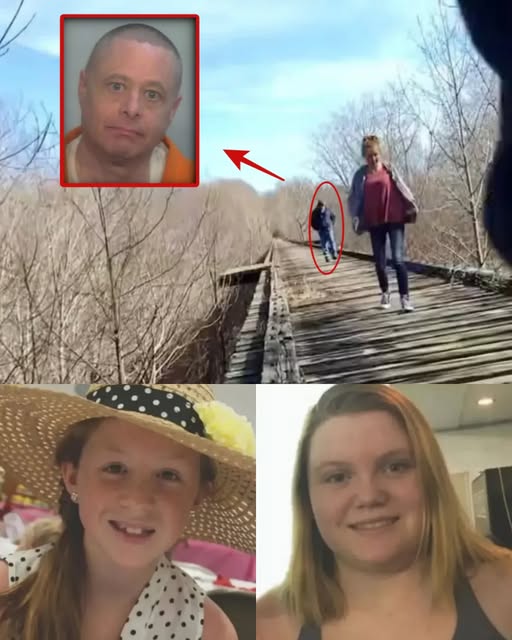
On the afternoon of February 13, 2017, the town of Delphi looked exactly the way small Midwestern towns are supposed to look—quiet, familiar, and safe enough that children could disappear into the woods for an afternoon without anyone feeling afraid.
It was a cold but clear day, the kind where winter feels manageable, where the promise of adventure outweighs the threat of danger, and where two teenage girls could walk across an old railroad bridge believing the world around them was predictable.
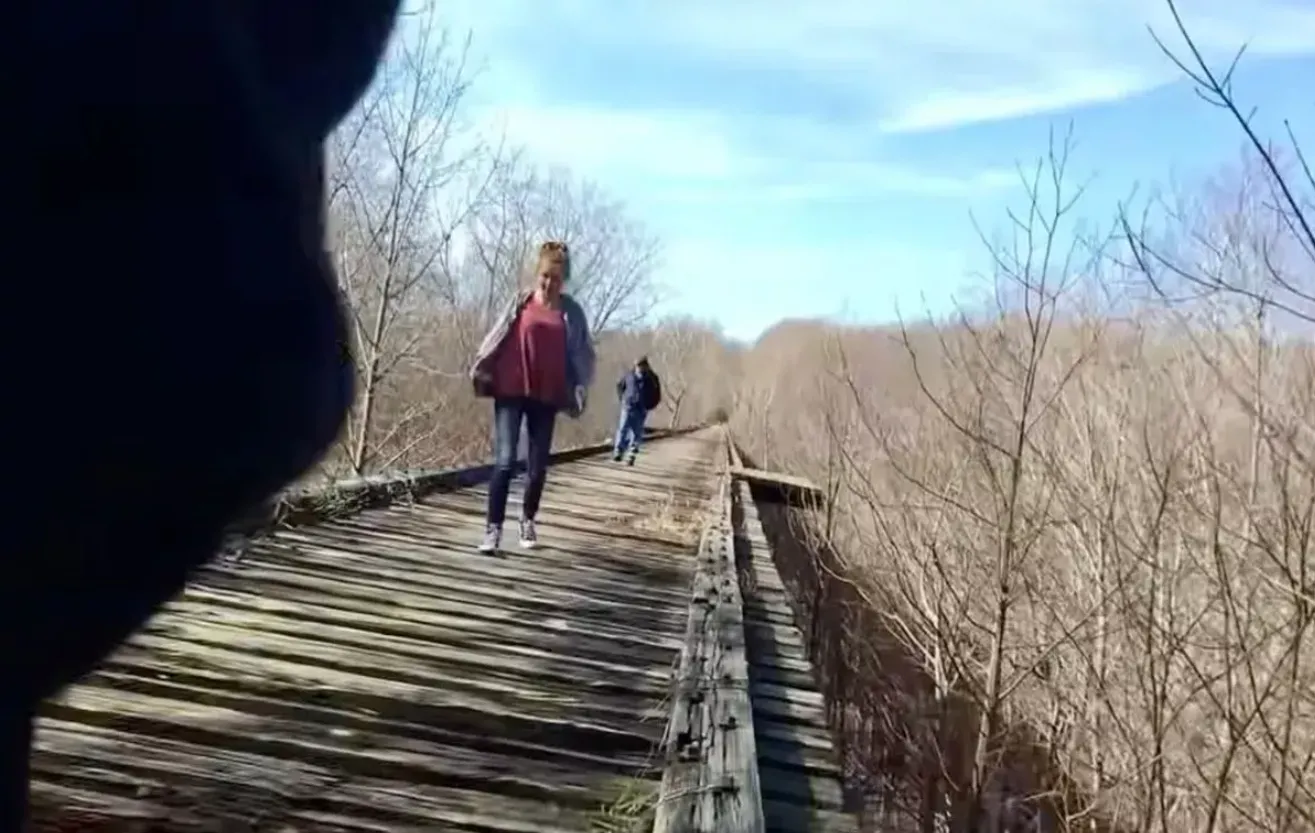
Fourteen-year-old Liberty German and thirteen-year-old Abigail Williams were best friends, inseparable in the way only girls that age can be, laughing and documenting their day as they crossed the aging structure known as the Monon High Bridge.
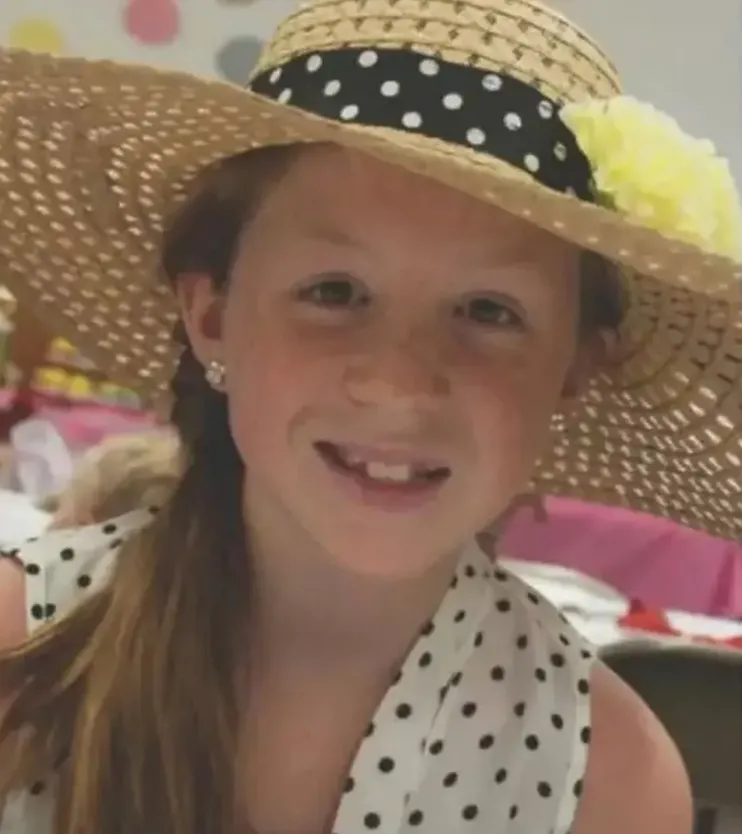
Liberty, like so many teenagers, had her phone out, capturing small moments meant for memory rather than evidence, unaware that what she was recording would later become one of the most chilling pieces of video in modern American criminal history.
What the newly released “full” Snapchat video reveals is not just movement or imagery, but the slow, dawning realization of fear, unfolding second by second, breath by breath.
In the 43-second clip, Abigail can be seen walking ahead on the narrow bridge, careful with her steps, while a man dressed in blue jeans and a Carhartt-style jacket follows behind them at an unsettling distance.
He is not running, not shouting, not behaving in a way that would immediately trigger panic, but close enough to make instinct whisper that something is wrong.

Liberty’s voice enters the recording softly, almost uncertain, as if she is trying to convince herself that her fear might be misplaced.
“Is he right here?” she whispers.
“Don’t leave me.”
In those words, experts say, is the clearest sign of a child recognizing danger before fully understanding it, a moment when instinct speaks faster than logic.
Seconds later, Liberty’s fear sharpens, her voice still hushed but more focused, more alert.
“That’d be a gun.”
The recording captures not hysteria, but calculation, as Liberty narrates the narrowing options ahead of them, explaining that there is no clear path forward and that they will have to go down the hill.
Her voice carries the tension of a child trying to solve a problem that no child should ever face.
Then, the man speaks.
“Guys.”
Liberty responds politely, reflexively, the way children are taught to do.
“Hi.”
The final command is delivered calmly, almost casually.
“Go down the hill.”
Those four words would later echo through courtrooms, documentaries, podcasts, and the collective conscience of a nation, becoming synonymous with fear, helplessness, and the brutal reality of what happened next.
The following day, the bodies of Liberty German and Abigail Williams were found off the trail, their throats cut, their lives ended in an act of violence that shocked even seasoned investigators.
For years, the man in the video—quickly dubbed “Bridge Guy”—became one of the most recognizable unidentified suspects in America, his image distributed endlessly as the case grew cold.
Despite national attention, press conferences, and pleas from law enforcement, no arrest came.
The case lingered, haunting Delphi and the families of the girls, a reminder that sometimes even clear evidence does not lead to immediate justice.
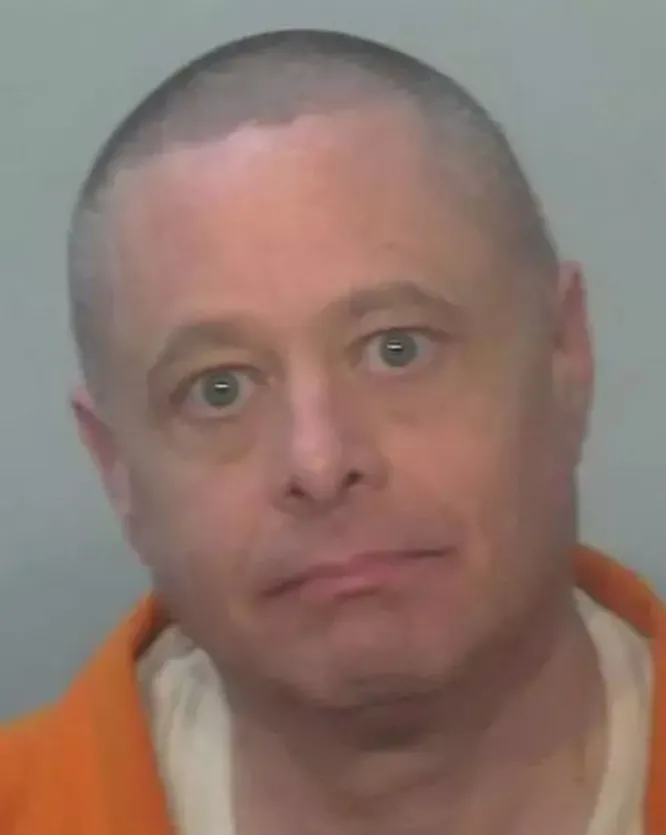
That changed in October 2022, when Richard Allen, a local Delphi resident who worked as a pharmacy technician, was arrested more than five years after the murders.
Allen lived quietly in the same town where the girls were killed, working only blocks from the courthouse where he would later stand trial, a detail that only deepened the horror for residents who realized how close the suspect had been all along.
In November 2024, a jury found Allen guilty of two counts of murder and two counts of felony murder, and he was sentenced the following month to the maximum of 130 years in prison.
Prosecutors argued that Allen was armed with a gun and forced the girls off the trail with the intent to sexually assault them, but that a passing van interrupted his plan, leading him to murder them instead.
One of the most critical pieces of evidence presented at trial was an unspent bullet found between the girls’ bodies, which experts testified had been cycled through Allen’s .40-caliber Sig Sauer handgun.
Yet the case might never have been solved if not for a single overlooked document.
In 2022, a retired state worker and volunteer clerk named Kathy Shank discovered a misplaced “lead sheet” while reviewing old files.
The document stated that a man had contacted authorities shortly after the girls were found, saying he had been on the trail the day they went missing.
His name was incorrectly listed as “Richard Allen Whiteman” and marked as “cleared.”
Shank realized the error, flagged it, and brought it to investigators, reopening a door that had been quietly shut for years.
Carroll County Sheriff Tony Liggett later publicly credited Shank’s discovery as the turning point that finally led to an arrest.
At sentencing, Liberty’s grandfather Mike Patty stood before the court and thanked jurors, investigators, and prosecutors, saying simply that justice had finally been served for the girls.
For many families, that moment felt like closure.
Now, that sense of finality has been shaken.
Allen’s legal team has formally launched an appeal, arguing that errors were made during the trial and seeking a new proceeding that could reopen every painful detail once again.
Defense attorney Jennifer Auger said the appeal process would begin immediately, while also offering condolences to the victims’ families and stating that a more detailed defense explanation would come later.
The release of the full “Bridge Guy” video has added fuel to an already emotional moment, dragging the public back into the final seconds of two girls who knew something was terribly wrong and tried, in their own way, to respond.
For supporters of the conviction, the video reinforces the prosecution’s narrative and highlights the bravery and awareness shown by Liberty German in documenting the threat.
For others, the footage raises renewed questions about timing, interpretation, and how such a crime could unfold in broad daylight without intervention.
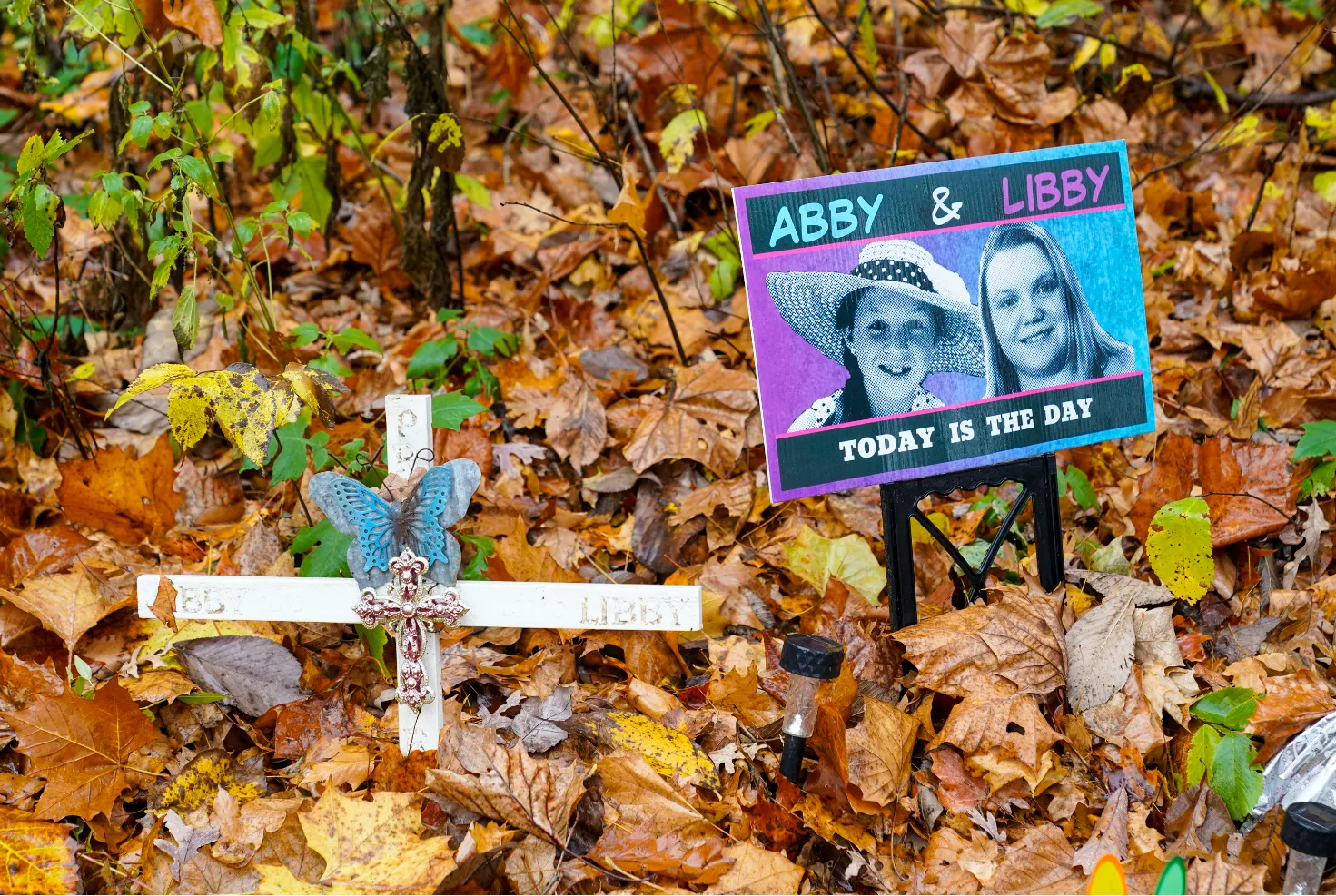
What remains unquestionable is the fear captured in real time.
Two children sensed danger.
They tried to reason through it.
They recorded it.
They trusted their instincts.
The video is no longer just evidence in a legal case.
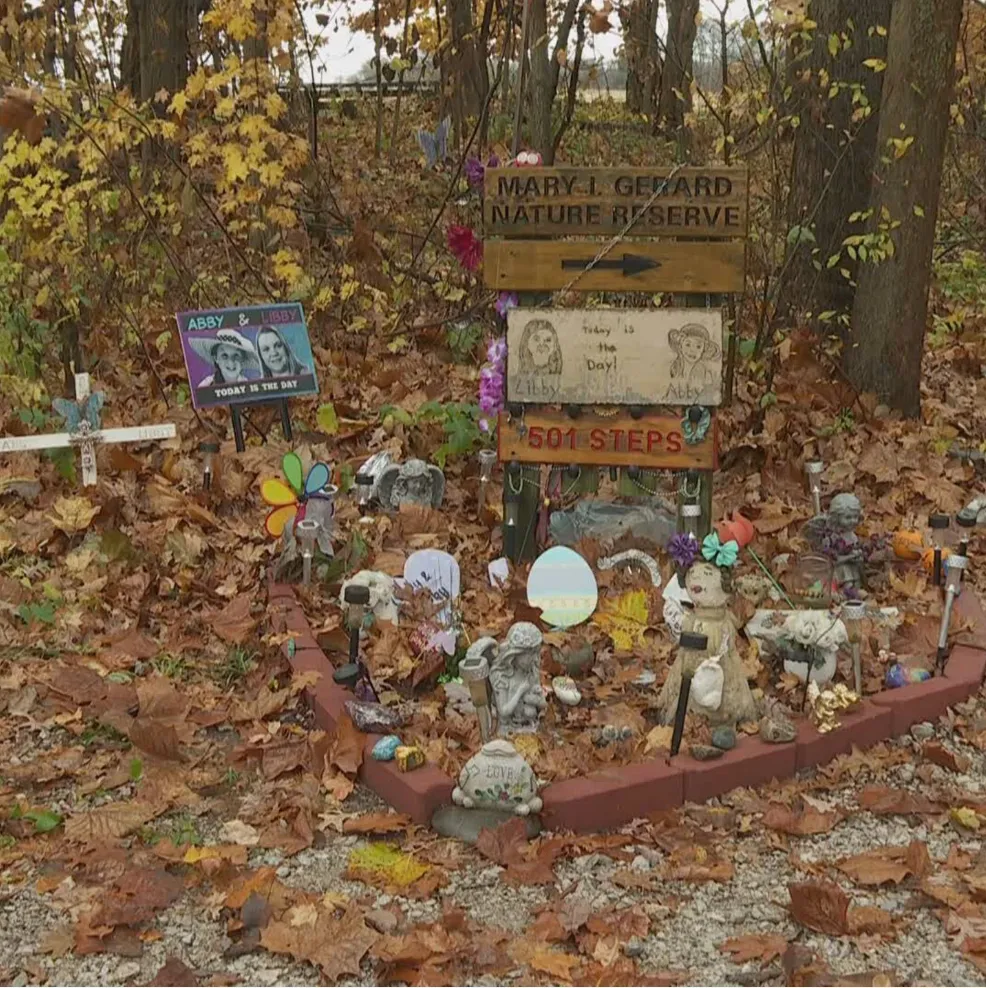
It is a permanent record of vulnerability, courage, and terror, preserved in digital form for the world to witness.
As the appeal moves forward, the Delphi murders once again sit at the center of national attention, reopening wounds for a community that has never truly healed and for families who continue to live with unimaginable loss.
The bridge still stands.
The trail still exists.
But for many Americans, those 43 seconds will forever define Delphi as the place where innocence ended, where fear was whispered instead of screamed, and where justice, even when delivered, still feels fragile.
