
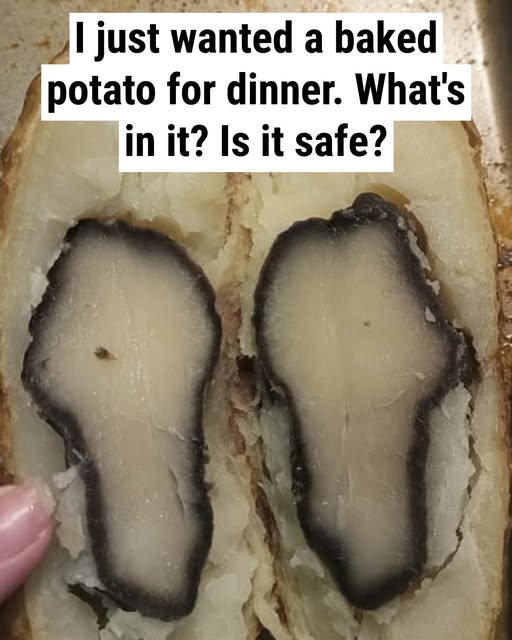
You slice open a steaming baked potato… and freeze.
A sinister black ring glares from the center like something rotten, toxic, wrong. Your appetite vanishes. Your mind races: mold, poison, some hidden disease no one warned you about. In that split second, the humble comfort food turns into a horror story. But the truth behind that eerie dark circle is stranger, far more common, and much less dangerous than you think.
That unsettling black ring is usually something called an internal black spot — essentially a bruise hidden deep inside the potato. It’s caused by pressure, rough handling during transport, or improper storage long before it ever reached your kitchen. The outside can look flawless while the inside quietly darkens, forming grayish or black rings or patches that feel firm and smooth, not slimy or fuzzy. In some cases, temperature stress or natural vascular “veins” oxidize and darken, especially after cutting or cooking, making the discoloration look even more dramatic than it is.
In most cases, it’s still safe to eat. Simply cut away the darkened area and inspect the rest of the potato. It should smell neutral, feel firm, and look like normal, pale potato flesh. If the interior is soft, slimy, sour-smelling, green, or shows obvious mold, that’s your cue to toss it. When in doubt, trust your senses — they’re usually right.
To reduce the odds of future surprises, choose potatoes without soft spots or deep bruises, store them in a cool, dark, well-ventilated place, and buy from stores with fast-moving produce. With a little care, most potatoes stay exactly what they’re meant to be: simple, comforting, and safe to enjoy. Then you can get back to baking, mashing, and roasting — without fear lurking in the center.
