
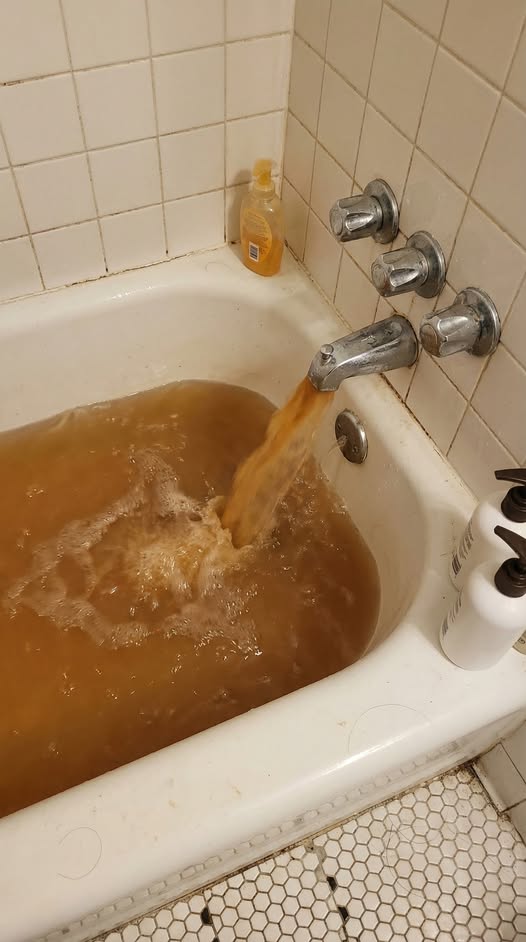
Icy, brown water pouring from a bathtub faucet in total silence is the kind of image that lodges in your brain. It feels wrong. It feels dangerous. And if it happens in your own home, your mind races from rust to poison to sewage in seconds.
That unsettling brown water is, in most cases, nothing more dramatic than rust or sediment suddenly knocked loose in your plumbing or the city’s lines. Old iron pipes corrode, minerals settle, water pressure shifts, a hydrant is flushed down the street—and all of that quiet, invisible buildup is sent straight to your tub in one alarming burst of color. It looks filthy, but it’s usually not toxic, and it often clears after you let the cold water run for a few minutes.
The key is how you respond. Pause the hot water so you’re not dragging more sediment from the heater, test other faucets, and check with neighbors or building management to see if it’s a shared issue. If the discoloration lingers or keeps returning, call the city or a plumber and get it checked. Brown water from the faucet is rarely a catastrophe—but ignoring it, or spiraling into fear instead of taking simple, steady steps, is the real mistake.
