
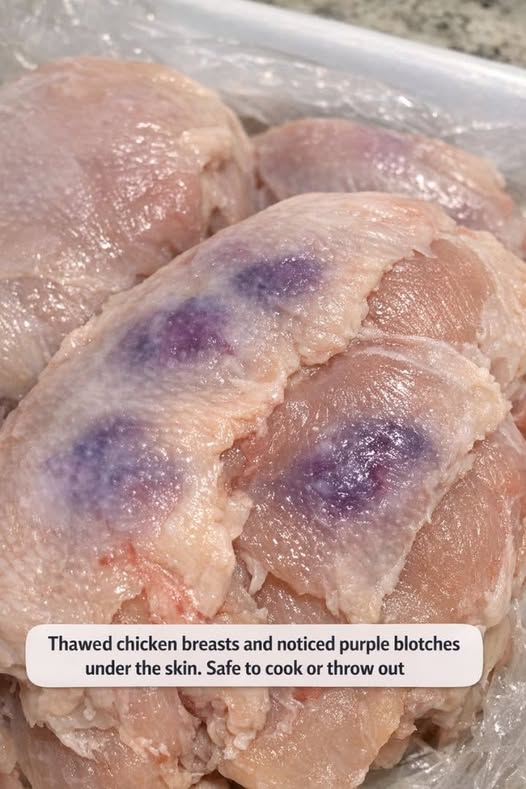
The panic hits fast. You peel open the package, and there it is: purple, bruised-looking flesh staring back at you beneath the chicken skin. Was it always like this? Did the freezer do something to it? Is this dangerous… or are you about to throw away perfectly good food out of fear?
Those unsettling purple blotches are usually far less sinister than they look. In most cases, they’re caused by myoglobin and bone marrow pigments shifting during freezing and thawing—especially in younger birds with more porous bones. As ice crystals form and melt, they can rupture tiny cells, allowing dark marrow to seep into nearby tissue and stain it a deep purple or red. The discoloration can resemble bruising or spoilage, but when the chicken has been kept cold, smells clean, and feels moist rather than slimy, it’s typically a cosmetic issue—not a safety threat.
The real danger isn’t the color; it’s time, temperature, and bacteria. Trust your nose and your fingers before your eyes. Sour or ammonia-like odors, a tacky or slippery texture, or gray-green tones mean it’s not worth saving. When in doubt, throw it out. When it passes those checks, cook it to 165°F (74°C), serve it confidently, and let the blotches go.
