
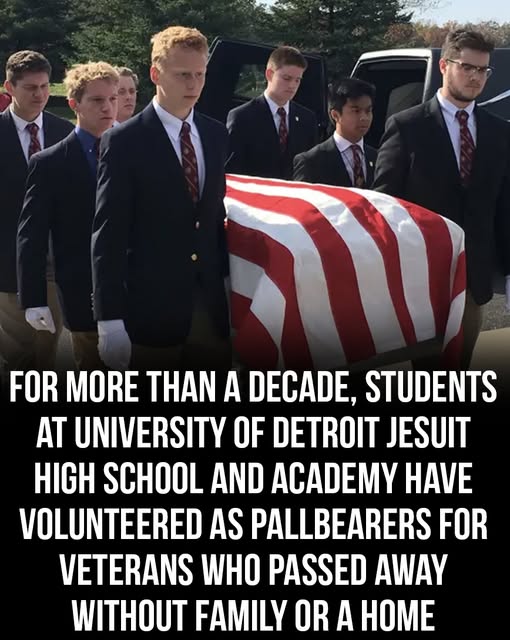
A teenage boy grips a casket no one else came to claim. The cemetery is nearly empty. The silence is deafening. These are not their fathers, uncles, or grandfathers—yet they stand in anyway, the only ones left to say goodbye to homeless veterans abandoned in life and death.
They come from classrooms filled with exams, locker-room chatter, college dreams, and the everyday worries of adolescence. Yet, at moments when most of their peers are thinking about weekends or homework, these students step into a role many adults never will.
Students from University of Detroit Jesuit High School and Academy volunteer to serve as pallbearers for homeless military veterans—men and women who once wore the nation’s uniform, but who died without family, without ceremony, and often without anyone to claim them. There are no flashing cameras. No applause. No viral moment waiting to happen. Just a quiet call for dignity.
When the day comes, they dress formally, stand in silence, and lift the casket together. Their steps are slow and deliberate, guided by respect rather than instruction. Most know little about the veteran they are honoring—perhaps only a name, a rank, or a fragment of a life story shared at the graveside. Still, they carry the weight of that life as if it were known to them.
In that brief, sacred walk, they shoulder more than wood and metal. They carry unspoken histories of service and sacrifice, of promises partially kept, of battles fought long after the uniform was folded away. These veterans once stood for something larger than themselves, and in their final moments, these students stand for them.
The experience changes the boys who participate. Many speak later of the silence—the way it settles in, heavy but meaningful. They learn that honor does not require recognition, and respect does not need an audience. It exists most purely when offered to someone who cannot thank you.
For the veterans, the gesture ensures they are not buried alone. For the students, it becomes a lesson that cannot be taught from a textbook: that citizenship is not just rights, but responsibility; not just pride, but care for those society has forgotten.
In escorting these veterans to their final resting place, the students offer a final act of mercy. They ensure that lives shaped by service are not erased by circumstance, but remembered—if only for a moment—with solemn steps, bowed heads, and quiet dignity.
Sometimes, the most powerful tribute is simply showing up.
