
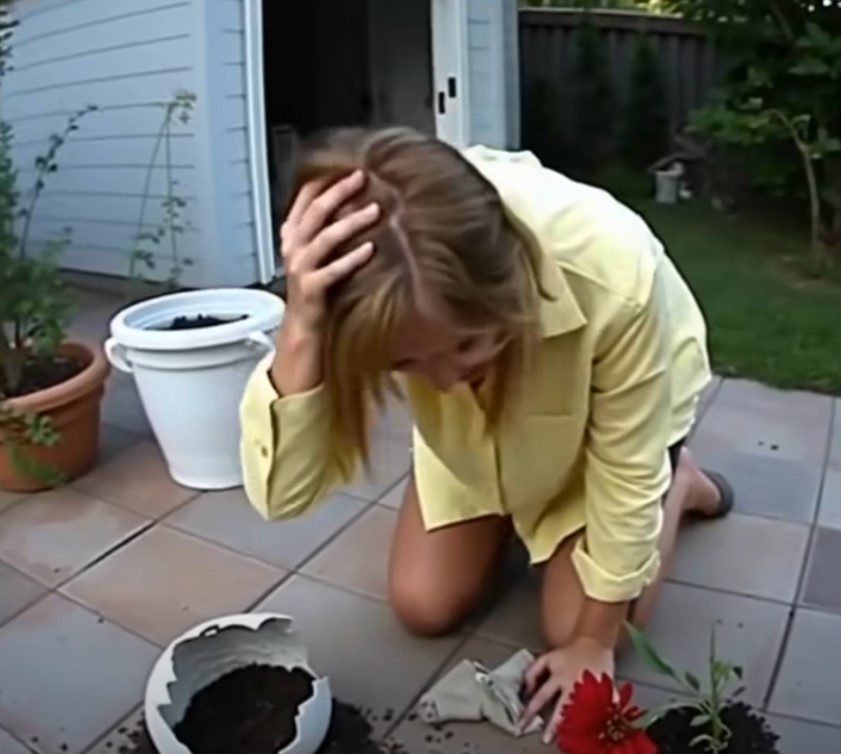
The officers moved slowly and deliberately through the room, careful not to disturb anything unnecessarily. One photographed the cracked flowerpot from multiple angles, capturing the way the soil had spilled onto the floor like a quiet confession.
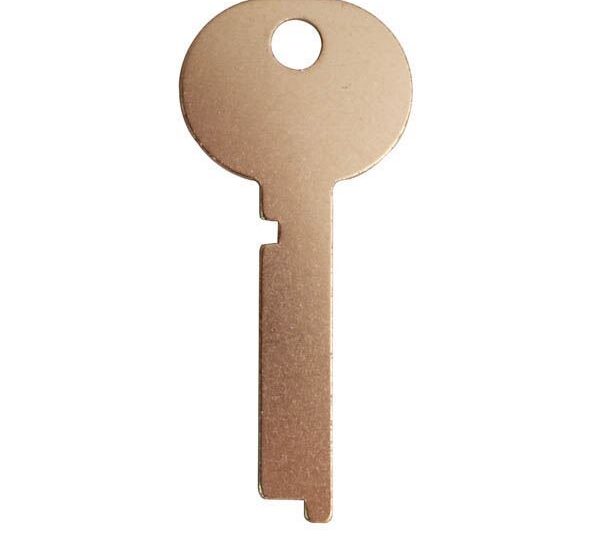
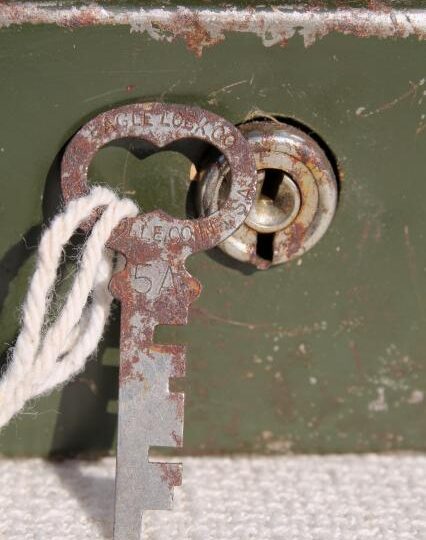
Another documented the tarnished key resting on a folded cloth, while a third carefully slid the fragile note into an evidence sleeve. Their movements were calm, methodical, and respectful, which helped steady my nerves just enough for me to breathe.
They treated the discovery seriously, but without urgency or alarm. There were no raised voices, no sudden gestures. That alone reassured me. If they weren’t panicking, maybe I didn’t need to either.
One of the officers turned to me gently and asked if I could tell them about my husband. Not just his name or age, but who he was—his work, his routines, his habits. Had he ever mentioned concerns, conflicts, or worries?
Had anything seemed out of place in the months leading up to his death? I opened my mouth to answer, then closed it again.
I struggled to find words because nothing had seemed unusual at the time. He had been reserved, yes, but consistent.
He woke up early, made coffee the same way every morning, complained about traffic, and laughed at the same dry jokes. He paid bills on time. He remembered birthdays. He loved routine.
There were no secret phone calls, no unexplained absences, no sudden changes in behavior.
“He was private,” I finally said, unsure if that was helpful. “But not secretive. At least… I didn’t think so.”
The officer nodded, jotting down notes without judgment.
They took the key and the note as evidence, explaining they would be logged, analyzed, and followed up as part of a broader review.
Before leaving, one officer paused near the door and offered a quiet explanation—not an official statement, just a human one.
Sometimes, he said, people prepared for worst-case scenarios without believing they would ever come true. Sometimes a note like that wasn’t a warning of danger, but a precaution born from old fears.
It was meant to comfort me.
It only partially worked.
After they left, the house felt hollow. The silence pressed in, heavier than before. The following days stretched out slowly, each one weighted with expectation.
I went through my routines mechanically—making meals I barely ate, answering emails I didn’t remember sending, folding laundry that didn’t need folding.
Time moved forward, but I didn’t feel like I was moving with it.
Every phone call startled me. Every unfamiliar number made my heart jump into my throat. I wanted answers desperately, but at the same time, I feared what those answers might uncover.
I lived in that uneasy space between knowing and not knowing, where hope and dread existed side by side.
When the call finally came, it wasn’t dramatic.
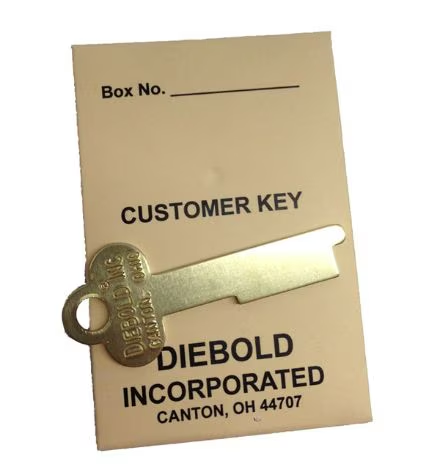
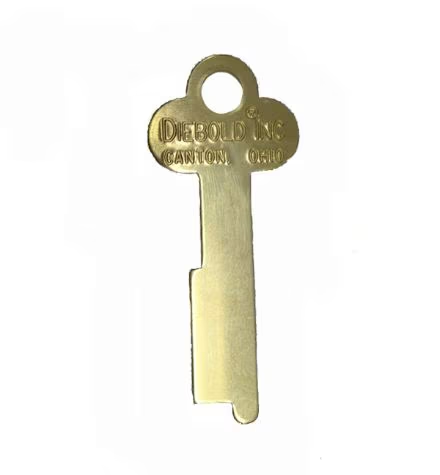
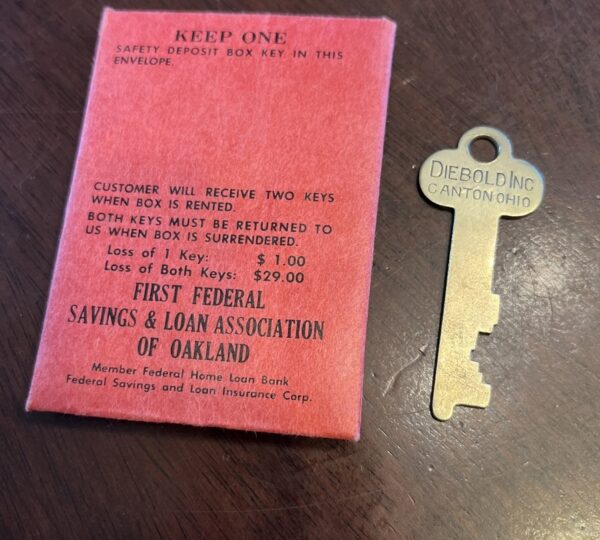
The officer’s voice was calm, measured, and professional. He explained that the key matched a safety deposit box at a local bank.
The box was registered solely in my husband’s name and had been maintained for several years. There was nothing illegal about it. Nothing suspicious on its own.
But it was something he had never told me about.
That realization stung more than I expected.
I agreed to visit the bank with an investigator present. Walking there felt surreal, like stepping into a life that had never been mine. The building was quiet, polished, and neutral.
Everything smelled faintly of paper and metal. The deposit box itself was small and unremarkable, the kind no one would notice without reason to look.
Inside were documents, folders, and a few personal items arranged neatly, as if he had wanted everything to be easy to understand if someone ever found it.
There was nothing dangerous. Nothing criminal.
But there was history.
Financial records dated years before we met. Legal correspondence related to family property and unresolved inheritance matters.
Old letters written in careful handwriting, never sent, addressed to relatives whose names I barely recognized. The papers told a story—not of wrongdoing, but of complexity.
Of obligations and disputes he had chosen not to bring into our life together.
The note, it became clear, wasn’t about immediate danger. It wasn’t a warning of violence or betrayal. It was about caution.
About protecting information he feared could be misunderstood, misused, or reopened by people who no longer belonged in his life.
Understanding that brought a strange mix of relief and pain.
On one hand, there was no hidden crime. No conspiracy. No secret life that explained his death. It remained what it had always been—a tragic, senseless loss.
On the other hand, I now knew that part of him had existed beyond me. Not because he didn’t trust me, but because he wanted to shield our shared life from old burdens he believed were his alone to carry.
That knowledge hurt in a quiet, complicated way.
The flowerpot, once nothing more than a decorative object tied to fond memories, had become a turning point. It had guarded his secret silently for years, holding onto it until chance—or simple wear and time—brought it into the open.
What began as a moment of shock slowly transformed into an opportunity for understanding.
I couldn’t rewrite the past. I couldn’t change what he had chosen to keep private. But I could accept that love does not erase the lives we lived before it.
People are shaped by experiences that come long before marriage, before shared homes, before promises made for the future.
Some things remain unfinished, even in the closest relationships.
One evening, as the light faded and the street outside grew quiet, I stood by the window and looked down at the cracked flowerpot resting on the sill. It could be replaced.
Or repaired. Either way, it would never be exactly the same.
And neither would I.
Life, I realized, works much the same way.
We gather the pieces we’re given. We learn the truth when it finally arrives. And we move forward carrying both the beauty and the fractures.
Even when answers come late, they can still offer something valuable—not perfect peace, but clarity.
And sometimes, clarity is enough to begin healing—honestly, patiently, and whole.
