
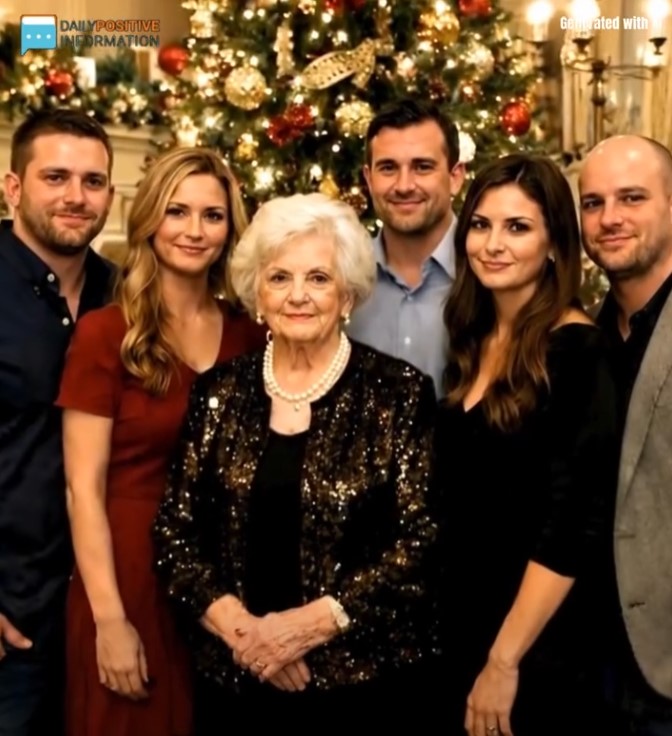
The snow was falling thick and heavy over the Aspen trees that lined my driveway, blanketing the world in a silence that felt both peaceful and accusing.
I sat in my high-backed leather chair, the leather worn smooth by decades of reading, thinking, and waiting. The fire in the hearth had burned down to embers, glowing like the eyes of a watching beast. At eighty-seven years old, you learn the difference between silence that is restful—the kind that comes after a job well done—and silence that is empty.
Tonight, the silence was vast. It echoed off the vaulted ceilings of a house built for a large family, a house that now held only me and the ghosts of better years.
I have always prided myself on being a self-made woman. It’s a phrase people toss around lightly these days, usually referring to someone who started with a small loan and a safety net. But my husband, Arthur, and I started with nothing but a toolbox and a terrifying amount of optimism.

I remember 1958. I remember the drafty apartment in Chicago where the wind screamed through the window frames. I remember Arthur coming home with his hands raw and bleeding from laying brick in the dead of winter, his face grey with exhaustion. We ate potato soup for three weeks straight so we could save the forty dollars needed to buy our first rental property—a dilapidated duplex with a leaking roof and a basement full of rats.
We fixed it ourselves. I learned to spackle drywall while pregnant with my first son. Arthur learned plumbing by reading manuals at the public library because we couldn’t afford a contractor. We scraped, we saved, and we compounded every penny.
When Arthur passed away thirty years ago, he left me with a broken heart, but he also left me with a fortress of security. I took over the portfolio. I didn’t shrink away into widowhood. I invested in commercial real estate when everyone told me it was a “man’s game.” I pinched pennies on my own clothes—wearing the same wool coat for twelve years—so I could ensure the bank accounts grew.
I did it for them. For the family. So that my children, and eventually my grandchildren, would never know the taste of potato soup three weeks in a row.
But somewhere along the way, that security turned into a barrier. The money became a wall that I couldn’t see over, and they couldn’t see through.
I had five grandchildren. They were the sun and moon to me when they were toddlers—sticky hands, loud laughs, running through the sprinkler on the lawn. But as they grew into adults—handsome, busy, modern adults—I began to feel less like a grandmother and more like a bank vault that opened on a timer.
Every December 25th, I hosted a lavish dinner. I ordered the prime rib from a butcher three towns over. I spent days polishing the silver until my knuckles ached. And every year, at the end of the night, I handed each of them a thick, cream-colored envelope containing a check for $10,000.
It started as a gift to help them with college tuition. Then it was for down payments on starter homes. Then, it just became… the fee. The entrance ticket for their affection.
“It’s easier this way,” I used to tell my reflection in the hallway mirror as I applied my lipstick. “They have complicated lives. They have debts. This is how I help. This is how I stay relevant.”
But last year, the illusion shattered.
The cracks in the foundation
It wasn’t one big explosion. It was a series of small, sharp cuts.
I remembered the year before the “test.” I had been excited to tell them about my garden. I had finally managed to get the hydrangeas to bloom blue, a tricky feat with our soil acidity.
I was sitting next to Carl, my lawyer grandson, at the dinner table.
“Carl, you won’t believe the garden this year,” I had started, beaming.
Carl didn’t turn his head. He was typing something on his Blackberry under the table. “That’s nice, Grandma,” he murmured. Then, without missing a beat, he turned to his cousin Mike. “Hey, did you see the interest rates hike? I’m thinking of refinancing the ski condo before the market tanks.”
I shrank back.
Then there was Christy. I had asked her to come early that year to help me arrange the flowers, something we used to do when she was a teenager.
She arrived two hours late, breezing in with a flurry of excuses about traffic and a juice cleanse she was on. When I handed her the vase, she sighed, a heavy, dramatic exhale.
“Grandma, honestly, why don’t you just hire a florist? You can afford it. It’s silly for us to be doing manual labor on Christmas Eve.”
She didn’t see the hurt on my face. She was too busy checking her makeup in the hall mirror.
And then, the moment that sealed it. I was in the kitchen, preparing the dessert, when I overheard them in the living room. They thought I was out of earshot.
“I’m hoping it’s the full ten k again,” Jake’s voice floated down the hall. “I put a deposit down on a new truck. If she skimps this year, I’m screwed.”
“She won’t skimp,” Carl’s voice replied, confident and cold. “She’s a creature of habit. Besides, what else is she going to spend it on? She hasn’t bought new furniture since the Reagan administration.”
They laughed.
I stood there, holding a tray of crystal dessert bowls, my hands trembling. They weren’t visiting me. They were visiting an ATM. They were visiting their inheritance, checking to make sure the machine was still dispensing cash.
That night, I handed out the checks as usual. But as they drove away, their taillights fading into the dark, I made a vow.
I decided to play a game. A cruel game, perhaps, but a necessary one.

The night the tradition changed
The following Christmas—the first year of the “test”—the house smelled of pine needles, cinnamon, and tension.
I had gone to the bank three days prior. I remember the teller, Mrs. Higgins, looking at me over her spectacles.
“You want… fifty dollar bills, Mrs. Sterling?” she asked. “Usually you request the cashier’s checks for the grandchildren.”
“Not this year, Sharon,” I said, my voice steady. “We’re trying something different. Economy is tight, you know.”
I walked out with five crisp fifty-dollar bills in my purse. They felt incredibly light.
When Christmas Eve arrived, they showed up right on time, a parade of expensive coats and forced smiles.
There was Jake, the youngest at twenty-three. He walked in with his phone already in his hand, recording a video for his social media.
“Hey guys, at Grandma’s crib for the holidays,” he narrated to his screen, panning the camera over my antique chandelier. He barely looked at me. “Hey, Grandma,” he said, the camera still rolling. “Wifi password is still the same, right?”
He was handsome, but his eyes were empty. He was already mentally at a party he had to get to later that night.
Then came Christy. She was a mother now, carrying a baby on one hip and a designer diaper bag on the other. She looked exhausted, but it was a curated exhaustion—perfectly messy hair, expensive athleisure wear.
“I am literally running on fumes,” she announced to the room, bypassing me to dump her bags on the antique velvet sofa I usually asked people not to sit on. “Traffic was a nightmare. I hope this won’t be a late night, Grandma. The twins are impossible if they miss bedtime.”
“Hello to you too, Christy,” I said. She didn’t hear me.
Carl was next. He wore a suit on Christmas Eve, adjusting his silk tie and checking a Rolex that cost more than the down payment on my first house.
“Big case coming up,” Carl told me, accepting a glass of scotch without asking. “Partner’s counting on me to have the brief ready by the 26th. Probably shouldn’t have even taken tonight off, honestly. But, you know. Tradition.”
Tradition, he said. As if it were a chore. As if it were a dental appointment.
Mike, the mechanic, came in smelling faintly of motor oil and stale cigarettes. He was the one I had the most hope for, usually. But tonight, he was vibrating with anxiety. Every ten minutes, he slipped out to the porch.
“Sorry,” he’d mutter when he came back in, trailing cold air. “Work thing. Gotta take it.”
And finally, Julian.
Julian was the enigma. She was the middle child of my eldest daughter. She was a traveler, a free spirit who worked odd jobs—bartending in New Orleans, teaching English in Thailand. She didn’t have the polished success of Carl or the motherhood status of Christy.
She hugged me properly, holding on for a second longer than the others.
“You look nice, Grandma,” she said. “Is that a new brooch?”
“It was Arthur’s mother’s,” I said, touching the garnet pin. “I haven’t worn it in years.”
“It’s beautiful,” she smiled. But then she drifted away, pulling out her phone to show Mike a photo of a beach in Bali. She didn’t come back to sit with me.
We sat for dinner. The roast beef was perfect. The Yorkshire pudding was tall and fluffy. But the conversation was agonizing.
They talked about the stock market. They talked about a new ski resort in Vail. They talked about people I didn’t know. Whenever I tried to interject—to tell them about the book club I had joined or the trouble I was having with the snow removal service—they nodded politely and steered the conversation back to themselves.
I felt like a ghost at my own table.
And then, the shift happened. The meal ended. The coffee was poured. And five pairs of eyes turned toward the sideboard where five cream-colored envelopes sat in a neat row.
They were waiting. The hunger in the room was palpable. It wasn’t hunger for my company. It was hunger for the payoff.
My heart hammered in my chest. This was the moment.
The fifty dollar reality check
I stood up, my knees popping audibly in the quiet room. I walked to the sideboard. My hands felt cold.
I passed them out, one by one.
“Merry Christmas, sweetheart,” I said to Jake.
“For you, darling,” I said to Christy.
The room went silent, save for the sound of tearing paper. It was a violent sound, ripping through the polite veneer of the evening.
Jake was the first to react. He pulled out the single bill. He stared at it. He flipped the envelope over, shaking it upside down to see if a check was stuck inside.
“Uh,” Jake said, a nervous, high-pitched chuckle escaping him. “Hey, Grandma… I think there might’ve been a mix-up? This is a fifty.”
The air left the room. It was sucked out, leaving a vacuum of confusion.
“Sorry, dear,” I said, sipping my tea calmly, though my heart was racing. “But there’s no mix-up. My savings aren’t what they used to be. The market, you know. Inflation. That’s all I can afford to give you this year.”
I watched their faces. It was like watching a slow-motion car crash. The masks fell.
Christy pulled her bill out. She stared at the picture of Ulysses S. Grant like he had personally insulted her children. Her face flushed a blotchy red.
“It’s $50,” she said, her voice flat, dangerously devoid of emotion. Then she remembered herself, remembered she was “polite.” “That’s… that’s sweet of you, Grandma.”
But her eyes screamed murder.
Carl, the lawyer, cleared his throat loudly. He didn’t even take the money out. He just peeked inside, saw the denomination, and closed the flap with a snap.
“Things are expensive for everyone right now,” Carl said stiffly, his jaw tight. “We understand. You have to protect your assets.”
He checked his watch immediately.
“I actually… I hate to do this,” Carl continued, standing up abruptly. “But if we’re done with gifts, I really need to get back to that brief. Early start tomorrow. Rain check on dessert?”
He didn’t wait for an answer. He was already reaching for his coat.
Mike nodded, stuffing the envelope into his back pocket without looking at it. He looked disappointed, deflated. “Thanks, Grandma. Every little bit helps, I guess. I gotta bounce too. Roads are getting bad.”
Julian was the last one. She turned the envelope over in her hands. She looked confused, brow furrowed. She looked at the others leaving, then looked at me.
“Oh… okay,” was all she said. She didn’t seem angry, just perplexed.
Within twenty minutes, my house was empty. The fire was still burning. The expensive dessert I had made—a chocolate mousse with shaved truffles—sat untouched in the center of the table.
The game had begun.

The year of silence
If I thought the dinner was painful, the year that followed was a slow, agonizing lesson in reality.
I had ripped off the bandage, and now the wound was exposed to the air.
In previous years, January was a month of thank-you calls. “Thanks for the money, Grandma, I bought a new jet ski.” “The money really helped with the nursery, Grandma.”
This year? Silence. Absolute, ringing silence.
I waited a week. Then two.
I called Jake on his birthday in February. It went straight to voicemail. I left a singing message. He texted me back three days later: “Thx Grandma. Super busy. Catch up soon.”
We never caught up.
In March, the snow melted and the ground thawed. usually, I hired a service, but I wanted to see if anyone would offer. I mentioned to Christy on a brief phone call that the storm had knocked down a heavy branch in the front yard.
“Oh, that sounds dangerous,” she said, distracted by a screaming toddler in the background. “You should look on Yelp. There are tree guys. Gotta go, Grandma.”
She didn’t offer to send Mike. She didn’t offer to come help move it.
In July, I had a scare. I slipped in the hallway on a loose rug. I didn’t break anything, but I bruised my hip badly. I was stuck in my chair for a week, unable to drive.
I called Carl. I didn’t ask for money. I just asked if he could pick up a few groceries for me on his way home from work—he drove right past my exit.
“Geez, Grandma, I’m swamped,” he said, the sound of typing clicking furiously in the background. “Have you tried that grocery delivery app? Instacart? You really need to get with the times. I can’t leave the office until at least nine.”
I ended up eating canned soup and stale crackers for four days until I could walk to the car.
That was the lowest point. I sat in my kitchen, eating chicken noodle soup from a tin, looking at the photos of them on my refrigerator. Graduation photos. Wedding photos. Smiling faces that I had paid for.
I realized then that I wasn’t a matriarch. I was a resource. And when a resource runs dry, you stop visiting the well.
Julian was the only outlier, but even she was distant. She was in South America, then Europe. She sent postcards—beautiful pictures of cathedrals and marketplaces.
Thinking of you, they said. Hope you’re well.
But she didn’t call. I convinced myself she was just like the others, just with better manners. I convinced myself she was disappointed about the money too, just too polite to say it.
I hardened my heart. I let the anger calcify into resolve. I would not beg. I would not buy them back.
The empty table
Christmas Eve arrived again.
The weather mirrored my mood. It was a blizzard, a true Colorado whiteout. The wind howled around the eaves of the house, rattling the windowpanes.
I had spent the day cooking. I couldn’t help myself. Old habits die hard. I roasted the beef. I made the pudding. I set the table for six, polishing the silver until it gleamed like weaponry.
But as the afternoon turned into evening, the notifications started lighting up my iPad.
A text from Jake popped up first: “So sorry, Grandma. Stuck at a friend’s place in Denver. Blizzard is crazy. Can’t make it. Roads are sketch. Love you!”
I checked the weather report. The roads in Denver were clear. He was lying.
An email from Carl. Subject: Christmas Regrets. “Work is killing me. Partner demanded I bill hours tonight. Send my love. We’ll do lunch in Jan.”
We would not do lunch in Jan. We never did.
Christy sent a photo of her kids in front of a palm tree. “We decided to do Disney this year! Last minute thing. So sorry to miss dinner! The kids needed some sun.”
Mike left a voicemail. “Hey Gram, truck broke down. Can’t drive it up the mountain. Merry Christmas.”
I stood at the kitchen window, looking out at the long, empty driveway. It was pure white, unbroken by tire tracks. The snow swirled in hypnotic patterns under the floodlights.
The clock on the mantle ticked. 6:00 PM. 6:30 PM. 7:00 PM.
The food was cooling. The house was silent.
My chest ached. It wasn’t a sharp pain, but a dull, heavy realization that I was entirely alone. I had been buying their presence for a decade, and the moment the subscription lapsed, so did they.
I poured myself a glass of wine. I sat at the head of the table, looking at the five empty chairs.
“Well, Arthur,” I whispered to the empty room. “I guess we failed.”
I stood up to start clearing the plates. I would wrap the meat. I would freeze the leftovers. I would eat roast beef sandwiches until March.
Then, I saw it.
Two beams of light cutting through the swirling snow at the bottom of the hill.
My heart leaped, then immediately sank. Probably a delivery driver. Or someone turning around.
But the lights kept coming. A beat-up Subaru was crawling up my driveway, sliding slightly on the ice, fighting for traction. It moved slowly, stubbornly.
I held my breath, clutching my napkin.
The car stopped near the garage. The door opened against the wind. A figure stepped out, bundled in a thick wool scarf and a heavy parka, carrying a small paper bag.
It was Julian.
I rushed to the door, forgetting my hip, forgetting my dignity. I threw it open before she could even knock.
Wind and snow blasted into the foyer. Julian stood there, red-cheeked, stomping snow off her boots. She looked up and saw me.
“Am I early?” Julian asked, looking past me into the empty living room. “It doesn’t look like anyone else is here yet.”
I swallowed the lump in my throat. I couldn’t let her see me cry. Not yet.
“Oh, they couldn’t make it this year,” I told her, forcing my voice to remain steady, masking the tremor. “The weather. Work. Disney. You know how it is.”
Julian paused. She pulled her scarf down. She looked at the dining room table, set perfectly for six. She saw the candles burning down. She saw the mountain of food.
Then she looked at me, and her expression softened into something incredibly sad and incredibly kind. She didn’t pity me. She saw me.
“Oh… okay,” she said softly. She didn’t ask questions. She didn’t make an excuse for them. “Well, I guess it’s just us then. More roast beef for me, right?”
She smiled brightly, but I could tell she was doing it for me. She was carrying the weight of the evening on her shoulders so I wouldn’t have to.
The dinner of truth
We sat together. Just the two of us at the head of the long mahogany table.
And for the first time in years, I actually enjoyed Christmas dinner.
It wasn’t transactional. It wasn’t rushed.
Julian didn’t look at her phone. She put it away in her coat pocket in the hall.
“So, tell me about this trip to Prague,” I said, passing her the potatoes.
She lit up. She told me about the architecture, about a small cafe where she sat and wrote poetry, about the way the light hit the river at sunset. She asked me about Grandpa Arthur—questions the others never asked. She asked how we met. She asked about the first house we built.
“I remember he had these massive hands,” Julian said, laughing. “I remember him holding me when I was three, and I felt like I was in a giant’s grip.”
“He was a giant,” I smiled, tears pricking my eyes. “In every way that mattered.”
She told me about a pottery class she was taking—not because she wanted me to pay for it, but just because she loved the feel of the clay on her hands.
“It’s messy,” she laughed. “I’m terrible at it. I make lopsided bowls. But it feels good to make something, you know?”
“I know,” I said. “I used to feel that way about spackling drywall.”
We laughed. A real, genuine laugh that echoed in the empty house.
When I told her about how I’d accidentally set off the smoke alarm trying to make garlic bread last week, she didn’t roll her eyes or tell me I needed a nurse. She laughed so hard she nearly choked on her wine.
“You have to be careful, Grandma!” she giggled, wiping her eyes. “We need you around. Who else is going to make this pudding?”
It felt real. It felt warm. It felt like family.
When the plates were cleared and the pie was eaten, the clock chimed nine. I knew it was time.
My stomach flipped. This was the final test. The ultimate gamble.
I reached into the pocket of my cardigan. I had prepared for every scenario. I had an envelope for everyone, just in case they had shown up. I had the “fifty dollar” envelopes ready for the greedy ones.
But I also had one other envelope.
I slid the single cream envelope across the polished wood toward Julian.
The room went quiet. The fire popped.
Julian stopped laughing. She looked at the envelope, then at me. She didn’t reach for it immediately. She actually recoiled slightly.
“Grandma,” she started, shaking her head. “You don’t have to—I know things are tight. You said last year—”
“Open it,” I commanded gently. “Please. Look at what’s inside.”
She hesitated. She bit her lip. Then, slowly, she picked it up. She tore the flap with careful fingers.
She pulled out the check.
She stared at it. She blinked. She brought it closer to the candlelight.
“Grandma?” she whispered. Her voice trembled. “Is this… this says fifty thousand dollars. Grandma, did you write the wrong number? What is this?”
I leaned forward, clasping my hands on the tablecloth. I looked her dead in the eye.
“It’s simple, honey. Right before Christmas last year, I decided things needed to change,” I explained.
“See, between the constant phone checking, the demands, and the absent-minded small talk, I started to wonder. I wondered which of my grandchildren would still come to see me if there wasn’t a price tag attached to the visit. I felt like an ATM machine, Julian. Not a person. Not a grandmother.”
Julian lowered the check, her eyes wide, glistening with unshed tears.
“So, I devised a little test,” I continued, my voice gaining strength. “I took away the money. I pretended I was struggling. I wanted to see who would come back when there was nothing to gain. Who would show up when the well ran dry.”
I gestured to the empty chairs around us.
“Tonight, the weather is bad. But it’s not that bad. Tonight, only one car came up that driveway. You’re the only one who came, Julian. You’re the only one who didn’t care about the money.”
I took a deep breath.
“So the entire budget… the money I would have given them, and then some… it’s all yours.”
I sat back, waiting. I expected shock. I expected excitement. I expected her to jump up and hug me, maybe talk about paying off her student loans or traveling to Asia.
But Julian did something that nearly stopped my heart.
She didn’t smile. She didn’t cheer.
She slowly slid the check back into the envelope. Then, she placed the envelope on the table and slid it back across to me.
“No,” she said.
“Excuse me?” I blinked, stunned.
“I can’t take this,” Julian said, her voice shaking slightly but firm. “Grandma… you don’t owe me anything.”
She looked down at her hands.
“I’m sorry you felt the need to test us,” she said softly. “That breaks my heart. It really does. It makes me feel ashamed of our family. And I’m sorry I’m the only one who passed. But you don’t need to reward me for it.”
She reached across the table and took my wrinkled hand in hers. Her skin was warm.
“I didn’t come for the money, Grandma. I came because it’s Christmas. I came because I missed you. I don’t need a prize for loving you.”
The real gift
Tears, hot and fast, blurred my vision. I hadn’t cried in twenty years. Not since the day I buried Arthur.
“You stubborn girl,” I choked out, a laugh bubbling up through the tears. “It’s a lot of money. It could change your life. You could buy a house. You could open a studio.”
“My life is fine,” she said firmly. “I have enough. But… maybe there’s something better you could do with it. Since you were ready to part with it anyway.”
“Like what?” I asked, wiping my face with a linen napkin.
“Donate it,” she said. “To people who actually have empty tables tonight. To people who are actually cold.”
I looked at her for a long time. In her face, I saw my husband Arthur. I saw his stubbornness, his integrity. I saw the best parts of myself—the parts that existed before the money complicated everything.
“You’re right,” I said finally. “There probably is.”
We didn’t end the night there. We moved to the living room. We opened a bottle of the good port. We sat with Julian’s laptop.
We researched. We argued playfully about which causes were best.
We found a local Meals on Wheels program for seniors who had no one to visit them—a cause that hit close to home for me that night. We found a literacy program for underprivileged kids in the city where Arthur and I grew up. We found a hospice center that needed new beds.
We split the $50,000 three ways. I wrote the checks right there on the coffee table.
“You mail them,” I told her. “I want you to drop them in the box.”
“I will,” she promised.
She stayed the night. We watched an old movie—It’s a Wonderful Life, cliché as it was—and she fell asleep on the sofa. I covered her with an afghan and just watched her sleep for a while, grateful that the house finally felt full.
The aftermath and the lesson
I thought that would be the end of it. I thought she would go back to her travels, and I would go back to my solitude, warmer for the memory.
But Julian surprised me again.
Two weeks later, on a random Tuesday in January, my doorbell rang.
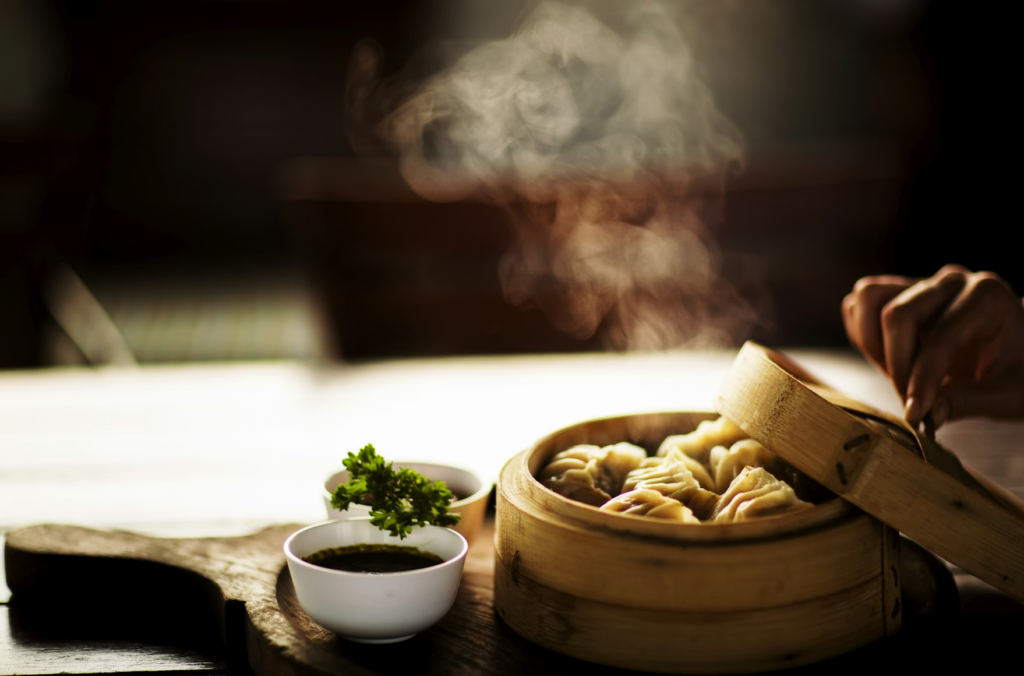
It was Julian. She had takeout Chinese food and a DVD.
“I was just in the neighborhood,” she lied—she lived forty minutes away in the city. “Thought you might want some dumplings. And I noticed your driveway needed salting.”
She comes by all the time now. Sometimes for dinner, sometimes just to sit and read in the same room as me. She helps me with the garden. She showed me how to use Instacart, though I prefer when she brings the groceries herself.
The others? That was a different story.
They found out. Of course they did. Small towns talk, and charities publish donor lists.
Carl called me in February.
“Grandma,” he said, his voice tight. “I saw the newsletter from the Hospice center. A substantial donation. Under your name.”
“Yes, Carl. It’s a wonderful facility.”
“I thought… well, you said things were tight,” he stammered. “I mean, if you had that kind of capital…”
“I do have that kind of capital, Carl,” I said, cutting him off. “For things that matter. I had a surplus this year. Julian helped me allocate it.”
“Julian?” he asked. “Julian was there?”
“She was. We had a lovely Christmas.”
There was a long silence on the line. I didn’t fill it. I let him sit in it. I let him do the math.
“Oh,” was all he said.
They tried to come around for Easter. Suddenly, schedules cleared up. Suddenly, the trucks were working and the legal briefs could wait.
I was polite. I let them in. I fed them ham and scalloped potatoes.
But when dinner ended, there were no envelopes on the sideboard.
Christy lingered by the door as she was leaving. “So, Grandma… are we doing gifts this time? Or…?”
“No, dear,” I said, smiling pleasantly. “I’ve decided to change my giving strategy permanently. I’m focusing on philanthropy now. Drive safe.”
I closed the door.
At eighty-seven years old, I finally understood the lesson I should have learned decades ago.
Love isn’t something you can buy. It is not a transaction. It’s not a negotiation. You cannot bribe people into caring about you.
You either have it, or you don’t.
When you do, it shows up. It drives through a blizzard just to eat roast beef with an old woman. It pushes the money back across the table because the relationship is worth more than the check.
I wish I’d learned that lesson sooner. But looking at Julian, sitting in the chair opposite me right now, laughing at my terrible jokes and eating Chinese takeout… I’m just grateful I learned it at all.
Let us know what you think about this story on the Facebook video! Do you think the grandmother was right to test her family, or was it too harsh? If you have ever dealt with entitled family members, tell us your story in the comments. And if you like this story, share it with friends and family to remind them what really matters this holiday season.
