
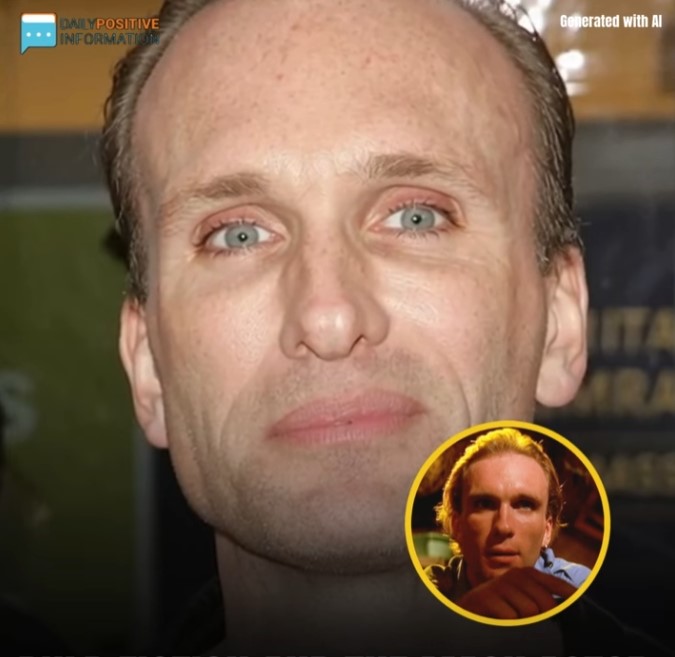
The Lower East Side of Manhattan has always held a specific kind of rhythm—a mixture of grit, history, and the relentless, cinematic pulse of the city. It is a neighborhood that feels like a character in itself, the kind of place where an actor like Peter Greene didn’t just live; he belonged.
On a gray December afternoon, that rhythm skipped a beat.
Peter Greene, the screen legend whose angular features and piercing gaze defined an entire era of American cinema, has died. He was 60 years old.
The news, confirmed by his longtime agent and friend, has sent a shockwave through the film community, silencing the chatter of a busy Thursday in New York. For a generation of moviegoers, Greene was the face of the captivating antagonist—the man you couldn’t take your eyes off, even when he terrified you. But to those who knew him on the streets of New York, he was simply Peter: a man with a gentle soul wrapped in the armor of a Hollywood heavy.
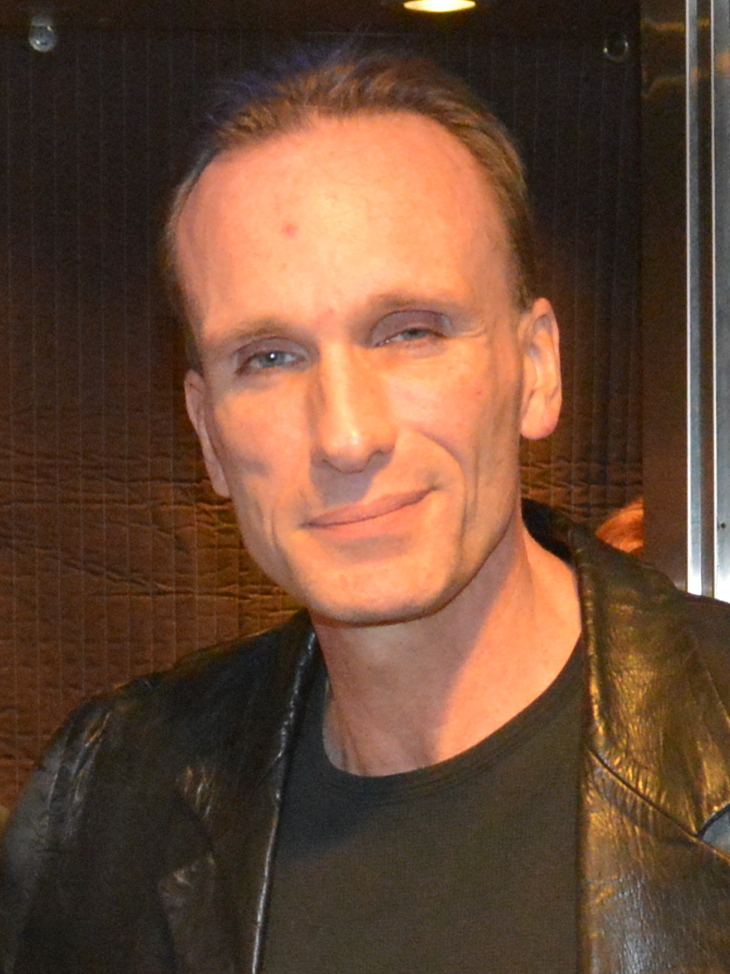
A Quiet Exit in the City That Never Sleeps
It was roughly 3:25 p.m. on December 12 when the silence settled over Greene’s apartment.
According to reports from the scene, the discovery was made at his residence in the heart of the Lower East Side. Gregg Edwards, Greene’s manager of ten years and a close confidant, was the one to bear the heavy burden of confirming the news. Speaking to the press, Edwards’ voice carried the weight of a sudden, profound loss.
“He was sadly confirmed dead at the scene,” Edwards stated, the finality of the words hanging in the air.
The atmosphere around the building was somber as emergency services arrived. While the sudden passing of a public figure often brings with it a storm of speculation, the initial reports from law enforcement have offered a measure of quiet closure. Police sources indicate that they are not treating the death as suspicious. There was no foul play, no intrusion—just the quiet end of a loud life.
The New York City Medical Examiner will conduct a standard investigation to determine the official cause of death, but for now, the focus remains on the void left behind.
The Heart of Gold Behind the Screen Villain
When we think of Peter Greene, our minds inevitably drift to the shadows. We think of smoke-filled rooms, loaded guns, and the menacing charisma of the villains he played so effortlessly. But the man who lived behind those characters was a stark contradiction to the monsters he portrayed.
In the hours following the discovery, Edwards painted a portrait of a man that few fans ever got to see.
“He was a terrific guy,” Edwards said, his statement serving as a eulogy for a friendship that spanned a decade. “Truly one of the great actors of our generation. His heart was as big as there was. I’m going to miss him. He was a great friend.”
It is a common trope in Hollywood that the best bad guys are played by the nicest people, and Greene seemed to be the ultimate proof of this rule. In a conversation with NBC News, Edwards elaborated on this duality.
“Nobody played a bad guy better than Peter,” he admitted. “But he also had, you know, a gentle side that most people never saw, and a heart as big as gold.”
This sentiment—that the man who terrified audiences was actually a reservoir of kindness—is the tragedy at the center of this story. He was a man who, according to his manager, “fought his demons but overcame them,” suggesting a life of resilience and quiet battles won away from the camera’s lens.
Defining the Nineties: The Rise of Dorian Tyrell
To understand the magnitude of this loss, one has to rewind to the early 1990s. It was a time of transition in Hollywood, a shifting landscape where independent grit was beginning to merge with blockbuster spectacle. Peter Greene stood squarely at that intersection.
In 1994, he exploded onto the global stage in The Mask.
While Jim Carrey was rubber-faced and manic, spinning like a tornado of neon green energy, the film needed an anchor—a force of darkness to balance the comedy. Greene provided that as Dorian Tyrell.
Tyrell wasn’t just a thug; he was a stylized, operatic mobster. Greene played him with a slick, reptilian charm that made him genuinely intimidating in a movie that was otherwise a live-action cartoon. He wore the suits, he smoked the cigarettes, and he carried himself with an ambition that bled through the screen. Edwards, looking back on his client’s storied career, noted that this performance was “arguably his best role.”
It was the role that proved Greene could hold the screen against the biggest star in the world and not give up an inch of ground. He didn’t just play the villain; he elevated the stakes of the entire film.
The Zed Controversy and the Genius of Pulp Fiction
The same year that The Mask hit theaters, Greene took a detour into the dark, twisted underbelly of Los Angeles in Quentin Tarantino’s masterpiece, Pulp Fiction.
If Tyrell was slick and ambitious, Greene’s character “Zed” was the stuff of nightmares.
The role of Zed is small in terms of screen time, but seismic in terms of impact. He is the centerpiece of the film’s most harrowing, controversial sequence. It is a testament to Greene’s ability that he could make such an indelible mark on pop culture with only a few lines of dialogue. The phrase “Zed’s dead, baby” became one of the most quoted lines of the decade, a cultural touchstone that immortalized his character’s demise.
But the role almost didn’t happen.
In a candid 2011 interview, Greene pulled back the curtain on his hesitation. The script, particularly the basement scene involving Bruce Willis and Ving Rhames, was graphic, intense, and deeply disturbing. It wasn’t the kind of role an actor takes lightly.
“When I got the script, I was thoroughly disappointed,” Greene had revealed. “The way it was written wasn’t my cup of tea.”
He referenced the haunting legacy of the film Deliverance, noting how certain roles can trap an actor forever. “If you ever saw Deliverance, you never saw the guy who took Ned Beatty and made him ‘squeal like a pig’ ever again, so I didn’t think it was a great career move.”
It took the persuasion of Quentin Tarantino himself to change Greene’s mind. The director, knowing Greene was the only man for the job, allowed him to have input on the scene. They worked together to tone down the explicit graphic nature of the original draft, relying instead on psychological terror and Greene’s menacing presence.
“We kept the language that was there,” Greene explained, “but it was originally a much more graphic scene.”
The result was a masterclass in tension—a scene that remains difficult to watch but impossible to forget.
A Career Built on Complexity and Grit
Greene’s filmography reads like a love letter to the American crime thriller. He didn’t just stop at The Mask and Pulp Fiction. He became a staple of the genre, a face that signaled to the audience that things were about to get serious.
He brought a nervous, frenetic energy to The Usual Suspects, fitting perfectly into the ensemble of misfits and criminals. In Judgment Night, he embodied the terrifying randomness of inner-city violence. In The Rich Man’s Wife and The Bounty Hunter, he continued to refine his craft, proving time and again that there are no small parts, only small actors—and Greene was anything but small.
Critics often noted his “presence.” It’s an intangible quality, something you can’t teach in drama school. When Peter Greene walked into a frame, the temperature in the room seemed to drop. He had a face that told a story before he even opened his mouth—eyes that had seen too much, a jaw set in perpetual defiance.
Yet, despite being typecast as the heavy, he brought a specific humanity to his roles. He wasn’t a cartoon villain; he was a broken man making bad choices, a desperate soul cornered by circumstance.
The Tragedy of the Final Curtain Call
Perhaps the most heartbreaking aspect of Greene’s passing is the work left unfinished.
Hollywood is a town of comebacks and second acts, and Greene was on the verge of a new chapter. Edwards revealed that Greene had recently signed on to star in an independent thriller titled Mascots.
The project was promising. It was set to pair Greene with fellow screen legend Mickey Rourke—a casting match made in heaven. Two actors known for their grit, their scars, and their immense talent were due to share the screen. Production was scheduled to begin in January.
The timing of his death, just weeks before filming was to commence, adds a layer of profound sadness to the loss.
Edwards recounted the difficult phone call he had to make to the film’s director, Kerry Mondragón. It is a call no agent ever wants to make. When Edwards broke the news, the reaction was immediate and visceral.
“He broke down in tears,” Edwards said of Mondragón. “They were very upset.”
The film will likely go on, but it will be haunted by the absence of the man who was supposed to be there. It serves as a reminder of the fragility of plans, of how quickly the future can dissolve into the past.
A Legacy of Shadows and Light
In the wake of the news, the internet has become a digital vigil.
Social media, usually a place of noise and discord, has unified in tribute. Fans, critics, and fellow creatives are sharing clips, quotes, and memories of an actor who helped define their cinematic upbringing.
“Such a memorable character actor,” one user wrote, capturing the sentiment of thousands.
Another fan reminisced about his scene-stealing charisma: “RIP Peter Greene. He totally stole every scene in The Mask.”
“A terrific character actor. Gone too soon,” read another comment.
These tributes speak to the specific niche Greene carved out for himself. He wasn’t always the name above the title, but he was the performance you remembered when the credits rolled. He was the texture, the danger, and the reality in films that often drifted into fantasy.
As the sun sets on the Lower East Side and the city moves forward, Peter Greene leaves behind a body of work that will endure. He leaves behind the iconic smirk of Dorian Tyrell, the terrifying quiet of Zed, and the unseen heart of a man who was loved by those who truly knew him.
He played the bad guy so we could see the darkness, but in his life, he tried to bring a little bit of light.
We want to hear your memories.
Did Peter Greene’s performances in The Mask or Pulp Fiction leave a mark on your movie-going memories? How do you think he changed the role of the “movie villain” in the 90s?
Please let us know what you think about this story in the comments on the Facebook video.
If you liked this tribute and want to help honor his legacy, please share this story with your friends and family.

