

I’m 37, married for eight years, and until about a month ago, I thought my spouse and I were that couple. You know the ones. The ones who don’t need to post constant tributes on social media because the reality of their life is steady enough to stand on its own. Ethan and I weren’t flashy. We didn’t take vacations to the Maldives or drive matching Lexuses. But we were close. Or so I thought.
We were the couple that friends described as solid, comfortable, and maybe even a little boring, but in a good way—like a favorite sweater that never loses its shape. We were the type of couple who finished each other’s sentences not out of habit, but out of a shared frequency of thought. We knew how the other took their coffee (black for him, oat milk and two Stevias for me). We knew which side of the family to avoid at Thanksgiving.
We lived in a cozy, two-bedroom Craftsman in a leafy suburb of Seattle, the kind of place where moss grows on the roof and the rain is a constant, comforting backdrop. We had an herb garden that I never remembered to water, leaving Ethan to quietly rescue the basil every Saturday morning. We had two cats, Barnaby and Sphinx, who only acknowledged our existence when the food bowl was empty. Weekends equaled blueberry pancakes, ambitious DIY failures that left us covered in paint and laughing, and half-watched Netflix documentaries we barely remembered the next day.
We had been through the trenches together. The kind of things that either bind people together with steel cables or tear them apart like wet paper. We survived a cancer scare with his mom. We survived my layoff three years ago. We survived two devastating miscarriages and the hollow, clinical ache of unexplained infertility. We had grieved the children we never held, and we had come out the other side holding hands.
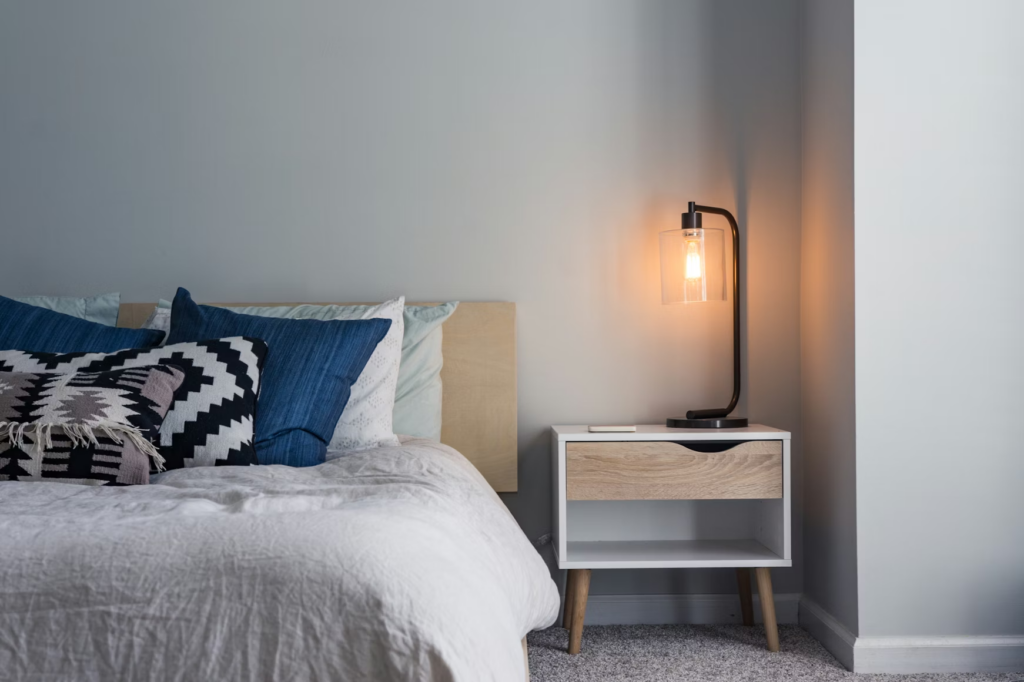
My husband, Ethan, and I always slept in the same bed. It was our sanctuary. No matter how angry we were, no matter how bad the day was, we ended it under the same duvet, legs tangled together.
So when he started sleeping in the guest room, I didn’t question it at first. I trusted him. That was my first mistake.
The Slow Drift Into The Guest Room
It started on a Tuesday in November. The rain was hammering against the siding, a relentless drumbeat.
He came to bed late, smelling of toothpaste and fatigue. He stood by the edge of the mattress, clutching his pillow like a shield. He had a sheepish, almost pained look on his face.
“Sweetheart,” he said, his voice soft. “I love you, but lately you’ve been snoring like a leaf blower on overdrive. I haven’t had a solid night’s sleep in weeks. I’m starting to hallucinate at work.”
I laughed. I really did. It seemed absurd. I teased him about being dramatic, about his delicate constitution.
“Oh, poor baby,” I said, patting his arm. “Do you want some earplugs?”
“I tried them,” he said, and he didn’t smile back. “I think I’m just going to crash in the guest room tonight. Just to catch up. I have that big presentation for the investors on Thursday.”
He kissed my forehead—a quick, dry peck—and carried his pillow down the hall. It felt like a temporary measure. A staycation.
I didn’t think much of it. I sprawled out in the king-sized bed, enjoying the extra space, and slept soundly. I even joked the next morning that he could bring me room service. He grinned, but the grin didn’t reach his eyes.
“Maybe tonight,” he said, pouring his coffee into a travel mug. “I really need to bank some sleep.”
A week went by. Then two. The pillow never came back. Neither did his laptop or his phone charger. He moved his toiletries into the hall bathroom. It was a slow migration, like a glacier carving a valley between us.
And then he started locking the door.
That’s when the atmosphere in the house shifted from “practical” to “paranoid.”
I tried the handle one night, intending to drop off a basket of clean laundry. It was locked. Not stuck—locked.
I knocked. “Ethan?”
There was a scramble of noise inside—a chair scraping, something heavy being moved—before he opened the door a crack. He looked flushed.
“Why is the door locked?” I asked, trying to keep my voice light.
He shrugged, leaning against the frame to block my view. “I don’t want the cats jumping in and knocking stuff over while I’m working. Barnaby stepped on my keyboard last night and sent a half-written email to my boss.”
It sounded reasonable. It sounded like Ethan.
He wasn’t mean. That was the hardest part. If he had been cold or angry, I could have fought back. But he was just… absent. He still hugged me goodbye every morning, still asked how my day was. But it felt performative, as if he were an actor playing the role of “Good Husband” while his mind was somewhere else entirely.
When I asked about the distance, he kissed my forehead—always the forehead, never the lips—and said, “Don’t worry so much, babe. Just trying to get ahead at work. This project is a beast.”
But there was something in his voice—a tremor, a tightness—that set my teeth on edge.
One night, I woke up around two in the morning. His side of the bed was cold, a vast, empty tundra. I went to the hallway. The light under the guest room door glowed faintly, a yellow strip in the darkness. I almost knocked. I raised my hand. But I stopped. I didn’t want to be the nagging wife. I didn’t want to be the reason he was stressed.
The next morning, Ethan was already gone before I woke up. There was no breakfast together, no shared coffee ritual. Just a sticky note on the counter: “Busy day, love you. Leftover pasta in the fridge for dinner.”
And every night, the excuse was the same: “You were loud again, honey. I need a full night’s rest. Just until I can get some good sleep. It’s for my health.”
He made me feel like the villain. Like my body was the problem.
I felt embarrassed. Deeply, surprisingly ashamed. I didn’t want to be the reason he wasn’t sleeping. I didn’t want to be the repulsive, noisy wife driving her husband away.
So I went to war with my own biology. I bought the expensive nose strips. I tried the saline breathing sprays that burned my sinuses. I drank valerian root tea that tasted like dirt. I even slept sitting up, propped by a fortress of pillows, trying to keep my airway open.
“Did I snore last night?” I’d ask in the morning.
“Like a freight train,” he’d say, looking away. “I’ll stay in the guest room one more night.”
But he wasn’t just sleeping there—he was living there. And I was living alone in our marriage.
The Evidence of the Night
After six weeks of this exile, I started spiraling. I don’t like to admit that, but I did. The silence in the house gave my anxiety too much room to grow.
I questioned everything. Had I gained weight? Did I smell? Was there someone else? Was he talking to women online? Was he gambling?
I went to see a sleep specialist behind Ethan’s back. I sat in a sterile office, explaining my marital problems to an ENT doctor who looked at my throat with a flashlight.
“Structurally, everything looks fine,” the doctor said. “But snoring can be intermittent. I suggest you record yourself while sleeping. We need to monitor the timing and intensity of the apnea events before we order a full sleep study.”
And that’s when the idea took root.
It wasn’t about spying on him at first; it really wasn’t. I just wanted to prove to myself that I wasn’t a monster. I wanted to hear what he was hearing.
I found an old handheld digital recorder from my freelance journalism days, the kind with a high-sensitivity microphone. I put fresh batteries in it. I tucked it under the lampshade on my nightstand, right next to the bed, and pressed “record.”
I whispered into the dark, “Let’s see what’s really going on.”
I went to sleep. Or tried to. I slept fitfully, conscious of the little red light blinking under the shade.
When I woke up, the sun was just touching the window sill. I didn’t even brush my teeth. I grabbed the recorder, my heart pounding in my chest like a trapped bird, and hit “play.”
I put on my noise-canceling headphones and sat cross-legged on the bed.
The first hour was nothing. Just the quiet hum of the fridge downstairs, the occasional creak of the house settling in the wind. The sound of my own breathing—deep, rhythmic, quiet.
There was no snoring. Not a wheeze. Not a snort.
I scrubbed forward. 1:00 a.m. 1:30 a.m. 2:00 a.m.
Still nothing. Just soft breathing.
And then, at exactly 2:17 a.m., the audio landscape changed.
I heard footsteps. They were not mine. These were slow, measured steps in the hallway—the distinct creak of the floorboard just outside the master bedroom. Then, the faint, high-pitched whine of the guest room door opening.
I turned the volume up to maximum.
There was the soft clack of a chair being pulled out. A heavy sigh. And then, the unmistakable, rhythmic click-clack-click of a mechanical keyboard being typed on. Fast typing. Urgent typing.
I sat there, frozen, the headphones pressing into my ears.
He wasn’t sleeping.
Ethan, the man who claimed he was so exhausted he couldn’t share a bed with his wife, was awake at 2:30 in the morning. He was moving around. He was working—or communicating.
The typing continued for an hour. Then, a low voice. His voice.
“Yeah… I know. I’ll send it now.”
Who was he talking to?
He wasn’t snoring. He wasn’t sleeping. He was living a secret life ten feet away from me, behind a locked door.
The realization hit me harder than the snoring accusation ever had. The snoring was a lie. A fabrication designed to quarantine me in the master bedroom so he could have the night to himself.
But why?

The Key in the Tin Box
That day, I watched him like a hawk. He came into the kitchen at 7:00 a.m., rubbing his eyes.
“God, I’m tired,” he said, pouring coffee. “Rough night. You were loud again.”
I looked at him. I looked at the man I had promised to love in sickness and in health. And I lied right back.
“I’m so sorry,” I said, keeping my voice steady. “I’ll try another pillow tonight.”
His eyes were tired, yes. But not sleepy tired. They were stressed tired. The skin under his eyes was gray. He looked like a man carrying a boulder up a hill.
By evening, I’d convinced myself there had to be an innocent explanation. Maybe he was moonlighting? Maybe we had money problems I didn’t know about? Or maybe it was the worst-case scenario. Maybe he was talking to her. The mistress.
When he picked up his laptop and said, “I’m turning in,” I smiled and said, “Goodnight,” just like always. But I set my internal alarm. I wasn’t going to sleep.
At 2:00 a.m., I slid out of bed. The house was a tomb. My bare feet stuck to the hardwood as I crept into the hallway.
A thin strip of yellow light bled out from under the guest room door. I leaned in close, my ear against the wood. I heard it again. Typing. Fast, frantic typing.
I tried the doorknob gently. Locked. Of course.
Then I remembered.
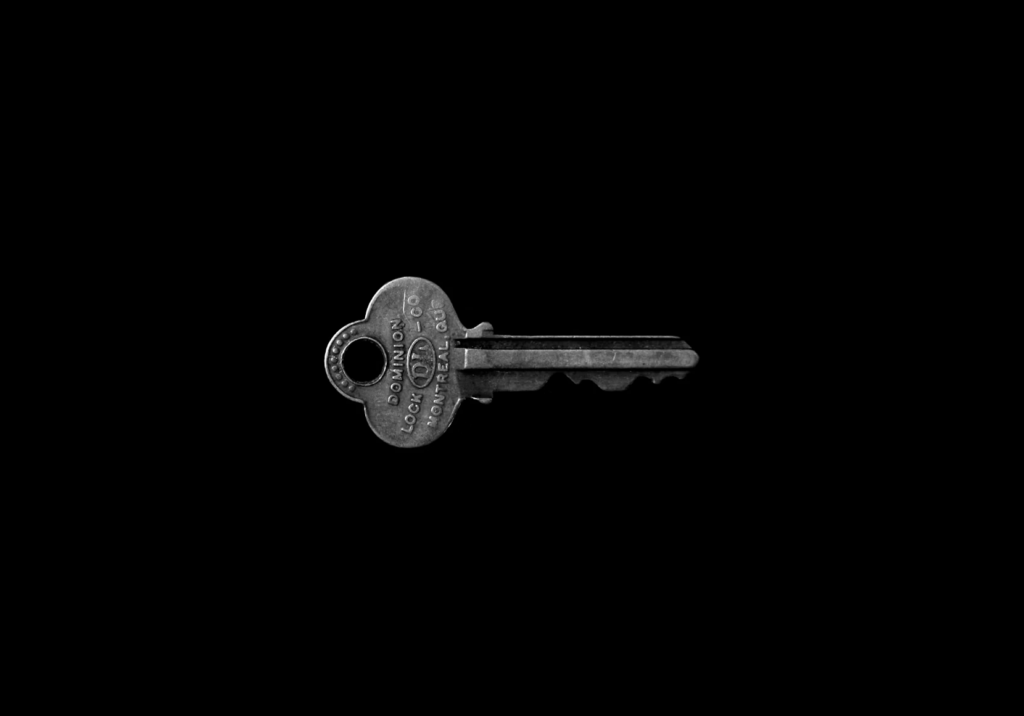
Three years ago, when we first moved into this house, I had been paranoid about getting locked out. I made copies of every key—front door, back door, and the interior privacy locks. I always forget where I put things, so I hid the extras in a little vintage Band-Aid tin box behind the cookbooks in the kitchen pantry.
I crept to the kitchen. The linoleum was freezing. I reached behind the stack of recipe books—The Joy of Cooking, Salt Fat Acid Heat—and found the tin. It rattled softly.
My hands were shaking so hard I almost dropped it. I fished out the small brass key for the interior doors.
I walked back to the hallway. I stood in front of the guest room door with the key in my palm. It felt heavy, like a weapon.
My heart was thudding so loudly I was sure he could hear it over his typing. Everything else was completely silent. For a second, I hesitated. What if I opened this door and found him on a cam-girl site? What if I found him gambling away our savings? What if this was the moment my marriage officially died?
But then I thought about the six weeks of rejection. I thought about the nose strips I wore that hurt my skin. I thought about the loneliness of the king-sized bed.
I deserved the truth. Whatever it was.
I slid the key into the lock. I turned it slowly, praying the mechanism was well-oiled. It clicked. Softly.
Ethan didn’t hear it. The typing continued.
I turned the knob and pushed the door open just an inch. Just enough to slice a view into the room.
The Boy on the Screen
The room smelled of stale coffee and takeout food. It was messy—clothes piled on the bed he supposedly slept in, papers strewn everywhere.
Ethan was sitting at the small desk in the corner, his back to me. The glow of the laptop screen illuminated his face in a harsh, blue light. He was hunched over, his posture terrible. He looked exhausted, defeated.
The desk was a disaster zone. Stacks of paper, open envelopes, and a half-eaten sandwich. His phone was plugged in beside him, buzzing silently.
But what froze me were the tabs open on his screen. I could see the reflection in the dark window glass, and I could see the screen itself through the gap in his arm.
Dozens of tabs. Email inboxes. PayPal. Venmo. A medical portal.
And in the center of the screen, a photo.
It wasn’t a woman. It wasn’t a cam girl.
It was a photo of a young boy. Maybe twelve or thirteen years old. He had messy brown hair, a shy smile, and he was holding up a blue ribbon from a science fair.
He had Ethan’s chin. He had Ethan’s dimple.
My breath caught in my throat with a audible hitch.
Ethan stopped typing. He stiffened.
Before I could stop myself, the name escaped my lips in a whisper. “Ethan?”
He jolted as if he’d touched a live wire. He spun in his chair so fast it skidded against the floor, nearly knocking over his coffee mug.
“Anna?!” His voice cracked, high and panicked. He scrambled to close the laptop, slamming the lid down. “What are you doing? Why are you up?”
I pushed the door open fully. I stood there in my pajamas, the key still clutched in my hand.
“I could ask you the same thing,” I said, my voice trembling. “What the hell is going on here? Who is that?”
He stood up, putting his body between me and the desk. He rubbed the back of his neck, looking everywhere but at me.
“It’s not what you think,” he said, the universal anthem of the guilty. “I was just… catching up on some freelance work. The project is over budget.”
“Freelance work?” I said, crossing my arms to keep them from shaking. “At two in the morning? With the door locked? With photos of children?”
He flinched. “Don’t say it like that.”
“Like what? Like it looks?” I stepped into the room. “Move, Ethan.”
“Anna, please. Let’s go back to bed. We can talk in the morning.”
“We are talking now,” I snapped. “Move.”
He looked at me, saw the resolve in my face, and the fight leaked out of him. His shoulders dropped. He slumped back into the chair, looking small.
“I didn’t want it to be like this,” he whispered into his hands.
“Like what?” I asked, my voice quieter now, but still full of adrenaline.
He looked up at me, eyes red and glassy with tears. “You’re right. I’ve been lying. But not because I don’t love you. God, Anna, I do. I love you so much. That’s why I lied. I just… didn’t know how to tell you.”
“Tell me what?” I demanded.
He hesitated, his hand hovering over the laptop. Then, slowly, he opened the lid. The screen woke up. The boy’s photo filled the screen again.
“Who is he?” I asked.
Ethan’s voice broke. “He’s my son.”
The History of a Lie
The world stopped. The rain stopped. The hum of the fridge stopped.
I grabbed the edge of the dresser to steady myself. “Your… son?”
“I didn’t know about him,” he said quickly, the words tumbling out in a rush. “I swear, Anna. Thirteen years ago, before I met you, I was seeing someone named Laura. It wasn’t serious. We were kids, basically. We dated for four months. We broke up, and I moved to Seattle for grad school. I didn’t hear from her again.”
My mouth was dry as dust. “And she never told you?”
“No. She said she didn’t want to ‘complicate things.’ She thought she could handle it on her own. She didn’t want to trap me.” He took a shaky breath. “But two months ago, she found me on Facebook. She sent me a message.”
“Why now?”
“Because she’s sick,” Ethan said, tears spilling onto his cheeks. “She has an aggressive autoimmune disease. She can’t work full-time anymore. She’s drowning in medical bills. And she was terrified. She needed help with Caleb.”
“Caleb,” I repeated. The name felt heavy in the room.
He nodded. “That’s his name. Caleb.”
“And you just… believed her?”
“I asked for proof,” he said. “I’m not an idiot. We did a paternity test. A DNA kit. It came back 99.9%. He’s mine, Anna. He has my eyes. He has my allergies.”
I stepped back, running both hands through my hair, trying to process the magnitude of the deception.
“So this whole thing about me snoring… that was a lie? All of it?”
He flinched as if I’d hit him. “I didn’t mean to make you feel bad. I just didn’t know what else to say. I needed time alone to talk to them, to figure out the money, to process it. And you…”
He looked at me with pleading eyes.
“You’ve been through so much, Anna. The miscarriages. The IVF. The surgeries. Every time we see a baby, I see the pain in your face. I see how much you want to be a mother. I was terrified that if I told you I had a secret child—a child I made with someone else effortlessly—it would break you. I thought it would destroy us.”
“So you decided to hide a whole human being instead?” I snapped. “You decided to gaslight me about my own breathing?”
“I thought if I could just help them quietly, it wouldn’t touch our lives,” he said. “I started taking online gig work—copywriting, data entry—at night to pay for it. That’s why I’ve been locked in here. I didn’t want to touch our joint savings. I’ve been sending money for Caleb’s braces, Laura’s treatments… everything.”
I stared at him. The betrayal was so layered. The money. The time. The emotional energy.
“You lied to my face. Every single night. You kissed my forehead and lied to me.”
“I was trying to protect you!”
“You were protecting yourself!” I yelled. “You were too coward to face the conversation, so you made me feel crazy instead.”
He stood up and reached for me, but I stepped back.
“I love you,” he said, desperate. “You are my wife. I didn’t want to lose you.”
“You almost did,” I said, my voice cold. “You still might. Because trust isn’t about protecting people from hard things, Ethan. It’s about facing the hard things together.”
I looked at the screen again. The email thread showed messages between him and Laura. I leaned in to read them.
“Thanks for the transfer, Ethan. Caleb needs new shoes for track.” “How is the treatment going?” “Rough. But knowing you’re helping him makes it easier.”
The tone was respectful. Grateful. It wasn’t flirty. It wasn’t nostalgic. It was two parents trying to keep a ship afloat.
“What are you planning to do?” I asked finally.
“I don’t know,” he admitted. “She wants Caleb to meet me. She says he’s been asking about his father. He knows about me now.”
“And you want to?”
He nodded slowly. “I think I need to. He’s my son, Anna. I grew up without a dad. I know what that hole feels like. I can’t be the guy who leaves.”
I looked at him. I saw the fear, but I also saw the integrity underneath the stupidity. He was trying to do the right thing, in the wrong way.
I swallowed hard. The anger was still there, hot and sharp, but something else was rising up to meet it. Reality. There was a child involved. A child who was innocent in all of this.
“Then we’ll talk to him,” I said. “Together.”
His eyes widened. “You’d be okay with that?”
“I’m not okay,” I said honestly. “I am furious. I am hurt. I am humiliated that I bought nose strips for a problem I don’t have. But I’m not a monster. I’m not going to punish a kid for your mistake. And if you’re going to be in his life, then I need to be a part of that too. We are a team, Ethan. Remember?”
Ethan’s knees gave out. He sat back down, burying his face in his hands, weeping with relief.
“Thank you,” he choked out. “Thank you.”
“Don’t thank me,” I said, standing. “Just don’t ever lie to me again. If you buy a pack of gum, I want to know about it. Total transparency. Or I walk.”
“I swear,” he said. “I swear.”
The Meeting
Two weeks later, we drove out to a small public library in a town an hour away. It was neutral ground.
My stomach was in knots. Ethan was driving, his knuckles white on the wheel.
We pulled into the parking lot. A woman was standing by the entrance, leaning on a cane. She looked tired, frail, but she was smiling. Next to her stood a boy.
Caleb.
He was taller than in the photo. He had a backpack on one shoulder and was kicking at a stone with his sneaker. He looked nervous.
Ethan turned off the car. He looked at me.
“I’m scared,” he whispered.
“Me too,” I said. I took his hand. “Let’s go.”
We got out.
“Hey, Caleb,” Ethan said, his voice soft but steady.
Caleb looked up. He had the same way of tilting his head that Ethan did.
“Hi,” he said.
Ethan turned to me. “This is my wife, Anna.”
I walked over slowly. I didn’t try to hug him. I just offered a warm smile.
“Hi, sweetheart,” I said. “It’s nice to meet you.”
“Hi,” he said again, quieter now.
We spent the afternoon getting to know him. We had lunch at a diner nearby. Laura sat with us for a bit, then gave us space, sitting at a different booth to read.
Caleb was smart. He was funny in that awkward preteen way, cracking jokes about Minecraft and complaining about homework. He told us about his favorite classes, his wish to learn to code, and how he’d just joined the robotics club.
And I realized something strange and beautiful—I wasn’t angry at the boy. I wasn’t even angry at Laura. My pain wasn’t gone, but it had changed shape. It had become something else. Something softer. Expansive.
I realized that my infertility didn’t mean I couldn’t be a mother figure. It didn’t mean I couldn’t love a child. Here was a child who needed love. Who needed a father. And maybe, just maybe, a stepmother.
On the drive home, the sun was setting, painting the sky in purples and golds. Ethan was quiet. He reached over and took my hand.
“Thank you,” he said, barely above a whisper.
“You don’t need to thank me,” I said, turning to him. “Families aren’t perfect, Ethan. They’re messy. But they have to be honest. That’s the only rule.”
He nodded, eyes full of something like hope.
That night, he didn’t go to the guest room.
He came back to bed.
He brought his pillow. He brought his phone charger.
There was no pretending or lies, just the two of us in the dark, side by side like it used to be. I listened to the sound of his breathing—steady, rhythmic—and realized I wasn’t waiting for the other shoe to drop anymore. The shoe had dropped. The secret was out. And we were still standing.
“Hey,” he whispered into the dark.
“Yeah?”
“I’m sorry for all of it. For the nose strips. For the lock. For everything.”
“I know,” I said. “But you have to promise me something.”
“Anything.”
“No more secrets. From now on, we face everything together. Good or bad. If you burn dinner, you tell me. If you have a secret son, you tell me.”
He squeezed my hand under the blanket. “Together.”
And somehow, in that muted moment, I believed him.
Because love isn’t just about comfort or shared routines or finishing each other’s sentences. It’s about showing up when it’s hard. It’s about standing in the wreckage of a mistake and choosing to grab a shovel and rebuild instead of walking away.
Even when the walls crack and trust breaks, the right love enables healing.
And as I drifted off to sleep, my husband’s hand still in mine, I realized we were already beginning again. And for the record? He snored a little.
And it was the best sound I’d ever heard.
We want to hear from you! What would you do if you found out your partner had a secret child? Do you think Anna was right to stay and help build a relationship with Caleb? Let us know your thoughts in the comments on the Facebook video. And if you liked this story, share it with your friends and family!
