
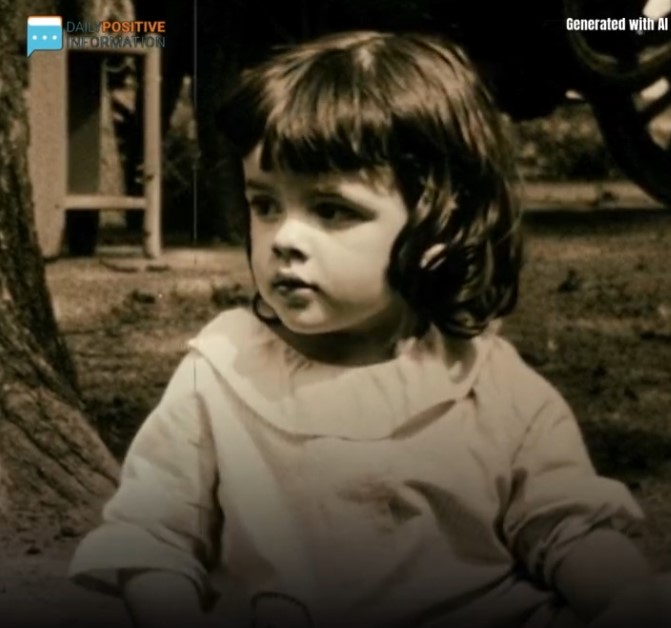
She didn’t start as a Hollywood legend. She started as a little girl in Minnesota — bright-eyed, hopeful, and too young to understand the world she was being pulled into. Born as Frances Ethel Gumm on June 10, 1922, in Grand Rapids, Minnesota, she came from a family of vaudeville entertainers.
Her stage debut happened before she was three years old. According to records from her hometown, she sang “Jingle Bells” at a Christmas show at her father’s theater, her tiny voice ringing out among the clatter of chairs and soft hush of an audience settling in.
To most people, that might seem sweet — a child discovering joy under the lights. But in her case, that early taste of applause became the only place she felt wanted.
As she grew, the illusions faded. Behind the glimmering promise lay a childhood marked by instability — a home life shadowed by rumors, uncertainty, and the pressure to become someone else’s dream. Biographers later reported that her mother often fought feelings of jealousy and insecurity; she pushed her daughters into early-night performances at venues far beyond what a child should endure. 
In 1926, when Frances was just four, the family relocated to Lancaster, California — a small desert town not far from Los Angeles. The reason for the move was whispered among locals: rumors about the father’s private life had begun to spread, and the family quietly fled their hometown in search of safety and opportunity. 
But leaving Minnesota didn’t mean leaving the instability. Behind closed doors, the cycle of tension, jealousy, and repeated reconciliation continued. As a child, she recalled the fear of separations and the desperate longing for normalcy. Later in life, she admitted that the only time she ever felt truly wanted was when she was on stage — in the glare of stage lights, not under the uncertain roof of home. 
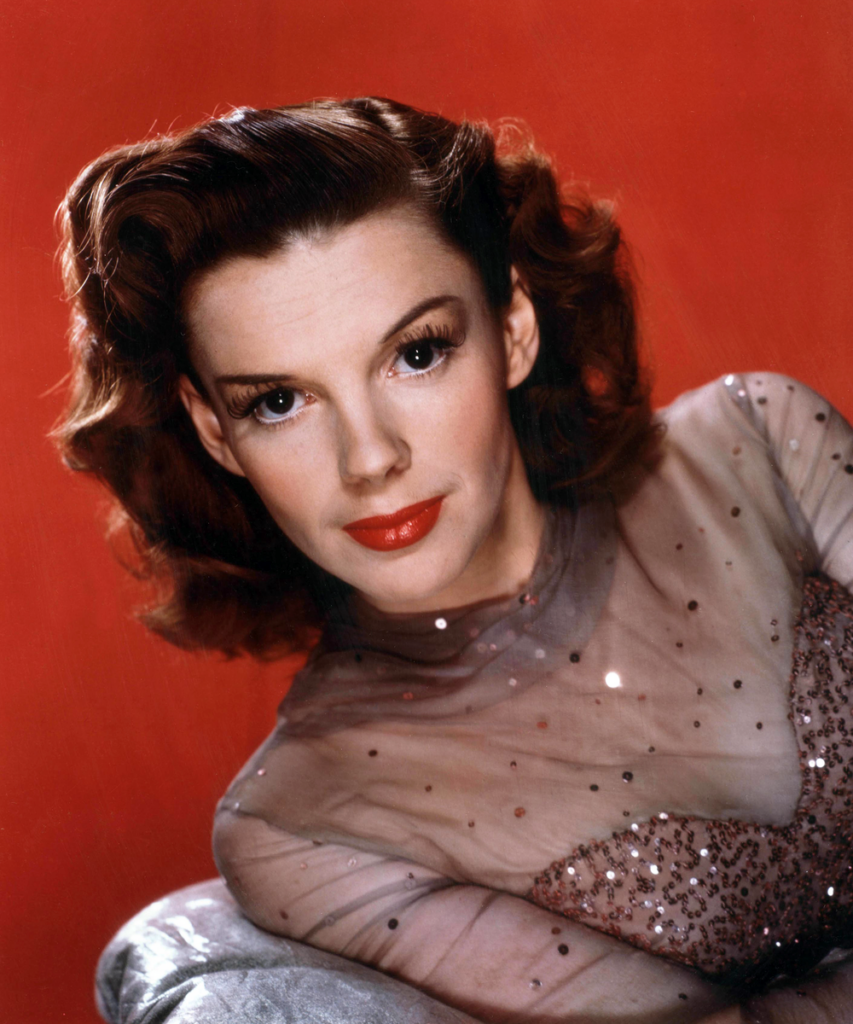
Thrust Into the Spotlight — Before Her Childhood Was Over
By the time Frances turned eight or nine, she and her sisters were performing regularly. The trio — once known as the Gumm Sisters — danced and sang in vaudeville houses and small theaters, often at venues far too mature for such young kids. Their mother managed every gig, every contract, every nightmare-inducing rehearsal — driven, some say, by her own insecurities and ambition. 
It was during one of those early performances that a famous entertainer noticed her. The comedian George Jessel reportedly suggested the family change their last name to something more theatrical — “Garland.” Not long after, Frances Gumm became Judy Garland. 
At 13, she signed a contract with the glamorous, powerful Metro-Goldwyn-Mayer (MGM), one of the biggest film studios in the world — and she did so without even a screen test. That kind of instant validation might have crushed most kids with disbelief, but Judy accepted it as the norm. 
From that point, her life became a nonstop blur of sets, recordings, rewrites, and songs. The studio quickly packaged her — small, talented, innocent — into a marketable star. But behind the wholesome smile and melodic voice, the machinery of Hollywood had already begun its work — shaping, molding, controlling.
The Price of Stardom: Pressure, Pills, and a Growing Shadow
Hollywood was relentless. Days blurred into nights, scripts piled up, expectations multiplied. For Judy Garland, that meant more than just singing or acting — it meant surviving in a world that cared about the bottom line, not the well-being of a child.
Historians and biographers report that during her early teens, MGM and studio executives pressured her to maintain a certain appearance, a certain weight. To keep her thin, the studio allegedly placed her on a strict diet of cottage cheese and chicken broth — and supplied her with diet pills laced with amphetamines to suppress appetite. 
At the same time, to help her stay awake for long shooting days, she was reportedly given stimulant pills. When the workday ended, barbiturates were handed out to help her sleep. The rhythm was mechanical, unrelenting — eat, act, sleep, repeat. No breaks. No childhood. No rest. The cost? Her body, her self-esteem, her health. 
In later interviews, she painted a chilling picture of what her life looked like behind the velvet curtains. She said that onstage — under the lights, in costume — she felt wanted, seen, alive. Offstage, she was just “Baby Gumm.” A child trapped under the heavy expectations of adults who called her “my little hunchback” and demanded perfection. 
Despite the weight of this pressure, she persevered. Movies followed one another with dizzying speed. Rehearsals, musical numbers, dance steps, radio spots — the schedule never paused. For her, performance was both salvation and prison.
The Yellow Brick Road That Defined a Generation — and Her Life
Then came 1939. The year that changed everything. When she was seventeen, Judy Garland was cast as Dorothy Gale in The Wizard of Oz — a role that would forever link her name to hope, innocence, and bittersweet sorrow.
The film became a national sensation. The world fell in love with Dorothy, with her ruby slippers, with the dream of a place “somewhere over the rainbow.” From that moment on, Garland wasn’t just a star; she was legend.
But fame didn’t heal old wounds. In many ways, it deepened them. The accolades, the praise, the lights — they didn’t protect her from the internal chaos, the self-doubt, the constant pressure to look and sound perfect. If anything, they amplified it.
Still, Judy worked. She carried on through dozens of films, musicals, performances, and tours. She sang hits, danced steps, charmed directors — all while privately wrestling with exhaustion, expectations, and a relentless pace that allowed no breathing room. 
The Burden Behind the Smiles: Loss, Pain, and Private Battles
The world saw Judy Garland as a dreamer, a songbird, a Hollywood gem. But behind the glamour, pain was real. Tragedy found her: her father died when she was just a young teenager, leaving her adrift at a time when she needed stability more than ever. Yet even grief couldn’t stop the studio’s demands. She went back to work almost immediately. 
As the years went on, the pills became part of the routine. The stimulants to wake. The sedatives to sleep. The diet pills to stay thin. The constant cycle of performance and pressure carved into her spirit, shaping a woman who gave everything to the spotlight but had nothing left for herself.
It’s no surprise that, to many close to her, she didn’t feel like she had a choice. The system demanded more, and she gave more — not because she wanted to, but because she had been taught that her value lay in her willingness to produce, to perform, to please.
Triumphs and Comebacks — But the Cracks Were Growing
Even under crushing pressure, Judy Garland’s talent burned bright. She was a performer gifted with a voice that could break hearts, a face that carried hope, and a presence that could light up a screen. She moved beyond Dorothy and musicals — delivering performances in films like Meet Me in St. Louis (1944) and A Star Is Born (1954), and later showing dramatic range in films like Judgment at Nuremberg (1961). 
She also found moments of reinvention — not just in film, but as a concert performer, a recording artist, a live presence that brought raw humanity to audiences around the world. Her voice could soar, tremble, heal, and haunt — in the same breath.
Yet with every high hit, the lows were never far behind. The pills she once took to survive the grind had become crutches — addicts call them crutches. The weight of fame, of expectation, of personal pain — it all piled up, quietly, disturbingly, until it became too heavy.
The Final Act That No Curtain Could Hide
In 1969, at the age of 47, Judy Garland’s life came to a tragic end. She was found dead in her London apartment — a victim of an accidental overdose, a sad echo of the very pills she was once forced to take by circumstances beyond her control. 
It was a brutal reminder that fame doesn’t heal wounds — and that no amount of applause can replace safety, love, or peace. Friends, family, fans — all mourned. Thousands attended her funeral in New York City, mourning not just a star, but a woman who had given everything, and lost much of herself in return. 
And yet, despite the heartbreak, her legacy endured. Her voice, her films, her songs — they never really died. New generations discovered her. New admirers found comfort in her renditions, tears in her ballads, strength in her vulnerability.
Why Her Story Matters — Then and Now
Judy Garland’s life is more than classic Hollywood biography. It is a warning. A mirror. A testimony to dreams built through sacrifice, and the heavy cost that sometimes comes with them.
She reminds us that:
- Childhood — especially one shaped by adults’ ambitions — can carry scars into a lifetime.
- Fame — with all its lights and applause — doesn’t immunize you from pain.
- Pressure to conform, to perform, to remain marketable — can destroy bodies and minds.
- Artistry can come from suffering — but that doesn’t make suffering an ingredient to be celebrated.
Her story speaks to every child actor, every dreamer, every young artist who believes the spotlight will heal their pain. It asks: at what price comes success? And: who pays for our entertainment?
What I Wish More People Knew about Her
More than the golden films, the awards, the songs — I wish people remembered Judy Garland as the human being she was. With all her flaws, her fears, her hopes, her strength, her cracks.
I wish they remembered:
The frightened little girl in Grand Rapids who once sang “Jingle Bells” on a tiny stage and felt alive when no one else would look at her.
The exhausted teenager in Hollywood, pushed by studio executives to stay thin, stay bright, stay working — even when every fiber of her body begged for rest.
The woman who tried to find herself in songs, in roles, in applause — as if every note might drown out the pain inside.
The mother, behind the scenes, who loved her children and carried her own grief, her own insecurities, even as the world saw only starlets and smiles.
Because maybe remembering her fully — not just as Dorothy in ruby slippers, but as Frances Gumm, child performer, human being — is the most honest tribute.
What the Industry Should Learn — and What We Should Remember
If there is one truth Judy’s life teaches us, it’s this: talent is not a shield. Stardom does not guarantee safety. And childhood, once sacrificed for profit, may never truly heal.
For any studio, for any company, for any group that profits from young talent — the lesson is urgent:
Protect the child. Not just the star.
Because a childhood lost can lead to a life haunted. And a legacy built on pain is never worth the applause.
As for the rest of us — the fans, the audience, the people who watch and applaud and then move on — perhaps we owe her something too.
We owe her honesty. We owe her truth. We owe her memory — not just the songs, but the struggle. Not just the smile, but the sorrow.
Because only by seeing the whole person can we truly learn from her story.
Let us know what you think about this story on the Facebook video — and if Judy’s story touched you, share it with friends and family. We owe it to her memory to keep speaking the truth behind the glamour.
