
World Health Organization reports ischaemic heart disease to be the leading cause of death worldwide, with the number of deaths due to cardiovascular diseases in 2019 being 8.9 million.
According to research, in the days or months leading up to a heart attack, people experience certain symptoms known as prodromal symptoms.
A research published in The National Library of Medicine, states that the prodromal symptoms are often overlooked by patients and primary clinicians.
Some of those symptoms “include chest pain, chest heaviness, chest burning, palpitations, fatigue, sleep disturbance, shortness of breath (SOB), dizziness, anxiety, sudden heat or cold, back pain, and vomiting.”
1. Fatigue
Being extremely tired, sleepy, exhausted or lacking energy to perform even the slightest of tasks can be a sign of fatigue. One of the reasons it may affect a person are the lowered levels of blood that go to the heart. This usually takes place when arteries get narrowed. Fatigue can easily happen if someone experiences heart issues.

2. Shortness of breath
The shortness of breath happens when the lungs don’t get the appropriate levels of oxygen needed for a proper function of the body. If you or someone you know experiences shortness of breath it is for the best to consult a doctor because it may be a sign of a potential heart attack. As per WebMD, “shortness of breath and feeling tired can be signs of [heart failure.]”
Heart failure refers to the heart’s inability to pump blood around the body properly.
3. Weakness
If you start experiencing weakness all of a sudden because of a an unknown reason your body might want to remind you to take things slowly and reconsider your lifestyle.
4. Dizziness and Cold Sweats
Both dizziness and cold sweats can be a result of poor circulation, something that must not be ignored.
5. Flu or Cold-like Symptoms
A great number of people who have experienced heart attack say that they developed flu-like symptoms mere days before the attack took place.
6. Chest Pressure
A common symptom of heart attack is the chest pressure one might experience. This pressure will constantly increase until the attack itself happens.

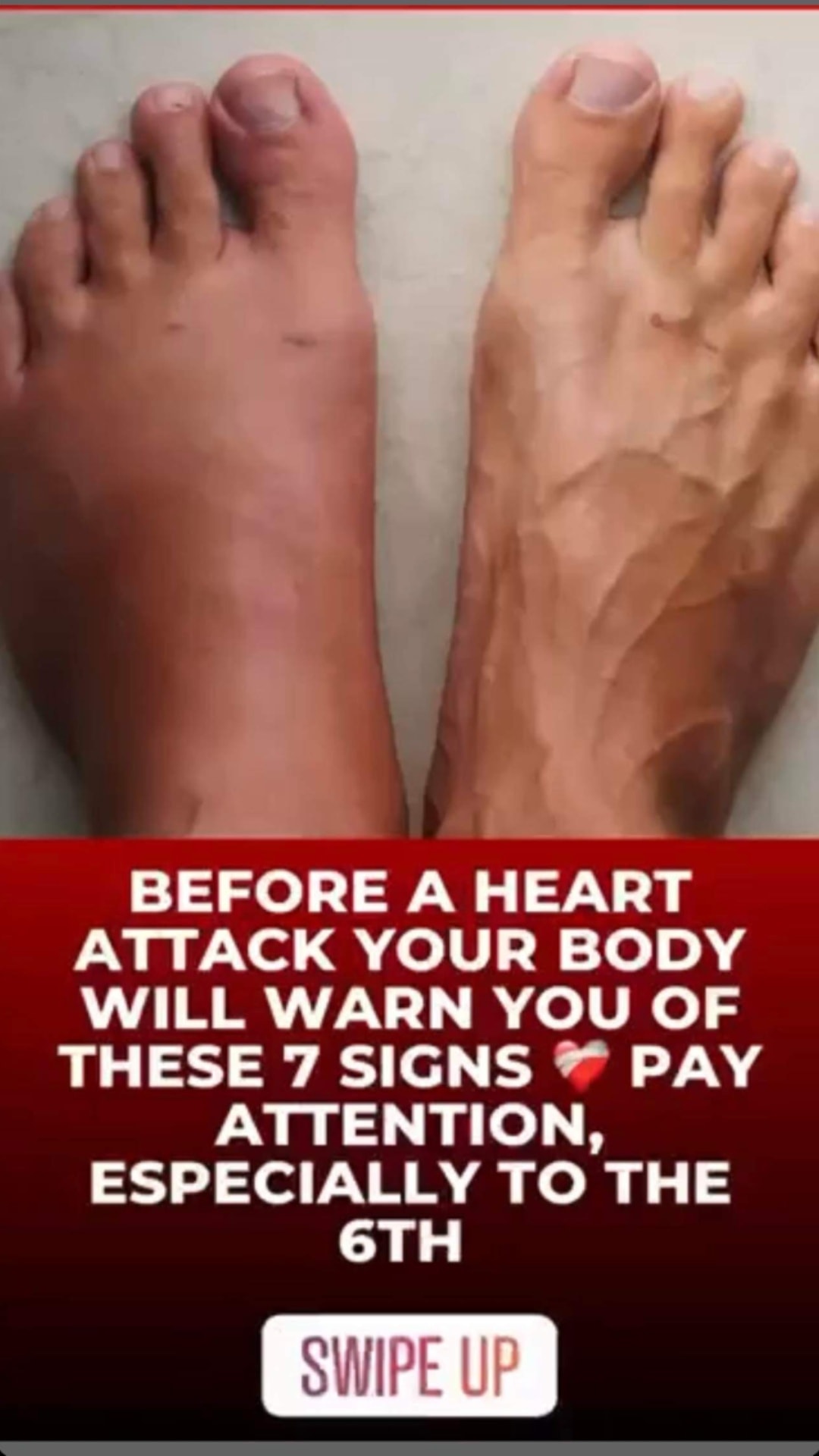
7. Swollen Feet
If you have congestive heart failure, one or both of your heart’s lower chambers lose their ability to pump blood effectively. As a result, blood can back up in your legs, ankles and feet, causing edema.
If you are interested to learn more about heart attack and some of the symptoms which pre-follow this condition go to the video below in which Dr. Travis Stork speaks on the Symptoms of Heart Attack.
In addition, check out another useful video about Heart Attack Cough (Self Aid) Demonstration.
Please SHARE this article with your family and friends on Facebook! Who knows, these videos may help save a life.
